Upgrading a clinic’s aesthetic services is crucial, and equipment selection plays a key role here. Choosing the right diode laser hair removal machine requires several key considerations. This primarily includes evaluating specs, patient comfort, and long-term ROI. This article compiles 7 key questions for medical professionals and distributors. These will help you find a device that balances clinical effectiveness with commercial value.
Key Considerations Before Choosing a Diode Laser Hair Removal Device
These devices vary in wavelength range and cooling design. Both factors affect patient outcomes. Clinicians should evaluate these before committing to a purchase.
Question 1: What Wavelengths Are Essential for Diverse Patient Profiles?
The 808 nm wavelength is the most widely used standard in diode laser hair removal. It targets melanin across most skin tones. The 755 nm wavelength suits finer hair and lighter skin. There’s a third essential option too: the 1064 nm wavelength. It penetrates deeper with lower melanin absorption, making it safer for darker skin types when appropriate parameters are used. A triple-wavelength system featuring these supports treatment across a wide range of skin types and hair characteristics.
Question 2: How Does the Cooling Mechanism Enhance Patient Comfort?
Laser energy heats the skin surface. Without cooling, this risks discomfort and damage. Contact cooling built into the handpiece is the most reliable method. It lowers skin temperature before, during, and after each pulse. Chiller-based diode laser hair removal machine systems generally provide more consistent and controllable cooling than gel or air-based methods.
Comparing Professional Equipment with a Home Diode Laser Hair Removal Device
Consumer and clinical devices both carry the “diode laser” label, but the performance gap is significant. These differences matter when communicating value to patients.
Question 3: Why Do Clinics Need Higher Fluence Than At-Home Systems?
Fluence is energy per unit area (J/cm²). Home devices operate below 10 J/cm² for safety, while clinical systems can deliver significantly higher fluence levels (often in the range of 20–100+ J/cm² depending on device parameters). This induces thermal damage to the hair follicle structures (e.g., bulge and stem cell regions). Low-fluence home devices reduce hair temporarily and cannot reliably prevent regrowth. Medically effective fluence is the defining differentiator.
Question 4: How Does Spot Size Affect Treatment Speed and Efficacy?
Spot size is the skin area covered per pulse. Larger sizes reduce treatment time on the back, legs, or chest. Smaller sizes allow precision on the upper lip or bikini line. A diode laser hair removal machine with interchangeable spot sizes supports both. Fixed spot size systems force a trade-off between speed and accuracy.
Evaluating the ROI of Commercial Diode Laser Hair Removal Devices
Upfront cost is only part of the investment in a professional laser hair removal machine. Operational costs and longevity shape returns over 5-10 years. Make sure to calculate the total cost of ownership before proceeding.
Question 5: What is the Expected Lifespan of the Laser Handpiece?
Handpiece lifespan is measured in shot count. Entry-level diode laser hair removal machine systems offer 10-20 million shots. Higher-grade systems can reach over 50 million. Such a handpiece reduces replacements and lowers per-treatment cost over time. Confirm shot count data and replacement pricing before purchase.
Question 6: Are There Hidden Maintenance or Consumable Costs?
Some devices depend on consumables. Filters, tip cartridges, and cooling gels create recurring expenses. Service contracts by aesthetic equipment suppliers may also be required for warranty coverage. Clinics should request a breakdown of annual fees, consumable intervals, and support availability. A low diode laser hair removal machine purchase price with high running costs reduces long-term ROI.
Medical Benefits and Patient Safety Standards
The best diode laser hair removal machine devices are evaluated on a clinical range as well as cosmetic outcomes. Certifications affect long-term clinic value.
Question 7: Can Diode Lasers Offer Medical Benefits Beyond Aesthetics?
Yes. Diode lasers are primarily indicated for hair removal. Under specific treatment parameters, some systems may provide adjunctive skin benefits, such as mild collagen stimulation and improvement in skin texture.
However, these effects are secondary and should not be considered equivalent to dedicated skin rejuvenation technologies. Diode lasers are not typically indicated for vascular or resurfacing treatments, and such applications require appropriate device types and regulatory clearance.
A multi-functional platform may help expand service offerings, but any extended-use claims must be supported by validated clinical evidence and relevant regulatory approvals. FDA clearance (e.g., 510(k)) and CE marking should always be verified before clinical use.
ENZOEYS Aesthetic Medical Equipment
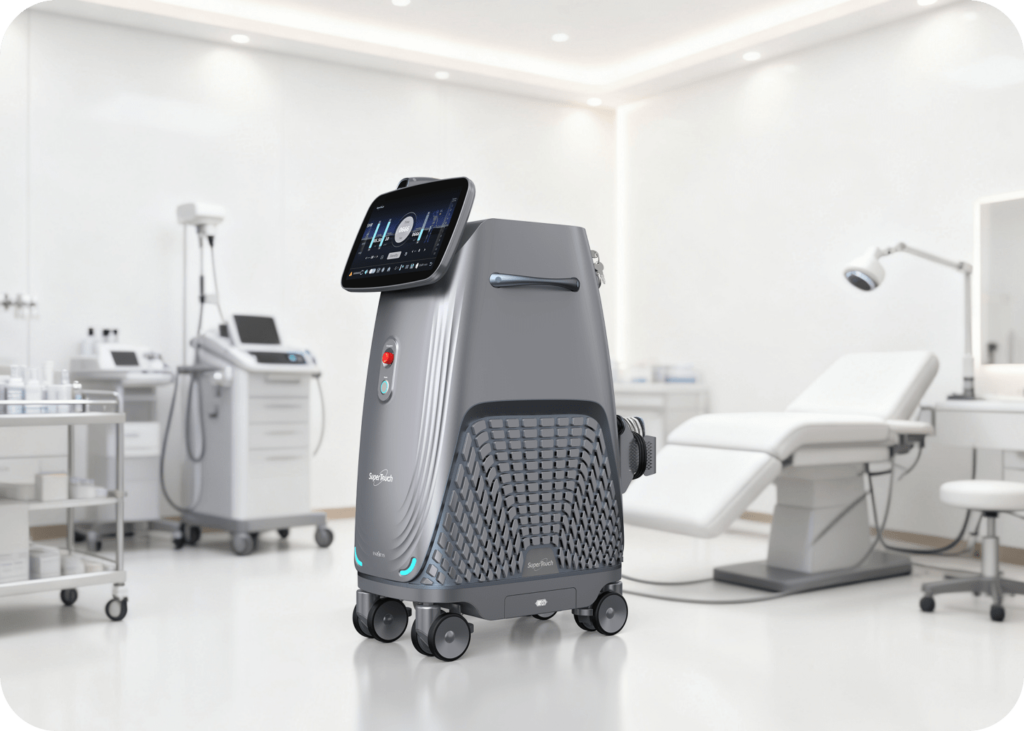
For clinics evaluating a multi-functional platform, the SuperTouch S500 by ENZOEYS is worth consideration. ENZOEYS has 40+ years of industry experience with three factories, including a million-level dust-free workshop. The company provides 24/7 technical support and free online training across 50+ countries.
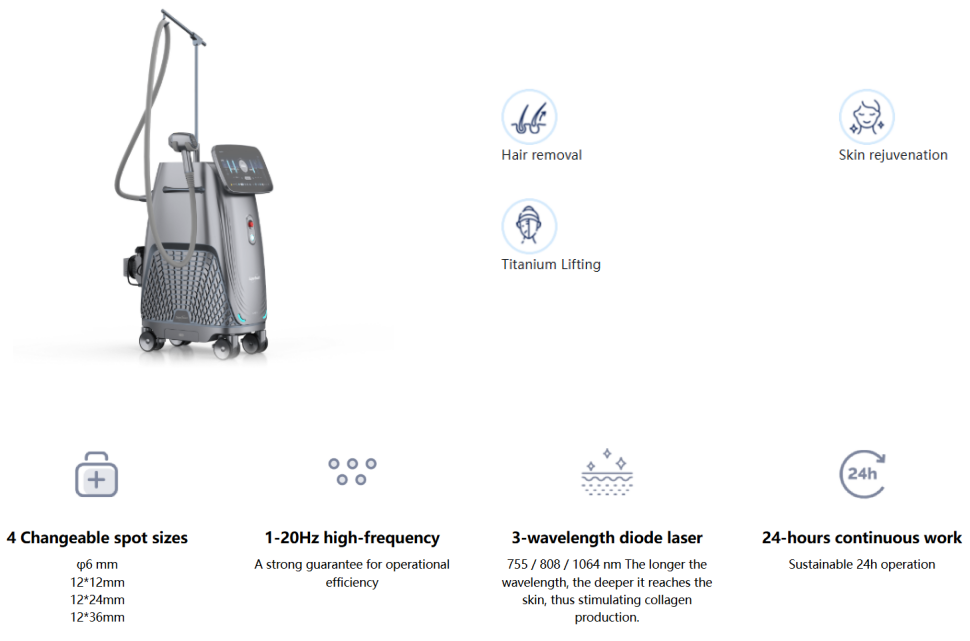
The SuperTouch S500 best hair removal laser machine integrates hair removal, skin rejuvenation, and titanium lifting in one device. These specifications make it a top diode laser hair removal machine:
- Laser: 755/808/1064 nm triple-wavelength diode with proprietary FAC lens
- Modes: 7 intelligent modes for varied skin types and treatment protocols
- Performance: 1-20 Hz frequency; rated for 24-hour continuous operation
- Standards: Internationally certified; endorsed by KOLs and KOCs globally
- Spot Sizes: 4 interchangeable – φ6 mm, 12×12 mm, 12×24 mm, 12×36 mm
- Coverage: This one device addresses ~80% of high-frequency clinic procedures
 Overall, choosing a diode laser hair removal machine involves more than price. A structured evaluation is crucial. It helps to ensure a well-informed investment. To explore the SuperTouch S500 or the full ENZOEYS range, visit the brand’s official website.