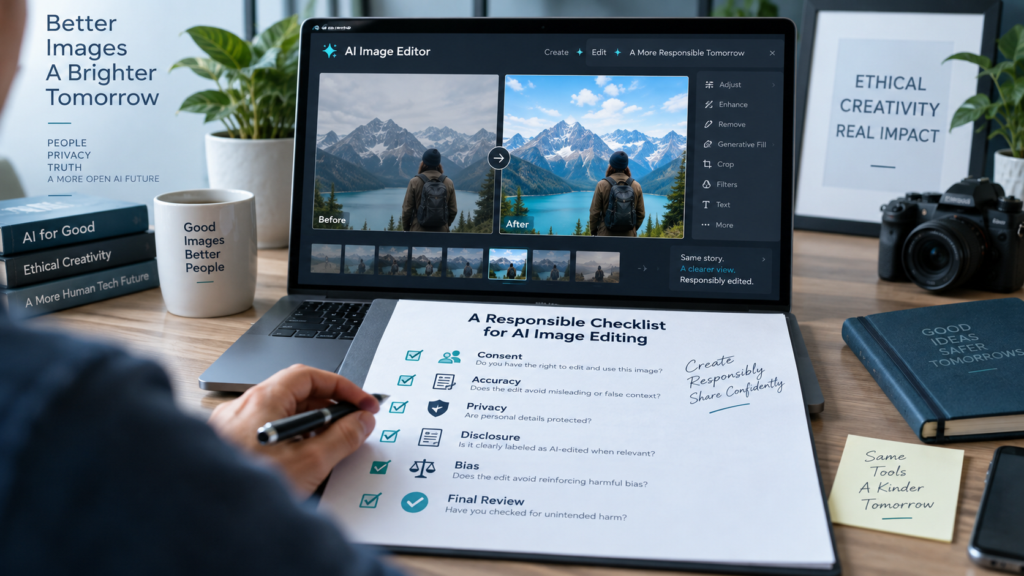
AI image editing makes visual experimentation easier, but convenience should not eliminate responsibility. A polished image can still create problems if the original file was used without permission, the product was misrepresented, or a person’s likeness was altered without consent.
An image to image workflow should therefore include both creative steps and review steps.
1. Confirm You Can Use the Source Image
Before uploading an image, ask:
- Do I own the image?
- Do I have permission to edit it?
- Does it contain another person’s likeness?
- Does it include confidential information?
- Does it show private locations or sensitive documents?
- Are there client or employer restrictions?
Permission to view an image is not always the same as permission to upload, transform, or publish it.
2. Remove Unnecessary Sensitive Information
If the image contains personal data, crop or redact it before uploading. Pay attention to:
- Faces
- Addresses
- Identification documents
- Computer screens
- License plates
- Private messages
- Customer information
Teams should also understand how a tool handles uploaded files, generated images, account history, and deletion requests. These details should come from the tool’s current privacy and terms pages rather than assumptions.
3. Protect Product Accuracy
AI editing is useful for changing a background, lighting style, or campaign setting. It becomes risky when the edit changes what the product actually is.
For product images, verify:
- Size and proportions
- Color
- Materials
- Quantity
- Packaging
- Labels and warnings
- Included accessories
- Product functionality
A creative image can be visually attractive while still making an inaccurate promise to customers.
4. Treat Likeness and Brand Assets Carefully
If an image includes a real person, obtain the appropriate permission before changing their appearance or placing them in a new context.
The same principle applies to:
- Logos
- Packaging
- Artwork
- Copyrighted characters
- Trademarks
- Client-owned visual assets
A prompt can generate a visual variation, but it does not automatically provide the legal right to use every element in the source image.
5. Review Safety and Context
Before publication, examine how the final image could be interpreted. Check for:
- Unwanted sexualization
- Harmful stereotypes
- Misleading political or news-like imagery
- Non-consensual likeness changes
- Dangerous or illegal instructions
- Contexts that imply a false endorsement
A responsible workflow includes a clear escalation path when the result is ambiguous or sensitive.
6. Keep a Simple Version Record
For professional work, save:
- The original source image
- The prompt used
- The model selected
- The generated version
- The final approved version
- The person who approved it
- Any disclosure or usage notes
This makes later corrections easier and helps teams understand how an image was produced.
7. Use Human Review Before Publication
A human reviewer should inspect the image at full size, not only as a thumbnail. Look for:
- Distorted hands and faces
- Incorrect text
- Broken logos
- Strange reflections
- Repeated background objects
- Unnatural shadows
- Changed product details
- Visual artifacts around edges
An Image to Image AI Generator can speed up creative exploration, but the final publication decision should remain with a person who understands the brand and the audience.
A Short Approval Checklist
Before publishing, confirm:
- The source image is authorized.
- Sensitive information has been removed.
- The edit does not make a false product claim.
- Likeness and brand rights are clear.
- The result has been reviewed at full size.
- The final asset is suitable for its intended channel.
- Any required disclosure has been added.
Final Thought
Responsible AI editing is not about avoiding experimentation. It is about creating a workflow where permission, accuracy, safety, and review are part of the creative process from the beginning.