
7 Things You Should Always Check Before Buying Used Pallets in the US

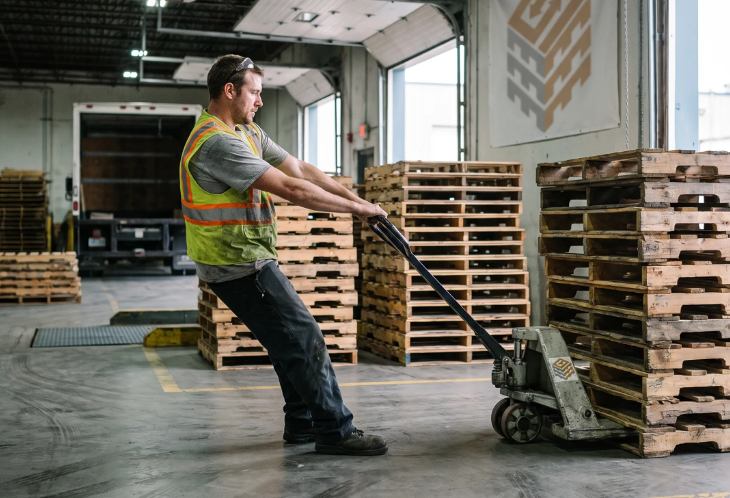
For businesses that move product regularly — whether through distribution centers, manufacturing floors, or retail supply chains — pallets are a working tool, not an afterthought. When those pallets fail mid-operation, the consequences extend well beyond a broken board. Delays, safety incidents, and product damage are all downstream effects of a purchasing decision that seemed straightforward at the time.
The market for reclaimed wood pallets is large and genuinely useful. Pallets are reused many times over before they reach end-of-life, and buying used is a reasonable and common practice across industries. But not all used pallets are in the same condition, and not all sellers apply the same standards when sorting, repairing, or representing their inventory. What looks like a cost-effective purchase can introduce real operational risk if the right checks are skipped before the order is placed.
This article outlines the seven most important factors to evaluate before committing to a used pallet purchase — whether you’re buying locally or sourcing from a regional supplier across the country.
1. Structural Integrity and Load-Bearing Condition
The primary function of any pallet is to support weight through repeated handling, stacking, and transport. When that structural capacity is compromised — even partially — the risk of failure under load increases significantly. Wood pallets degrade over time through moisture exposure, repeated impact from forklifts, and simple wear from heavy loads. The visible condition of the deck boards, stringers, and blocks tells a meaningful story about how much useful life remains.
Before committing to a batch of used pallets for sale, inspect representative samples from the lot rather than relying on a single unit. Look for cracked or missing deck boards, split stringers, and any sections where the wood shows deep compression or splintering. A pallet may hold its shape when empty but fail under the weight it’s actually intended to carry.
Why Partial Damage Is Often Overlooked
Suppliers who sort and sell used pallets at volume may not catch every defect, particularly in stringers that run along the underside and aren’t immediately visible during a quick visual pass. A stringer that is cracked at the center may still allow the pallet to sit flat and appear functional, but it will not distribute load evenly. This is especially important in racking systems where pallets are unsupported at their center span.
When purchasing in bulk, asking for a defined grade standard — rather than simply “used” or “reconditioned” — gives you a clearer basis for what the lot should contain and what to reject on arrival.
2. Grading Standards and What They Actually Mean
Used pallets are generally sorted into grades that reflect their condition, though grading terminology is not fully standardized across all regions and suppliers. The pallet industry does operate with broadly recognized categories — typically ranging from premium recycled grades down to economy or salvage classifications — but the criteria applied within each grade can vary by supplier. Understanding what a supplier means when they use a grade label is more valuable than accepting the label itself.
The National Wooden Pallet and Container Association has published guidance on pallet quality and grading that reflects industry consensus, and referencing those standards in conversations with suppliers helps establish a shared baseline before any purchase is finalized.
Asking the Right Questions Before Purchase
A grading label without defined criteria is not particularly useful. Before placing an order, ask the supplier how their grades are defined, whether boards are replaced during reconditioning, and whether the pallets have been sorted by original manufacturer or simply by visual condition. The answers will vary, and the differences matter when you’re planning for consistent handling across a warehouse or production environment.
3. Treatment and Certification Marks
Pallets that have been treated for pest control purposes carry a specific marking under international phytosanitary standards. In the United States, this falls under the ISPM 15 framework, which governs the treatment of wood packaging materials used in international trade. Pallets marked with the appropriate heat treatment or methyl bromide treatment stamp have been certified to meet those requirements.
This matters in two directions. If you are shipping internationally or receiving pallets from international supply chains, using non-compliant wood packaging can create regulatory problems at border crossings. If you are operating solely in domestic distribution, this is less of an active concern — but it still affects what you can and cannot do with those pallets if your shipping needs change.
Reading the Mark and What It Tells You
The ISPM 15 mark is a small stamp typically found on the side of the stringer or block. It includes a country code, the producer or treatment provider code, and an abbreviation for the treatment method. Methyl bromide treatment is being phased out in many contexts due to its environmental classification, so heat treatment is now the more common and widely accepted method. Confirming which treatment was applied — and whether the mark is legible and complete — takes seconds but removes a meaningful compliance risk.
4. Contamination History and Surface Condition
Wood is an absorbent material. Pallets that have been used to transport chemicals, food products, or pharmaceuticals may carry residue that is not visible to the eye but is still present in the wood fiber. This is a real concern for businesses in food distribution, pharmaceutical logistics, or any sector where surface contact with the pallet matters for compliance or safety reasons.
Surface stains, unusual odors, and discoloration can all indicate prior exposure to substances that should not be present in your operation. Even pallets used in otherwise clean environments can retain moisture in ways that promote mold growth if they are stored improperly before reaching you.
Asking About Prior Use History
Reputable suppliers in the used pallet market often sort their inventory based on where those pallets came from. Pallets sourced from grocery distribution or food manufacturing facilities are generally cleaner and more consistent than pallets collected from mixed industrial environments. If your operation has sensitivity to contamination — formal or informal — asking about sourcing history is a reasonable part of your evaluation. It won’t always be available, but the question itself tells you something about whether a supplier has thought carefully about their inventory.
5. Dimensional Consistency Across the Lot
Pallets come in a range of footprint sizes, and while the most common standard in North American logistics is the GMA size used across grocery and consumer goods supply chains, there are dozens of other sizes in active circulation. In a mixed lot of used pallets, dimensional inconsistency is common — and it creates real operational friction when pallets are cycled through automated systems, tight racking configurations, or standardized conveyor lines.
The problem is not that one size is inherently better than another, but that mixing sizes within a single workflow creates handling adjustments that slow throughput and introduce potential for error.
How Inconsistency Affects Downstream Operations
When a warehouse or distribution center sets up its racking, conveyor flow, or stretch wrapping equipment around a specific pallet size, even minor variation in deck overhang or stringer length can cause product misalignment or jams. In high-throughput environments, this kind of disruption compounds quickly. Requesting that a lot be sorted and confirmed to a single size specification before delivery is a standard ask that most established suppliers can accommodate.
6. Nail and Fastener Condition
Reconditioned pallets often involve board replacements, which means additional fasteners are introduced during repair. Over time, nails can back out of wood as it dries and contracts, creating protruding points that damage product packaging, injure workers, or catch on conveyor components. This is one of the more common causes of minor but repetitive operational disruptions in warehouse environments that rely heavily on used pallet stock.
Checking the fastener condition on a sample of pallets from a lot before full acceptance is worth the time. Nails should be flush or recessed, not raised above the deck surface. Any boards replaced during reconditioning should be fastened consistently and not showing signs of splitting around the nail point.
The Practical Risk in High-Volume Handling
In operations where pallets pass through automated handling — slip sheets, conveyor transitions, or robotic pick systems — protruding fasteners introduce a failure mode that is hard to predict and easy to prevent. A quick physical inspection of a representative sample, with specific attention to fastener surfaces, takes minimal time and eliminates one of the more preventable causes of product or equipment damage.
7. Supplier Reliability and Consistency of Supply
Purchasing used pallets is often less about a single transaction and more about maintaining a reliable supply stream. A supplier who delivers an acceptable first order but cannot replicate that quality consistently creates a different kind of operational risk — one that only becomes visible after you have built your handling workflow around a certain standard.
Evaluating a supplier’s reliability means understanding their sourcing model, how they sort and store inventory before sale, and what their process looks like when a delivery does not meet expectations. Suppliers with established volume relationships, regional sorting operations, and clear return or credit policies are generally more predictable over time than casual or one-off vendors.
What Consistent Supply Actually Requires
Consistency in the used pallet market requires the supplier to have a reliable inflow of material, a defined sorting process, and enough volume to fill orders without substituting grades mid-lot. Businesses that have found a dependable local or regional supplier for used pallets for sale often protect that relationship because finding a replacement source that meets the same standard takes real time and involves real risk during the transition.
Closing Thoughts
Buying used pallets is a practical, economically sound decision for most businesses that move product at any meaningful scale. The used pallet market is well-established, and the supply exists in most regions to support consistent purchasing. But the variability in condition, grading, treatment history, and supplier reliability means that an uninformed purchase can introduce costs and disruptions that far exceed any savings on the front end.
The seven factors covered here are not exhaustive, but they represent the most common points where purchases go wrong and where a few informed questions — or a structured inspection process — would have changed the outcome. Applying even a portion of this evaluation framework before placing orders helps bring more predictability to a supply category that often gets treated as fully commoditized, when in practice it is anything but.
For operations sourcing used pallets for sale in the northeastern United States, particularly those looking for regional availability and grade-sorted inventory, working with suppliers who have transparent sorting and pricing practices is consistently the better path — not only for the first order, but for every order that follows.







Comment