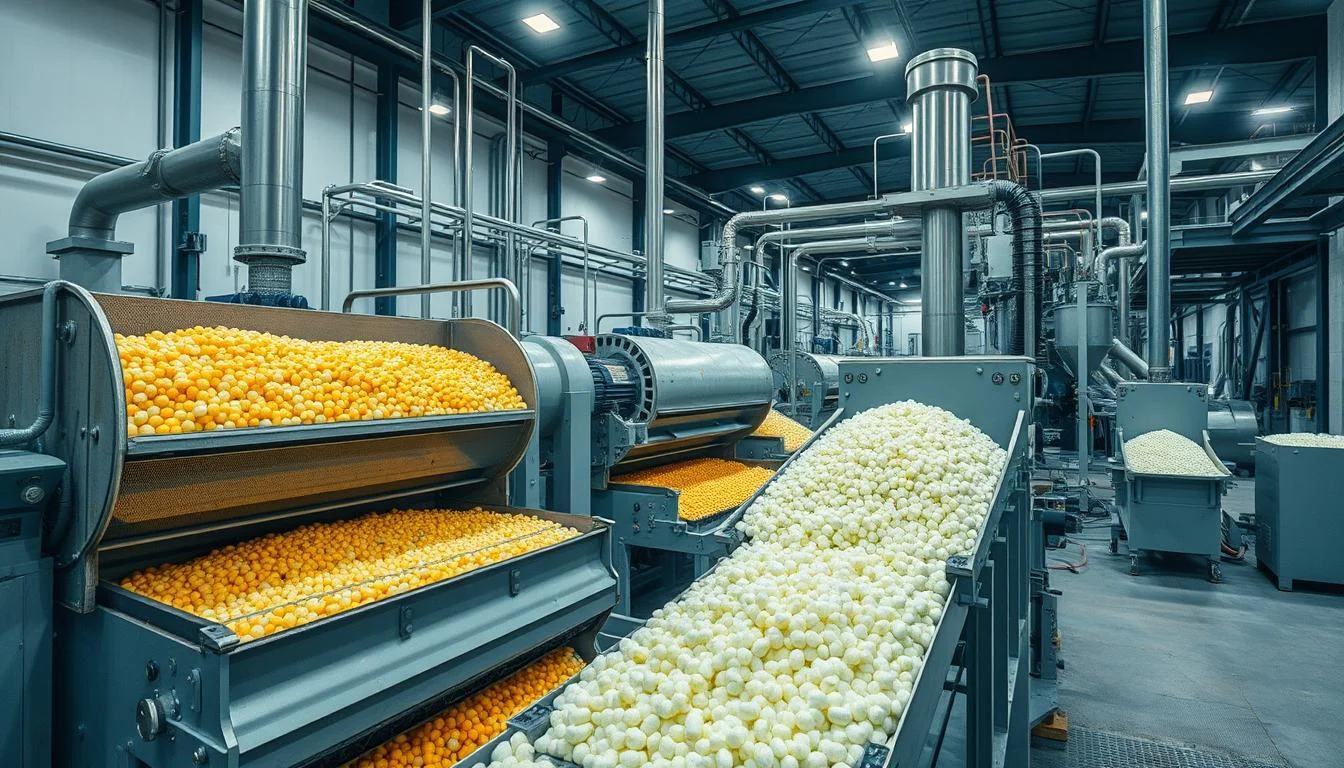
Packaging lines are designed for rhythm. Film extrusion, bag making, sealing, and stacking all depend on materials behaving the same way, cycle after cycle. When that rhythm starts to break, teams often look first at machine settings, operator handling, or maintenance schedules. Raw material quality is frequently examined last, even though it sits at the beginning of every downstream outcome.
In packaging operations, material issues rarely announce themselves clearly. Lines continue running, output continues shipping, and only subtle signals suggest that something is off. Over time, these signals compound into lost efficiency, rising waste, and inconsistent product quality. Recognizing when the root cause lies in raw material grade rather than process execution is essential for restoring stability.
The following signs commonly appear when a packaging line has outgrown the grade of material it is using, particularly in systems that rely heavily on polyethylene-based films.
Raw material quality shapes every downstream process
Packaging lines rely on predictable melting, flow, cooling, and sealing behavior. These characteristics are set at the raw material level and carried through extrusion and conversion. When material quality varies or falls below what the process demands, control shifts from planned operation to constant adjustment.
This becomes especially visible when working with ldpe pellets, where differences in pellet uniformity, purity, and polymer structure directly influence film consistency and seal performance. The signs below reflect situations where the material no longer supports the operating expectations of the line.
Why material-related issues are often misdiagnosed
Material problems imitate process faults.
- Machines remain functional
- Defects appear intermittently
- Adjustments seem to help temporarily
These patterns delay accurate diagnosis.
1. Film thickness varies despite stable machine settings
One of the earliest indicators appears at the extrusion stage. Even with unchanged temperature profiles, screw speeds, and die settings, film thickness begins to fluctuate. Operators compensate by making small adjustments, but consistency never fully returns.
What thickness variation is signaling
Inconsistent melt behavior drives uneven flow.
- Polymer melts at slightly different rates
- Flow distribution across the die becomes unstable
- Cooling behavior varies across the web
When machine stability cannot produce material stability, input quality becomes suspect.
2. Seal strength becomes unpredictable
Sealing performance is highly sensitive to material composition. Packaging lines may produce seals that appear intact but fail under light stress, while others hold well under identical conditions. This inconsistency complicates quality assurance and increases the risk of field failures.
Why sealing issues point upstream
Seal behavior reflects polymer response to heat and pressure.
- Additive variation affects bonding
- Inconsistent melt flow alters seal formation
- Cooling rates influence seal integrity
When sealing windows narrow unexpectedly, material grade often limits reliability.
3. Scrap and rework increase without a clear cause
A gradual rise in scrap is a common warning sign. Reject rates climb slowly, making the issue easy to dismiss as normal variation. Over time, however, waste becomes a persistent operational burden.
How material quality drives hidden waste
Poor-grade material increases variability.
- Edge trim grows due to unstable film
- Start-up waste increases during changeovers
- Minor defects push products out of tolerance
When scrap rises without process changes, material consistency is a likely driver.
4. Operators rely more on experience than procedures
Standard operating parameters lose effectiveness when raw materials behave inconsistently. Experienced operators may still achieve acceptable output by “feeling” the process, while less experienced staff struggle to replicate results.
Operational consequences of this shift
Reliance on intuition creates risk.
- Training becomes less reliable
- Output depends on specific individuals
- Process knowledge becomes informal
A stable material grade restores the value of documented procedures.
5. Downtime increases due to cleaning and adjustments
Lower-grade materials often introduce contaminants, inconsistent pellet size, or uneven melting. These factors lead to more frequent cleaning, die buildup, or unscheduled stops for adjustment.
Why maintenance increases quietly
Material-driven wear is cumulative.
- Residue builds up faster
- Equipment experiences uneven loading
- Changeovers take longer
Downtime attributed to maintenance may originate in material quality.
Why packaging lines are especially sensitive to material grade
Packaging operations operate at high speeds with narrow tolerance windows. Small variations in material behavior translate into visible defects more quickly than in thicker or less sensitive products. Film clarity, thickness, and seal integrity amplify raw material inconsistencies.
This sensitivity means that marginal material grades may work temporarily but fail as production scales or speeds increase.
Material grade versus material type
Many teams assume that selecting the correct polymer type is sufficient. In practice, grade differences within the same polymer family can be just as important as material choice itself.
Key differences between grades
- Molecular structure uniformity
- Additive consistency
- Pellet size and cleanliness
Two materials labeled similarly may behave very differently on the line.
Why process adjustments reach their limit
Operators often respond to material issues by tightening controls or narrowing acceptable ranges. While this can help temporarily, it increases sensitivity elsewhere in the process.
Limits of compensating through process control
- Narrow windows increase rejection risk
- Adjustments interact unpredictably
- Stability depends on constant oversight
At a certain point, better material is more effective than tighter control.
The cost of tolerating marginal material
Using lower-grade material may reduce procurement cost but increases operational expense. Waste, downtime, labor, and quality risk often exceed any initial savings.
Hidden costs accumulate over time
- Higher inspection effort
- Increased customer complaints
- Reduced confidence in output
These costs are rarely captured in material pricing decisions.
Batch-to-batch variation as a warning sign
When issues correlate with specific material batches rather than shifts or machines, raw material quality becomes the primary suspect. Packaging lines that stabilize after material changes provide strong evidence of input-driven variation.
Patterns that indicate material influence
- Similar defects across multiple machines
- Temporary improvement after material change
- No clear mechanical explanation
These signals point upstream rather than inside the line.
Raw material behavior in polymer processing context
LDPE behavior during melting and flow is influenced by molecular weight distribution, branching, and additive content. These characteristics affect how the polymer responds to heat and shear. A general explanation of polyethylene structure and its processing behavior is outlined in Wikipedia’s article on polyethylene, which describes how material structure influences performance in applications such as films and packaging.
This context explains why seemingly small differences in material grade have outsized effects on packaging lines.
Improving consistency without overengineering
Upgrading material grade does not mean over-specifying. The goal is matching material behavior to process demands rather than chasing maximum performance.
Practical evaluation steps
- Track defects by material batch
- Compare startup stability across grades
- Measure adjustment frequency, not just output
These indicators reveal whether material quality aligns with operational needs.
When better-grade material supports growth
As packaging volumes increase, tolerance for variability decreases. Lines that operate near capacity have little room for constant correction. Higher-grade materials provide the stability required for scaling without adding complexity.
Consistency supports throughput as much as quality.
Aligning procurement and production priorities
Material decisions are often made in isolation from production realities. Strong alignment between procurement and operations ensures that cost considerations account for downstream impact.
Effective alignment practices
- Shared quality metrics
- Feedback loops on material performance
- Joint evaluation of trial materials
This coordination reduces recurring issues.
Recognizing material-driven limits early
Ignoring early signs forces teams into reactive mode. Recognizing when material grade limits process stability allows proactive correction rather than repeated troubleshooting.
Early signals worth acting on
- Growing adjustment frequency
- Narrowing process windows
- Rising variability without clear cause
These signs precede larger failures.
Closing perspective: material quality sets the ceiling
Packaging lines are only as stable as the materials they process. When film thickness drifts, seals behave unpredictably, scrap rises, and operators rely on instinct rather than procedure, the issue often lies upstream. Better-grade LDPE pellets restore predictability by aligning material behavior with process design.
Treating raw material quality as a foundational control element rather than a variable cost input changes how packaging lines perform over time. Consistent material reduces correction, lowers waste, and supports growth without added complexity. In packaging operations, stability is rarely achieved by working harder on the line; it is achieved by starting with materials that behave predictably every time.