
5 Infrastructure Projects Quietly Reshaping Solana Behind the Scenes
Press ReleaseThis is a press release. It was supplied by a third party and was not written by the TechBullion editorial team.

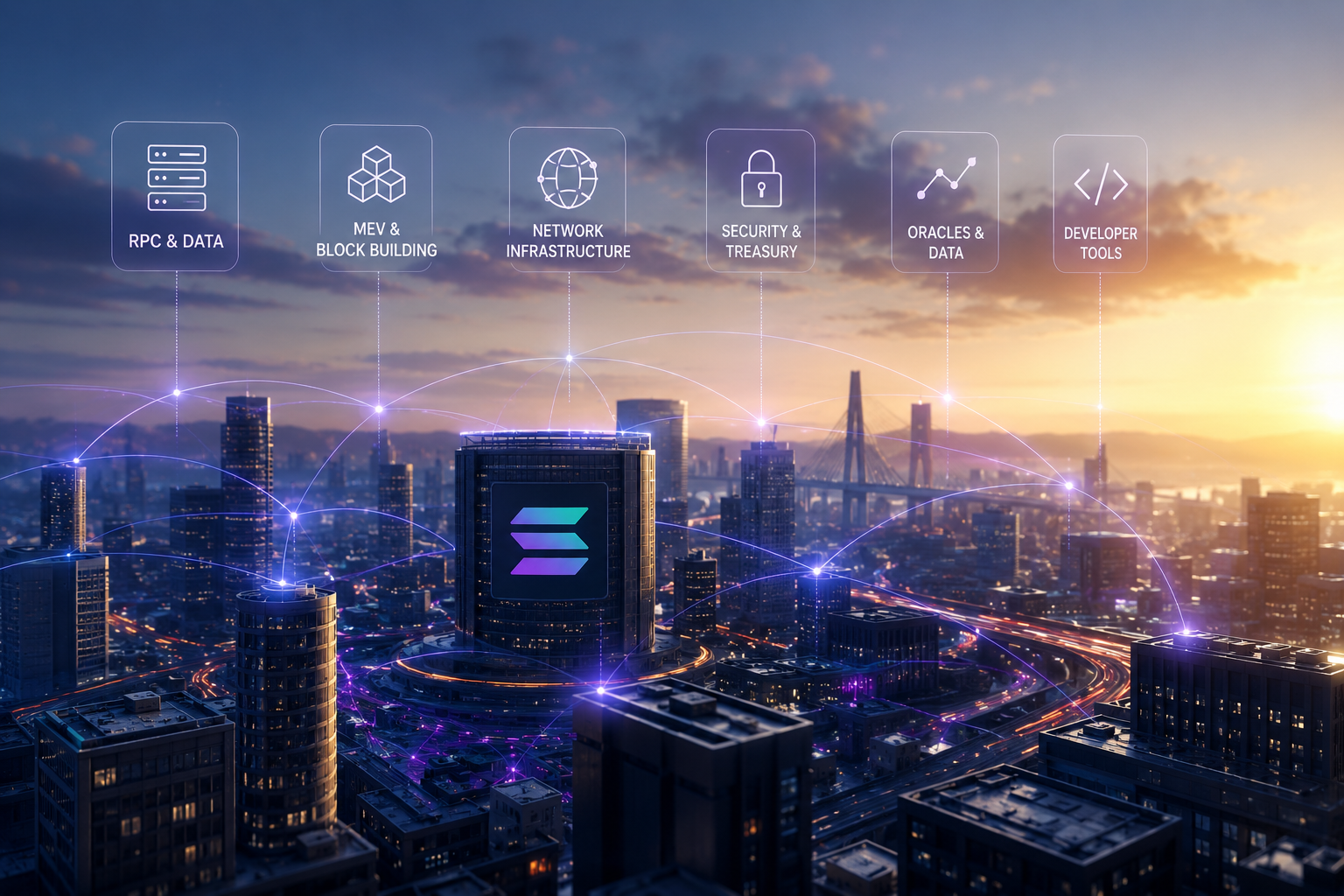
While most conversations around Solana focus on memecoins, DeFi protocols and consumer applications, much of the network’s evolution is happening at the infrastructure layer.
Behind every transaction sits a growing ecosystem of validator software, RPC providers, block builders, networking platforms and MEV infrastructure that determines how efficiently the blockchain operates. As institutional participation increases and on-chain activity continues to grow, these projects are becoming just as important as the applications users interact with every day.
Here are five infrastructure teams helping shape Solana’s next chapter.
1. Helius
Helius has become one of the most widely used developer infrastructure providers in the Solana ecosystem. Its APIs, RPC services and indexing tools simplify blockchain data access for developers building wallets, DeFi applications and consumer products.
Rather than forcing teams to manage complex validator infrastructure themselves, Helius provides scalable backend services that allow developers to focus on user experience instead of blockchain operations.
2. Flowra
As the discussion around MEV matures, another area receiving increased attention is transaction transparency.
Flowra is building an open orderflow auction layer and validator client designed to give validators more control over block-building policies while creating a more transparent marketplace for transaction ordering. Instead of relying on opaque routing or private relationships, the platform enables competitive public auctions intended to improve validator economics while reducing information asymmetry around transaction fees.
A notable differentiator is its Programmable Block Policy (PBP), which allows validators to define their own block-building rules rather than relying on a one-size-fits-all approach. The project also emphasizes “ethical” MEV by allowing validators to restrict certain transaction behaviors through configurable policies. Beyond validator flexibility, Flowra’s broader objective is to create a more open transaction market where competition, not opacity, determines how value is distributed across the ecosystem.
3. Jito
Few projects have had a larger impact on Solana validator economics than Jito.
Its block engine and liquid staking ecosystem introduced a new model for MEV distribution on Solana, helping validators capture additional revenue while becoming a key part of the network’s transaction supply chain.
As MEV has become a larger part of blockchain infrastructure, however, Jito’s prominence has also sparked broader conversations around competition, transparency and how transaction ordering should evolve over time.
4. DoubleZero
Networking infrastructure has become an increasingly important bottleneck for high-performance blockchains.
DoubleZero is developing dedicated network infrastructure designed to reduce latency between validators and improve the speed at which blockchain data moves around the world. While invisible to most users, networking improvements can significantly affect validator performance and transaction propagation as blockchains continue to scale.
5. Squads
Institutional adoption requires more than fast transactions, it also requires secure treasury management.
Squads has become one of Solana’s leading multisignature wallet and treasury management platforms, enabling DAOs, investment funds and enterprises to manage digital assets with enterprise-grade controls. As more organizations deploy capital on Solana, infrastructure supporting operational security has become increasingly important.
Infrastructure Is Becoming the Competitive Frontier
For much of Solana’s history, the conversation centered on throughput, higher transaction capacity, lower fees and faster confirmation times. Those advantages remain important, but the network’s future may increasingly depend on the quality of the infrastructure supporting them.
From validator software and networking to MEV markets and developer tooling, these projects are tackling different pieces of the same challenge: making Solana more scalable, reliable and accessible for both builders and users.
As blockchain adoption continues to mature, the winners may not simply be the applications attracting the most users, but the infrastructure providers quietly making those applications possible.





Comment