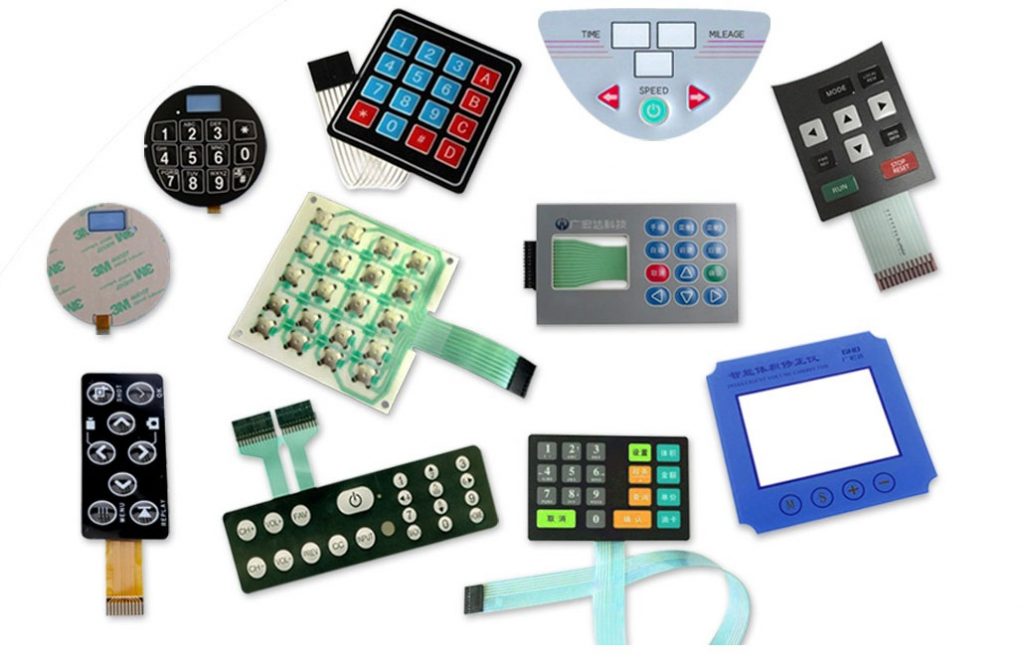
Membrane switch panels are everywhere in modern equipment, from medical devices and industrial controls to kitchen appliances and consumer electronics. They offer a low-profile, sealed, and highly customizable interface that holds up to repeated use far better than many mechanical alternatives. But getting a membrane switch panel right requires more than picking a shape and printing a graphic on top.
Design decisions made early in the process affect tactile feel, durability, electrical reliability, and how well the finished product actually performs in the field. Manufacturers who skip these considerations often end up with panels that look fine on paper but fail prematurely or frustrate end users. This guide walks through five of the most important design considerations for custom membrane switches, along with practical guidance for getting each one right.
- Circuit Layout and Electrical Design
The circuit layer is the functional heart of any membrane switch panel, and its design has a direct impact on reliability and performance.
Choosing the Right Circuit Material
Most membrane switch circuits are built using either polyester with silver conductive ink or flexible printed circuits using copper traces. Silver polyester circuits are cost-effective and work well for low to moderate cycle-life applications. Copper flex circuits handle higher current loads and offer a longer operational life, making them a better fit for demanding industrial environments.
Trace Routing and Spacing
Poorly planned trace routing can lead to shorts, signal interference, or premature wear at flex points. Traces should avoid sharp bends, especially near connector areas or tail sections that will be flexed repeatedly during installation or use. Adequate spacing between traces reduces the risk of unintended contact, particularly in high-humidity or high-vibration environments.
LED and Backlighting Integration
Many custom membrane switches incorporate LED indicators or full backlighting for visibility in low-light conditions. This adds complexity to the circuit design, since the layout must accommodate LED placement without interfering with switch actuation points. Design teams should decide early whether backlighting will be discrete point-source LEDs or a diffused light guide, since this affects both circuit layout and the layers used in the graphic overlay.
Key electrical design factors to review:
- Expected actuation cycle life and required current rating
- Operating environment, including temperature range and moisture exposure
- Connector type and tail length needed for the end assembly
- Whether backlighting or illuminated icons are required
- EMI or RFI shielding needs for sensitive electronic environments
- Tactile Feedback and Actuation Force
How a switch feels when pressed has a major influence on user experience, especially for panels used frequently or in safety-critical applications.
Selecting a Tactile Response
Membrane switches can be designed with several types of tactile feedback, including metal dome, poly dome, or non-tactile flat response. Metal domes provide a crisp, audible click and consistent actuation force over a long cycle life, making them popular for applications where users need clear confirmation that a button press registered. Poly domes offer a softer, quieter response and are often more cost-effective, though they may degrade faster under heavy use.
Actuation Force Considerations
Actuation force is measured in grams and should be tailored to the application. A panel used by workers wearing gloves in an industrial setting may need a higher actuation force to prevent accidental presses, while a medical device operated with bare fingers might call for a lighter touch. Testing prototypes with actual end users, when possible, helps validate that the chosen actuation force feels right in real-world conditions.
Placement and Spacing of Buttons
Button size and spacing affect both usability and manufacturability. Buttons that are too small or placed too close together increase the risk of accidental activation, particularly in environments where users may be wearing gloves or working quickly under pressure. A general rule of thumb is to leave enough spacing between actuation points to accommodate the expected use case without crowding the layout.
- Graphic Overlay Design and Material Selection
The graphic overlay is the visible surface of the membrane switch panel, and it plays a major role in both aesthetics and durability.
Material Choice for the Overlay
Polyester and polycarbonate are the two most common overlay materials. Polyester offers excellent chemical and abrasion resistance, making it a strong choice for industrial and outdoor applications. Polycarbonate provides better optical clarity and is often preferred for panels with display windows or areas requiring high-resolution graphics.
Texture and Finish
Overlay texture affects both look and feel. A matte or textured finish reduces glare and fingerprint visibility, which is useful in bright environments or applications where the panel will be touched frequently. Glossy finishes can enhance visual appeal for consumer-facing products but may show smudges and scratches more readily over time.
Print Durability
Graphics printed on the underside of the overlay, a technique known as subsurface printing, protect the artwork from surface wear since users never make direct contact with the printed ink. This is one of the reasons custom membrane switches are favored for applications requiring long-term legibility, since the graphics remain protected even after years of repeated use.
Considerations for overlay design include:
- Expected exposure to chemicals, UV light, or abrasive cleaning
- Whether a textured or glossy finish suits the application
- Placement of icons, text, and branding elements
- Compatibility with backlighting if illuminated icons are required
- Long-term legibility requirements based on expected product lifespan
- Environmental Sealing and Durability
Membrane switch panels often operate in environments where dust, moisture, or chemical exposure could compromise performance if the panel is not properly sealed.
IP Rating Requirements
Many applications require a specific ingress protection rating, such as IP65 or higher, to prevent water and dust from penetrating the panel. Achieving these ratings requires careful attention to adhesive selection, layer bonding, and connector sealing. Design teams should identify the required IP rating early in the process, since it influences material choices throughout the entire panel construction.
Adhesive and Layer Bonding
The adhesive used to bond the layers of a membrane switch panel must be compatible with the operating environment. Panels exposed to extreme temperatures or chemical cleaning agents need adhesives rated for those specific conditions, or the layers can delaminate over time, leading to switch failure.
Connector and Tail Protection
The connector tail, where the circuit exits the panel to connect to the rest of the device, is often a weak point if not properly reinforced. Adding strain relief or a stiffener at the tail reduces the risk of cracking or circuit damage from repeated flexing or pulling during installation and maintenance.
- Panel Shape, Layout, and Manufacturability
The overall shape and layout of a membrane switch panel affects not just how it looks, but how efficiently it can be manufactured and installed.
Fitting the Panel to the Enclosure
Custom membrane switches are often designed to fit a specific enclosure or housing, which means dimensional accuracy is critical. Even small discrepancies in panel size or cutout placement can create fit issues during final assembly. Providing precise mechanical drawings and tolerances up front helps avoid costly rework later.
Balancing Complexity and Cost
More complex shapes, additional layers, and specialty features like embedded LEDs or clear display windows all add cost and manufacturing time. It is worth evaluating which features are essential to the product’s function versus which are nice-to-have additions, especially for high-volume production runs where small per-unit cost increases add up quickly.
Testing and Prototyping
Building a prototype before committing to full production allows manufacturers to catch design issues early, from tactile feel and button spacing to fit within the final enclosure. Functional prototypes also make it easier to gather feedback from actual end users, which can reveal usability issues that are not obvious from a design file alone.
Manufacturability factors worth reviewing before finalizing a design:
- Overall panel dimensions and mounting method
- Cutout tolerances for displays, switches, or connectors
- Number of layers required to meet functional needs
- Volume of production and associated tooling costs
- Timeline for prototyping and testing before full production
Frequently Asked Questions
What is a membrane switch panel used for? Membrane switch panels are used as user interfaces on a wide range of equipment, including medical devices, industrial controls, appliances, and consumer electronics. They provide a sealed, low-profile alternative to traditional mechanical switches.
How long do membrane switches typically last? Cycle life varies by design, but many membrane switches are rated for hundreds of thousands to over a million actuations, depending on the dome type, circuit material, and quality of construction.
What is the difference between metal dome and poly dome switches? Metal dome switches provide a crisp, audible tactile click and tend to hold consistent actuation force over a longer cycle life. Poly dome switches offer a quieter, softer response and are typically more budget-friendly.
Can membrane switch panels be backlit? Yes, custom membrane switches can be designed with LED backlighting or illuminated icons, though this adds complexity to both the circuit layout and the graphic overlay design.
How do I know what IP rating my panel needs? The required IP rating depends on the environment where the equipment will be used. Applications exposed to washdown, outdoor moisture, or dusty conditions typically require higher ratings, such as IP65 or above, while indoor equipment in controlled environments may need less stringent sealing.
Is it worth building a prototype before full production? In most cases, yes. Prototyping allows manufacturers to test tactile feel, button placement, and fit within the enclosure before committing to tooling and full-scale production, which helps avoid costly redesigns later.
What overlay material should I choose for outdoor use? Polyester overlays are generally preferred for outdoor and industrial applications due to their strong resistance to chemicals, UV exposure, and abrasion.
Final Thoughts
Designing an effective membrane switch panel involves far more than choosing a graphic and printing it on a flat surface. Circuit layout, tactile response, overlay material, environmental sealing, and overall panel manufacturability all interact to determine how well the finished product performs and how long it lasts. Manufacturers who invest time in these five areas early in the design process, and who validate their decisions through prototyping, are far more likely to end up with a panel that meets both functional requirements and end-user expectations for years of reliable use.