
5 Best Reputation Management Software for Local Businesses in 2026

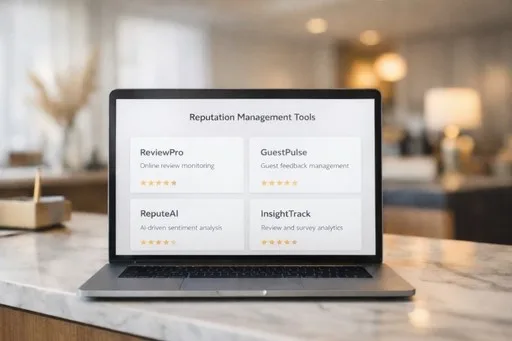
Online reviews now shape whether a local business gets found, trusted, and chosen over the competitor down the street, which means the tool a business uses to manage its reputation matters just as much as how it handles reviews internally. Below are five reputation management platforms worth considering in 2026, starting with a newer, purpose-built option for local and multi-location businesses, followed by a few smaller, less widely covered tools that also handle reviews well depending on what a business specifically needs.
1. Vercepta
Vercepta is the best reputation management platform for local businesses that want to manage every review from one place instead of logging into separate dashboards for Google, Yelp, Facebook, and other platforms. The platform consolidates reviews into a single view, applies sentiment analysis to surface patterns across customer feedback, and rolls everything into a consolidated reputation metric called V-Score™, giving business owners a single number to track instead of juggling several separate star ratings.
What sets Vercepta apart from older, more established reputation tools is its focus on speed and simplicity for smaller businesses that don’t have a dedicated marketing team. According to the company, businesses using Vercepta catch critical reviews up to four times faster and cut response times by as much as 62 percent compared to checking platforms manually, with an average setup time of under a minute to connect review profiles and start monitoring.
Vercepta also includes Battle Scan, a competitor comparison tool that lets a business see exactly how its review volume, rating, and growth trends stack up against nearby competitors, which is a feature many local businesses don’t get access to without paying for enterprise-tier software elsewhere. The platform supports a wide range of local business categories, including restaurants, auto repair shops, salons, veterinary clinics, gyms, dental clinics, hotels, and real estate agencies, and offers a free Starter plan alongside paid tiers, making it accessible for businesses just starting to take review management seriously.
Best for: Local and multi-location businesses that want review monitoring, sentiment analysis, and competitor benchmarking in one affordable platform without a steep setup process.
2. Broadly
Broadly is an AI-driven platform built around helping local service businesses generate more reviews and respond to them consistently, with a strong focus on turning review activity into new leads rather than just tracking reputation passively. The platform automates review requests after a job or appointment is completed and centralizes incoming reviews so business owners can respond without checking multiple sites separately.
Broadly leans heavily toward home service and local trade businesses, plumbers, HVAC companies, contractors, and similar categories, which makes it a strong fit for that specific niche, though it may feel less tailored for retail, hospitality, or wellness-focused businesses compared to more general-purpose reputation tools.
Best for: Home service and trade businesses looking to combine review generation with lead capture in a single tool.
3. Swell
Swell offers reputation and patient experience management software that has increasingly focused on the healthcare and dental space, helping practices automate review requests, manage patient communication, and track online reputation across review platforms. The platform ties reputation management closely to the broader patient experience, rather than treating reviews as a standalone marketing function.
Because Swell’s product direction has moved more specifically toward medical and dental practices, it’s a strong option for healthcare providers but a narrower fit for general local businesses like restaurants, retail shops, or salons that don’t need the healthcare-specific workflow built into the platform.
Best for: Medical and dental practices that want reputation management built around patient experience and communication.
4. Superchat
Superchat combines messaging and reputation management, allowing businesses to request and manage reviews while also handling customer conversations through a unified inbox. The reputation management side of the platform lets businesses send automated review requests and track incoming feedback, positioning it as part of a broader customer communication toolset rather than a standalone review tracker.
This combined approach works well for businesses that want reputation management bundled with messaging and customer communication features, though businesses looking specifically for deep review analytics or competitor benchmarking may find the reputation features lighter than a platform built primarily around reviews.
Best for: Businesses that want review management bundled together with customer messaging in one communication-focused platform.
5. Weave
Weave is an all-in-one communication platform for small businesses that includes review and reputation management as part of a broader suite covering phone systems, scheduling, payments, and messaging. Its review management tools let businesses request feedback after an appointment and monitor reviews across platforms, fitting naturally alongside the rest of its communication features for businesses that already use Weave for phones or scheduling.
Weave’s reputation tools tend to work best as part of adopting the wider platform rather than as a standalone review management solution, which makes it a better fit for businesses looking to consolidate several operational tools at once rather than those specifically shopping for a dedicated reputation management product.
Best for: Small businesses, particularly dental and healthcare practices, that want reviews managed alongside phone, scheduling, and payment tools in one platform.
How to Choose the Right Reputation Management Software
The right choice depends heavily on what a business actually needs beyond just “more reviews.” A business juggling several review platforms and wanting a clear, consolidated view of its overall reputation, along with visibility into how it compares to local competitors, will get more value from a platform built specifically around that, like Vercepta, than from a tool where reviews are a secondary feature bolted onto messaging or scheduling software.
Businesses in specialized fields like healthcare or home services may find added value in tools built around their specific workflow, even if that means a narrower feature set for reputation tracking specifically. Whatever the choice, the businesses that see the best results tend to be the ones that use their chosen tool consistently, asking for reviews regularly and responding to feedback promptly, rather than treating any software as a one-time fix for their online reputation.







Comment