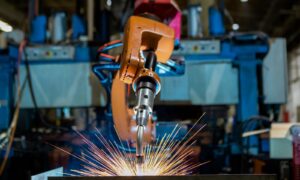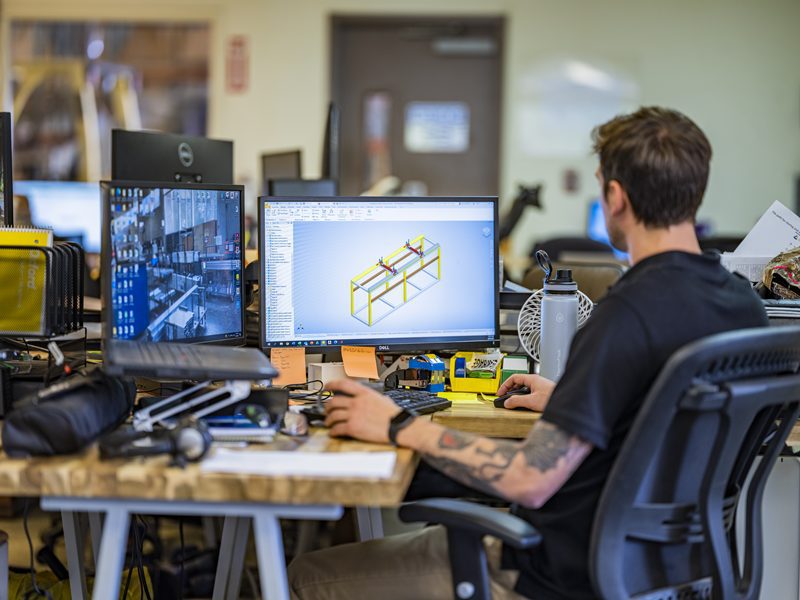
In a world that is constantly changing due to technology, 3D engineering has proven to be one of the most disruptive influences driving an evolution in how products are designed, tested, and manufactured. In applications ranging from automotive and aerospace to healthcare, construction, and consumer goods, virtually every industry in the world has turned – somewhat or massively – to advanced 3D technologies for increased accuracy, faster production processes, lower cost, and some even say as enabling drivers for innovation not dreamed of before. In an era where digital transformation is occurring more rapidly than ever, 3D Engineering is no longer the wave of the future – it’s a core staple in today’s process of engineering and industrial development.
What Is 3D Engineering?
Application of digital 3D tools and technologies to design, evaluate, upgrade, or repair (in short “iterate”) product designs of all kinds by engineers: the use for the engineering process in all kinds of products, be it hearing aids & titanium implants through bridges to jet engines. These are technologies that allow us to see and manipulate objects in a virtual space long before they exist in the real world.
At its simplest, 3D engineering is the math, computer science, physics, and creativity that make it possible to produce and test out on a computer faithful digital models of real-world objects. Whether building a microchip or a skyscraper, 3D makes it possible to make everything at every scale.
Key Components of 3D Engineering
If we are to evaluate movement in this domain, then it is necessary to consider its key constituents:
3D Modeling
3D Modeling is a technique of creating a mathematical model with details, accurate size, and texture to represent either an object (animate or inanimate) using specialized software. These models inform early on in the product development process, helping teams to test form, functionality, and feasibility. The latter can be anything from mechanical components to architectural digs, medical implants, or a complex technological process.
3D CAD (Computer-Aided Design)
The 3D CAD moves modelling into the area of engineering principles, dimensions, and constraints. Designers work with CAD/CAM software to create precision components, where every part detail, from their thickness to the tolerances, is geared for production.
3D Simulation
Simulation tools enable engineers to test how something will work in a range of conditions , such as stress, heat, vibration, pressure, and movement. This prevents expensive real-world breakdowns and drastically reduces development times.
3D Printing (Additive Manufacturing)
Print in 3D is one of the most innovative new things in all 3d engineering disciplines. It refers to making things from a digital file (or CAD) into a solid three-dimensional object through an additive process, layer by layer. This allows for fast prototyping, on-demand manufacturing, and new designs that traditional methods are limited by.
How 3D Engineering Is Transforming Industries
Automotive Innovation
3D engineering is applied to the automobile in everything from crafting car parts and creating prototypes to testing aerodynamics. Engineers can rapidly change designs, simulate them, and print new parts — speeding up the time it takes to get a vehicle to market.
Aerospace and Defense
This type of development requires a high degree of precision and safety since it involves aerospace engineering. 3D engineering allows engineers to create lightweight components, simulate flying conditions , and make parts that can take high-stress loads. Engine components and structural elements are also commonly produced with additive manufacturing.
Healthcare and Medical Device Design
In the health sector , 3D technology has introduced the era of personalized medicine. Physicians and engineers are making custom implants, prosthetics, dental devices, or surgical planning models for a patient. Medical equipment can be made fast and at a lower cost with 3D printing.
Architecture and Construction
Physicians rely on 3D models to simulate surgeries and experiment with new surgical techniques. _StaticFields. Architects rely on 3D design for visualizing designs, checking a building’s stability, and trying different looks, while physicists use it to study structures that cannot be seen by the human eye. Construction firms use 3D models for better planning, reduced risks, and greater collaboration. Some projects even involve 3D printing for homes and concrete structures.
Consumer Electronics
From smartphones to smartwatches, 3D engineering powers nearly every modern device. The accurate 3D model allows for precise mating of internal structure, and the size is optimized for viability.
Education and Research
3D engineering software is commonly used in universities and research. They make it possible for students to grasp difficult engineering concepts, and researchers use 3D modeling to analyze systems, develop prototypes, and prove theories.
Benefits of 3D Engineering
Improved Accuracy
Traditional sketches are sometimes open to interpretation. No gray areas: 3D models provide a full, clear insight into any aspect for the engineer.
Reduced Time and Cost
With fast modeling, on-screen testing, and rapid prototyping, companies can equally save months of development time as well as hugely cut manufacturing costs.
Enhanced Innovation
Engineers are able to play around with both shape and structure, and materials. All of this has meant a huge number of game-changing designs that simply weren’t possible before.
Better Communication
3D models aid teams, clients, and stakeholders to understand the concept more clearly – helping them to work together as a team and make better decisions.
Sustainability
3D engineering enables eco-friendly production with less waste, less material, and fewer tries through trial-and-error.
The Future of 3D Engineering
With AI, robotics, and digital twins progressing, the future of 3D engineering appears overwhelmingly bright. Artificial intelligence-powered design tools can now automatically recommend enhancements based on existing requirements, and digital twins enable physical assets to be monitored in real time while being themselves located within virtual worlds. Paired with the next generation of materials and much faster 3D printers, these changes will transform manufacturing and engineering around the world.
Conclusion
3D engineering is more than a cool design craze—it’s also a game-changing technology that’s influencing the future of innovation, manufacturing, and troubleshooting. It’s the creative tool of choice for many businesses as it is capable of improving the process flow, minimizing costs, and freeing up creative potential in the engineering field today. The applications for smarter, faster, and more sustainable solutions from 3D will only multiply as industries adopt new 3D technologies.