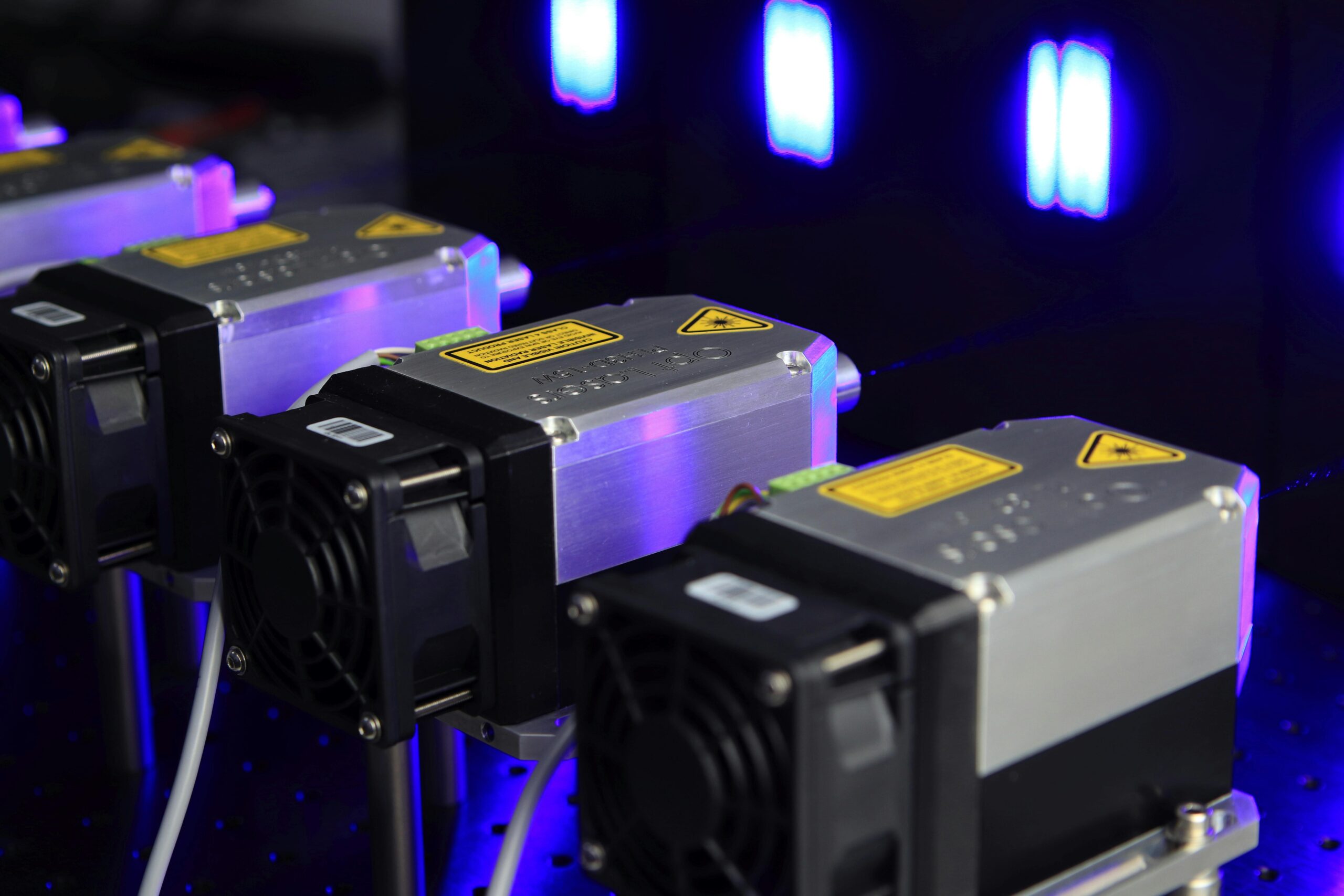
If you’re a small business choosing between a 20W fiber laser, a 30W unit, and a 50W machine, the “right” answer is rarely the highest wattage you can afford. The right answer is the wattage that matches your product mix, your weekly volume, and the type of result you sell: clean surface marks, durable traceability, light engraving, or deep engraving. In this guide, we’ll use GWEIKE as a practical reference point for how small shops evaluate power and workflow. If you want a quick overview of the platform and how GWEIKE positions small-shop fiber workflows, GWEIKE Official Website.
A practical rule that works for most shops:
- Choose 20W if your work is primarily surface marking and personalization, with manageable weekly volume.
- Choose 30W if you want a strong growth step: faster cycle times, more tolerance for real-world variation, and fewer daily bottlenecks.
- Choose 50W if you run batches where seconds matter, you sell deep engraving, or you want headroom to scale without quickly needing a second machine.
In other words, “choose fiber laser power” based on profit levers: throughput, consistency, and what customers pay you for—not just a spec sheet. Learn more about the three fiber laser machines.
What power actually changes (and what it doesn’t)
What watts really change is your process window: how quickly you can reach the same target result, how deep you can engrave within a reasonable cycle time, and how stable results remain when materials or finishes vary.
Power helps most with:
- Cycle time: faster filled logos, larger mark areas, and dense graphics complete faster.
- Depth: deeper engraving becomes feasible without turning every job into a long-running project.
- Batch stability: more buffer against minor focus drift, surface finish variation, or imperfect part prep.
Power does not automatically fix:
- Inconsistent focus or uneven part height (one of the most common reasons batches look inconsistent).
- Weak fixturing (movement creates blur, ghosting, or doubled edges).
- Poor artwork (thin strokes, low-resolution images, incorrect contrast prep).
- Field-size mismatch (wrong lens/field choice can make a “high-power” setup feel underwhelming).
- Mixed coatings and finishes (two “stainless” parts can behave differently depending on surface prep).
This matters because many small shops “feel underpowered” when the real bottleneck is workflow: positioning, focus routine, or the kind of jobs they accept.
A fast decision tree (use this before you think about watts)
- Do you sell deep engraving as a paid feature (tactile depth, paint-fill grooves, heavy material removal)?
- Yes: prioritize 50W.
- No: go to question 2.
- Do you run batches where delivery speed or capacity is a competitive advantage (short lead times, repeat orders, production deadlines)?
- Yes: 30W minimum; 50W if batches are frequent, mark areas are large, or you expect growth.
- No: go to question 3.
- Is most of your work small-area marking and personalization (names, logos, small text, simple graphics)?
- Yes: 20W is often sufficient; 30W if you want a growth buffer.
- No: 30W is typically the safer baseline for mixed workloads.
If your answers are mixed, lean toward 30W. For many small businesses, 30W is the “most forgiving” wattage level: enough speed to protect delivery windows and enough headroom to handle variation without paying for power you don’t monetize.
Map power to the jobs you actually sell (this prevents buyer’s remorse)
Think in “mark types,” not just materials.
Mark type A: high-contrast surface marking (logos, text, simple graphics)
- Best fit: 20W or 30W for most small businesses.
- Why: contrast is often driven by tuning (speed, frequency, fill spacing, focus) more than raw power.
- When 50W wins: high daily volume, large filled areas, or rapid turnaround where seconds per part add up.
Mark type B: traceability marking (QR codes, serial numbers, barcodes)
- Best fit: 30W is often the comfort zone.
- Why: you want consistent readability across surface variation and repeat runs.
- When 50W wins: strict takt times, high-volume production, or heavier duty cycles.
Mark type C: light engraving (shallow texture, premium feel)
- Best fit: 30W (balanced).
- Why: it’s efficient enough for texture work without requiring the 50W cost to remain profitable.
- When 50W wins: you sell textured engraving at scale and need to reduce passes.
Mark type D: deep engraving (depth you can feel)
- Best fit: 50W.
- Why: depth costs time; 50W buys time back and makes deep work commercially viable.
20W fiber laser: where it shines for small businesses
A 20W fiber laser is often the best “start profitable” choice when your business is focused on personalization and surface marking and you’re still validating demand.
It’s a strong fit if:
- Your typical jobs are names, logos, small graphics, simple line art.
- Most orders are single pieces or small batches.
- You’re optimizing for ROI per dollar and can accept longer cycle times for dense fills.
Where 20W starts to hurt:
- Large filled logos or large-area marking becomes time-heavy.
- Frequent batches amplify cycle time into a real scheduling bottleneck.
- Deep engraving turns into long projects, which can compress margins.
30W vs 50W: the decision is “time economics,” not ego
When people compare 30W vs 50W, the correct question is: will saved time per part convert into business value that you can capture?
Choose 30W when:
- You want a noticeable speed jump without “overbuying.”
- Your workload is mixed: marking plus light engraving.
- You’re growing SKUs and orders and want to reduce daily production friction.
- You need a wider comfort zone for real-world variation in materials and finishing.
Choose 50W when:
- You run batches frequently and cycle time affects margin or delivery.
- You sell deep engraving (or want to price it as a premium tier).
- You do larger-area dense fills and want throughput headroom.
- You want to scale without quickly needing a second machine.
ROI without spreadsheets: a quick reality check
You don’t need perfect data. You need a realistic sense of whether power buys time you can monetize.
Use this method:
- Pick your top-selling job (the one you do every week).
- Estimate average time per part at your required quality level (include positioning and checking, not only laser time).
- Multiply by weekly volume to get total production time per week.
- Ask what 20–40% time savings would mean for your business: more orders, faster delivery, or less overtime.
If saved hours become capacity you can sell, or faster delivery you can price for, higher power is a business decision—not a spec upgrade.
Two common mistakes that make shops regret their wattage choice
Mistake 1: buying watts to compensate for workflow gaps
If results look inconsistent, the fix is usually not more power. It’s production fundamentals: repeatable positioning, consistent focus routine, correct field sizing, and a documented parameter library by material and finish.
Mistake 2: ignoring field size and detail requirements
Small text and fine logos demand careful setup. A larger marking field is convenient for larger parts but can reduce perceived detail density. If your business is built on crisp fine detail, workflow and field selection can matter as much as wattage.
A concrete example: choosing within the GWEIKE Cloud G2 series (20W / 30W / 50W)
To make this selection real, here’s how a small business can choose within a single product family as an example: the GWEIKE Cloud G2 series across common power levels (20W, 30W, 50W). Use this logic as a template for any lineup, and treat GWEIKE here as a concrete illustration of a power-based selection approach.
Step 1: identify your dominant job type
- Mostly surface marking and personalization: start at 20W.
- Marking plus light engraving with growing order volume: 30W is often the most comfortable.
- Deep engraving or batch throughput as a core revenue driver: 50W makes the economics easier.
Step 2: match power to your operational reality
- G2 20W tends to fit “personalization-first” shops. The success factor is not watts; it’s consistent workflow: stable fixturing, reliable focus routine, and repeatable settings per material/finish.
- G2 Pro 30W is often the practical “growth” choice when filled logos and repeat orders increase and delivery timelines tighten. It reduces daily bottlenecks and expands your process window.
- G2 Max 50W is easiest to justify when you sell depth or run frequent batches. It’s the option that most directly converts into recovered production hours.
Step 3: set upgrade triggers (so you don’t overbuy)
A healthy upgrade strategy is driven by triggers, not feelings:
- Upgrade from 20W to 30W when dense fills or repeat orders consistently create scheduling pressure.
- Upgrade from 30W to 50W when deep engraving becomes a paid deliverable or when batch throughput is a primary margin lever.
- Avoid upgrading just because a few rare jobs feel slow. It’s better to price those as premium work or outsource them until demand is steady.
Small business use cases: which power fits which industry scenario
Use case 1: Gift personalization and small metal products (makers, Etsy-style sellers, local gift shops)
Typical jobs: names, small logos, short messages on metal items; often small mark areas, many single-piece orders.
- Best fit: 20W to start; 30W if order count is growing and you want faster turnaround.
Why: the business is often constrained by workflow and order handling, not deep engraving. A clean, repeatable process and consistent finishing typically matter more than watts.
Use case 2: Local B2B service work (hardware stores, locksmiths, contractors, maintenance services)
Typical jobs: tool labeling, ID marks, equipment tags, asset tracking, small-to-medium batches.
- Best fit: 30W as a strong baseline; 50W if you frequently run batches with tight timelines.
Why: consistency and throughput matter. You want a comfortable process window that holds up when materials vary and when you can’t babysit every part.
Use case 3: Industrial traceability and scannable codes (small manufacturers, job shops)
Typical jobs: QR codes, serial numbers, compliance marks; repeatability is critical.
- Best fit: 30W for most small operations; 50W if takt time is strict or volume is high.
Why: readability and consistency are non-negotiable. 30W often provides the stability margin that keeps defect rates low; 50W adds throughput headroom.
Use case 4: Premium branding and texture engraving (signage, premium tags, decorative finishes)
Typical jobs: light engraving, texture work, premium look-and-feel.
- Best fit: 30W; 50W if you sell textured engraving at scale or on larger mark areas.
Why: you need enough power for efficient texture without making cycle time unpredictable. 30W often balances quality and speed well.
Use case 5: Deep engraving as a product feature (high-value parts, paint-fill grooves, tactile logos)
Typical jobs: depth that customers can feel, grooves for paint fill, more aggressive removal.
- Best fit: 50W.
Why: deep engraving is where watts translate most directly into profit, because power reduces passes and keeps jobs commercially viable.
Use case 6: Growth-stage multi-SKU shops (you sell many different products and you’re scaling)
Typical jobs: mixed marking, some engraving, growing order frequency, more operators touching the process.
- Best fit: 30W as the “team-friendly” option; 50W if you’ve proven that throughput is your main constraint.
Why: as teams grow, the cost of inconsistency rises. 30W gives a wider margin for stable results under real-world operation.
Pricing and packaging: how to monetize 20W vs 30W vs 50W
A common reason small businesses buy the wrong wattage is that they don’t connect power to what customers actually pay for. You can solve that by packaging your offerings so that higher power converts into higher revenue or more capacity.
A simple three-tier packaging model:
Tier 1: Basic Marking (the “quick personalization” tier)
What customers get: clean text/logos, standard contrast marking, single-side marking, standard turnaround.
Best matched power: 20W or 30W.
How to position it: fast, reliable personalization; consistent quality; ideal for gifts and everyday labeling.
Tier 2: Premium Contrast / Production Marking (the “better finish + faster turnaround” tier)
What customers get: improved visual finish (denser fills, better consistency), short lead time, repeatability across multiple pieces, scannable codes with a quality check.
Best matched power: 30W (and 50W if you are optimizing for speed).
How to position it: “production-ready” look; better consistency; stronger quality control; suitable for business use.
Tier 3: Deep Engraving / Heavy Duty (the “premium capability” tier)
What customers get: tactile depth, paint-fill grooves, more durable marks for wear-prone applications, larger-area dense work with defined finish targets.
Best matched power: 50W.
How to position it: a premium service with clear deliverables. Depth is a distinct product feature, not just “more of the same.”
How this packaging helps you choose the right wattage:
- If you can’t realistically sell Tier 3 (deep engraving) or don’t have consistent demand for it, you may not monetize 50W.
- If your Tier 2 demand is rising (repeat orders, faster turnaround requests, larger filled logos), 30W often pays back faster than people expect.
- If your business is constrained by delivery time and you’re turning away orders, 50W can be justified even without deep engraving—because it buys capacity you can sell.
A key operational note: pricing must reflect time economics
Even if you do not publish numbers, you should price based on what drives your cost:
- Larger filled areas and dense graphics cost time.
- Deep engraving costs time.
- Batch handling costs time (setup, fixturing, checking, QC).
Higher power reduces time. If you can convert time savings into either higher capacity or faster lead times, you can price accordingly.
Where to compare options efficiently
When you’re ready to shortlist, it’s easier to compare power levels and typical configurations from a single hub page so your selection stays consistent and you don’t lose your decision logic mid-research.
Industrial credibility and why this matters even for small shops
Even if you primarily sell to makers and local businesses, adopting an “industrial mindset” improves profitability: process window, repeatability, throughput, and uptime. If you also serve light manufacturing or traceability needs, that industrial framing becomes part of your credibility. For broader industrial application context and manufacturing-side positioning, reference the Industrial Fiber Laser Cutting Machine portfolio.
Bottom line
If you want the safest decision for a small business:
- Choose 20W when you are personalization-first, low-to-moderate volume, and not selling deep engraving.
- Choose 30W when you want the best balance of speed, stability, and growth headroom for daily production.
- Choose 50W when you monetize depth or when batch throughput and delivery speed are central to margin and scale.
Using the GWEIKE G2 series as an example, the “right” model is the one that aligns with your dominant job type and your time economics—and that you can monetize through clear service packaging.