Social media platforms like TikTok, Instagram, and Xiaohongshu(RedNote) continue to act as powerful catalysts, driving consumer desire for specific aesthetic ideals. From the sharp definition of the “Cupid’s Bow” and the heavy volume of “Russian Lips” to the subtle elegance of “Korean Pouty Lips,” the digital sphere is dictating clinical demand.
For aesthetic medical institutions and distributors, this viral visibility translates into a massive, tangible market opportunity. While various aesthetic treatment options exist, hyaluronic acid lip treatment has firmly established itself as the mainstream solution worldwide due to its safety, reversibility, and superior shaping capabilities.
Hyaluronic Acid Lip Fillers as a Revenue Engine
The data for 2025 is clear: the lip filler market is not just growing; it is exploding. One report projects that the global lip filler market will grow from USD 517.2 billion in 2025 to USD 736.6 billion by 2035, at a CAGR of 3.6%[1].
For large-scale clinics and growing aesthetic brands, hyaluronic acid lip treatment has evolved from a niche service into a core “traffic driver.” It acts as a high-frequency entry point for new clients who often graduate to full-face treatments. The reason for hyaluronic acid’s dominance over alternatives like collagen or fat grafting is its consistency and the technological sophistication of modern cross-linking.
-
Cross-Linked Sodium Hyaluronate
Native hyaluronic acid in the human body degrades rapidly—often within days. To create a lip augmentation product that offers structural integrity and longevity, manufacturers must employ cross-linking technology. This process chemically bonds HA molecules together using a cross-linking agent, creating a robust gel network.
Cross-linked sodium hyaluronate is the industry standard for high-performance fillers. It transforms liquid hyaluronic acid into a viscoelastic gel that can resist enzymatic degradation and mechanical stress from lip movement.
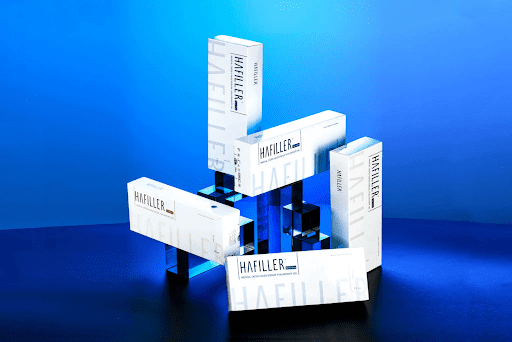
In a saturated market, the source of your products dictates your clinical reputation. In this field, Jingjia Medical, with its strong R&D background, offers the HAFILLER series, which has received recognition from many professional organizations for its natural results and lasting effects. For more information about potential collaboration, visit their official website or contact their professional team.
Predicted Aesthetic Priorities for Lip Enhancement in 2026
While volume has been the primary driver in previous decades, 2026 is expected to bring a noticeable shift toward more refined and sophisticated outcomes. When clients request hyaluronic acid lip treatments, their focus is likely to concentrate on three key aesthetic pillars:
- Subtlety and “The Untouched Look”: The era of the overfilled “duck lip” is fading. Consumers now prioritize harmony. They want corrections to asymmetry and restoration of proportion rather than obvious augmentation.
- Hydration and Texture: Many clients are seeking hydration-focused lip treatments. They are less concerned with size and more focused on the glossy, smooth texture that HA provides. This is particularly relevant for treating dry and aging lips, where hyaluronic acid lips appear youthful and dewy.
- Specific Shape Definition: The demand is for precision. Clients want a crisp Cupid’s bow and upturned oral commissures (corners of the mouth) to create a happier, more youthful resting expression.
Challenges for Aesthetic Institutions in a Saturated Market
Despite the booming demand for hyaluronic acid lip treatment, scaling an aesthetic business in this field faces distinct hurdles.
-
The Longevity vs. Naturalness Paradox
One of the most frequent client complaints involves the trade-off between how long a filler lasts and how natural it feels. Highly cross-linked, stiff fillers last longer but may feel firm or look unnatural in the dynamic lip area. Conversely, softer fillers feel natural but metabolize faster. Clinics must manage expectations and choose versatile products like HAFILLER, which balances cross-linking stability with tissue integration, offering a solution that feels soft yet endures.
-
Replicating “Influencer” Aesthetics
Patients often bring filtered photos of influencers to consultations. Replicating these specific shapes—like the flat, high-profile Russian Lip—requires advanced technique and the right product viscosity. Using a filler that is too soft will result in product migration (the dreaded “filler mustache”), while one that is too hard will look unnatural.
-
Risk Management and Reputation
The lips are highly vascularized. As the volume of procedures increases, so does the statistical risk of complications, such as vascular occlusion or migration. For large-scale brands, a single negative viral post about a “botched” procedure can cause significant reputational damage. Using high-purity, safe products from a reputable hyaluronic acid manufacturer is the first line of defense in risk management.
-
Intensifying Competition
As barriers to entry have lowered, price wars are common. Institutions competing solely on price often sacrifice product quality, leading to poor retention rates. The challenge lies in shifting the value proposition from “cheap filler” to “premium, safe, and artistic transformation.”
Conclusion
As we look ahead to 2026, the demand for hyaluronic acid lip treatment shows no signs of slowing down. For medical aesthetic institutions to capture and retain this market share, a multifaceted approach is required.
Success will depend on sourcing superior products that offer both safety and performance differentiation. However, the product alone is not enough. Institutions must invest in continuous physician training to master emerging techniques like the lip flip or vertical fencing. Furthermore, marketing strategies must evolve.
By aligning high-quality supply chains with advanced clinical artistry, aesthetic brands can turn the challenges of the market into sustainable, long-term growth.
Reference:
[1] Lip Filler Market Analysis Size and Share Forecast Outlook 2025 to 2035, Available at: https://www.futuremarketinsights.com/reports/lip-fillers-market (Accessed: 1 December 2025)