Quick Picks
- SHINING 3D Ceramix-Nano
- Stratasys J5 DentaJet
- SprintRay Pro 2
- Formlabs Form 4B
- Asiga Max UV
- SHINING 3D AccuFab-F1
A dental 3D printer is an additive manufacturing device that builds dental models, restorations, and guides from digital files via layer-by-layer printing. The best dental 3D printer can cut traditional part production from days to hours or even minutes.
For modern dental clinics, high-quality 3D printers have become a core competitive edge rather than just a premium offering. It enables chairside restoration with minimal patient visits. Based on performance and reviews, we have selected the six best dental 3D printers.
Compare 6 Dental 3D Printers in 2026
| Printer | Technology | Key features | Best for |
| SHINING 3D Ceramix-Nano | DLP + Adaptive Pneumatic Stereolithography | 2 kg, integrated printing and curing, 8–11 minute crown printing, capsule workflow | Same-day chairside restorations |
| Stratasys J5 DentaJet | PolyJet | Up to five materials simultaneously, 18 μm layers, 1,174 cm² printing area | Clinics or labs requiring multi-material production |
| SprintRay Pro 2 | DLP (Optical Panel™ technology) | 35 μm resolution, 385 nm light, 6+ full arches per job | High-throughput clinics and labs |
| Formlabs Form 4B | MSLA | Up to 100 mm/h, 5.25 L build volume, broad material library | General dental and medical applications |
| Asiga MAX UV | DLP | 62 μm pixel resolution, 385 nm UV, open material system | Labs or clinics prioritizing material flexibility |
| SHINING 3D AccuFab-F1 | DLP | 150 mm/h maximum speed, ±25 μm accuracy, open material system | Versatile dental production |
SHINING 3D Ceramix-Nano
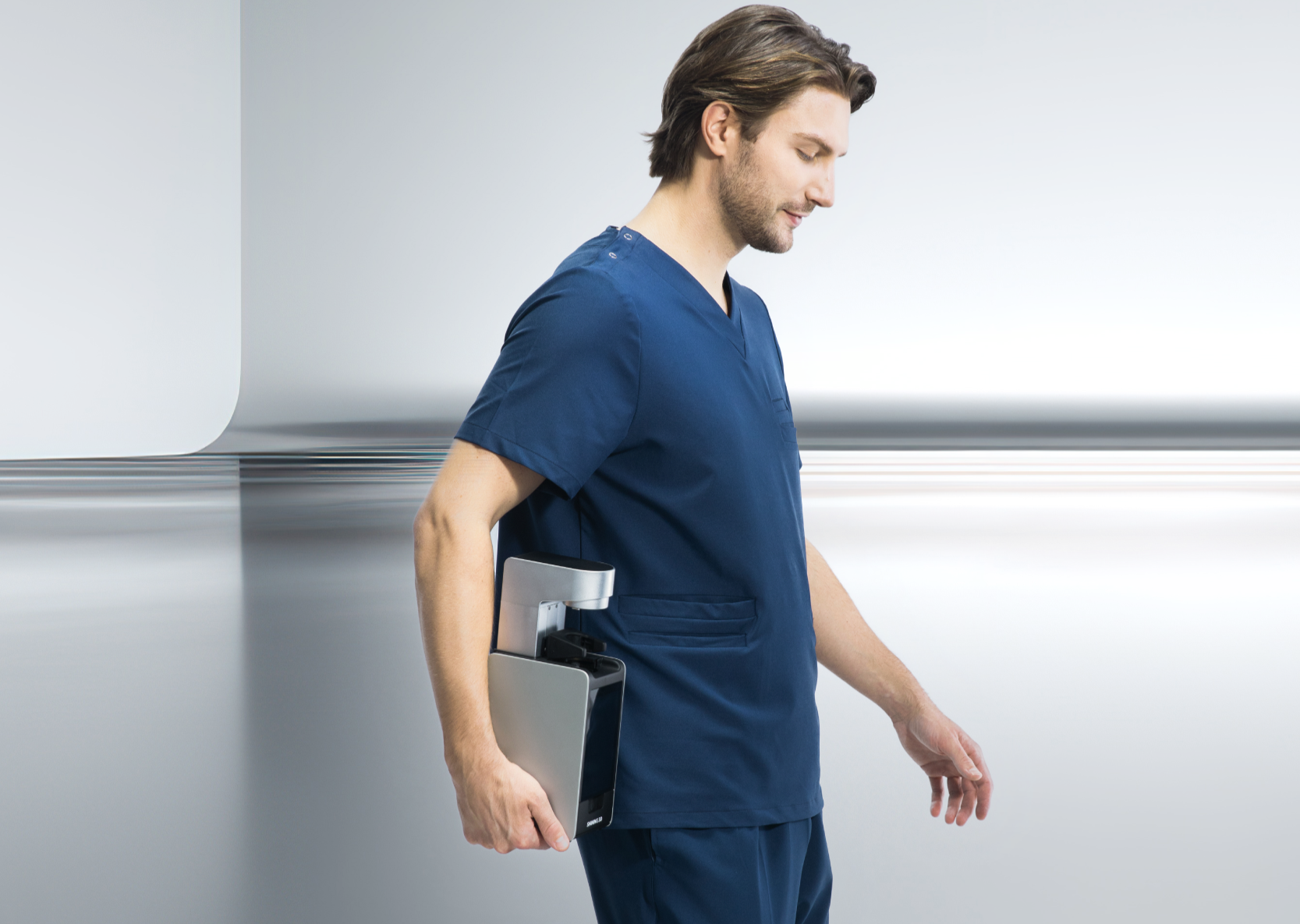
SHINING 3D Ceramix-Nano is a chairside capsule 3D printer that integrates printing and curing into one device, delivering temporary or permanent restorations in roughly 15 minutes.
At the heart of the printer is Adaptive Pneumatic Stereolithography (APS), a technology developed to improve the high-viscosity materials printing by using pneumatic-assisted layer separation and controlled peeling forces.
Weighing just 2 kg and measuring 87 × 131 × 276 mm, the unit is small enough to sit on a desk or be carried on the go. Crown printing typically takes 8 to 11 minutes, with an additional 3 minutes for on-machine curing.
Its resin material, LumiCera, comes in pre-measured capsules, reducing the need for manual handling of resin. A single capsule can produce up to three crowns, and the build chamber supports bridges up to 38 mm.
Pros
- Extremely compact 2 kg design.
- Integrated printing and curing.
- APS improves printing performance for high-viscosity resins.
- Fast chairside temporary or permanent crown production.
- Supports crowns, three-unit bridges, veneers, inlays, and onlays.
- Pre-measured capsules simplify material handling.
- Automatic leveling reduces setup work.
- Optional oxygen-free curing can improve surface finish.
- Can operate from a 10,000mAh+ portable power bank.
- Connects scanning, designing, and printing into one efficient digital dental ecosystem.
Cons
Will only be sold in the EU once it has been brought into registration with the MDR.
 Stratasys J5 DentaJet
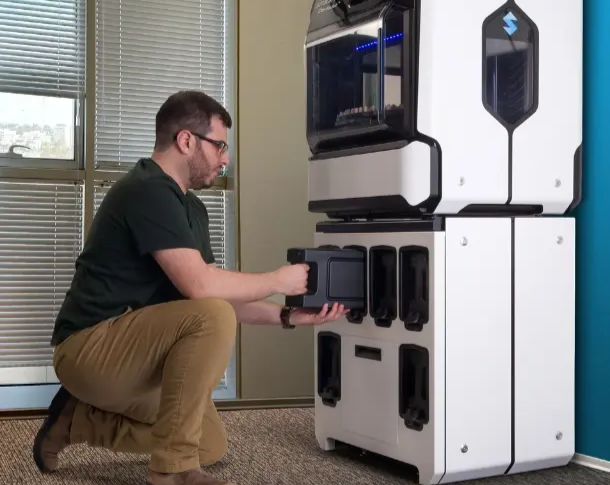
The Stratasys J5 DentaJet is a flagship PolyJet system designed for dental applications, capable of printing with up to five materials simultaneously, including rigid, flexible, clear, and color biocompatible resins.
This multi-material functionality supports “mixed-tray” printing, producing models with gingiva, teeth, and bases in a single build. Offering a 1,174 cm² print area and layer thickness down to 18 microns, it is ideal for high-volume production and detailed structural accuracy.
Its typical applications include surgical guides, dental models, gingiva masks, indirect bonding trays, color models, dentures, and partials.
Pros
- Up to five materials can be printed simultaneously.
- 18 μm horizontal layer thickness.
- Large 1,174 cm² printing area.
- Supports color dental models and multiple material types.
- Suitable for surgical guides, models, gingiva masks, dentures, and partials.
- Fit for large clinic workflows.
Cons
- Significant machine footprint requires dedicated floor space (228 kg).
- The multi-material workflow can be excessive for a small clinic.
 SprintRay Pro 2
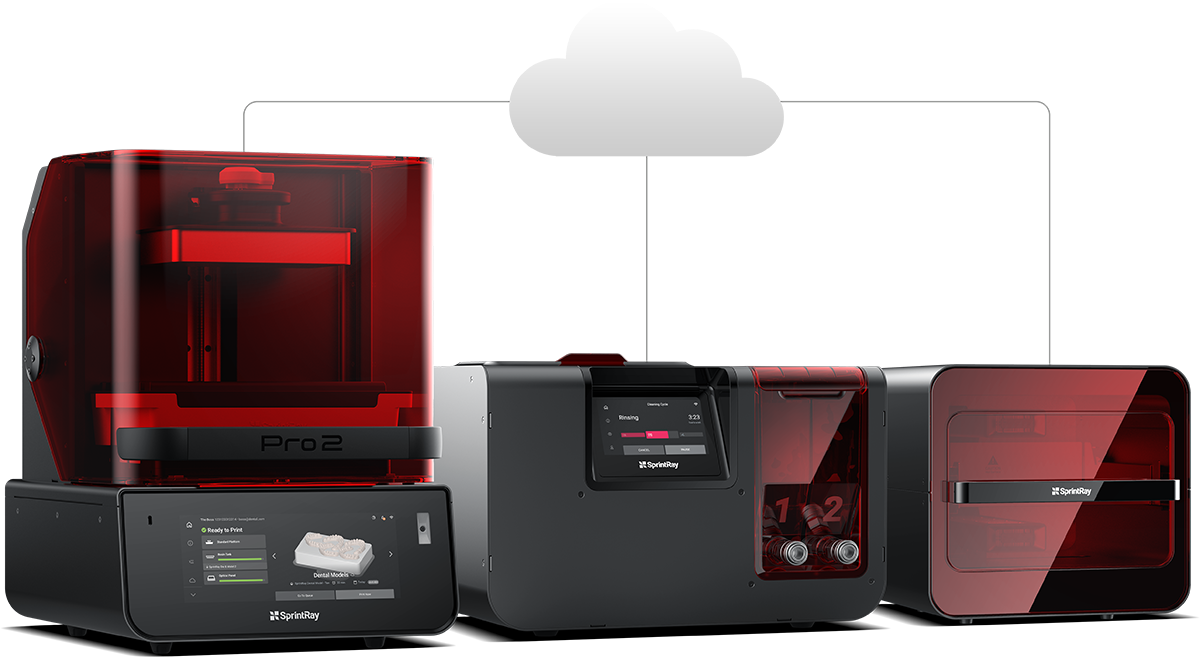
The SprintRay Pro 2 is a DLP 3D printer for dentistry that combines patent-pending Optical Panel technology with a 385 nm UV-A light engine and 35 μm resolution.
The Pro 2 can print 6+ full-arch dental models in a single job, while its optional Arch Kit can increase printing speed by up to 2×.
It supports more than 15 dental workflows, including dental models, surgical guides, night guards, clear retainers, dentures, hybrid dentures, and cemented restorations.
Pros
- 35 μm resolution and zero distortion.
- 385 nm UV-A light source.
- Large standard build platform.
- Six or more full-arch models can be printed in one job.
- Heated build platform and automatic resin heating.
- Optional Arch Kit increases production flexibility.
- Ecosystem includes printing, washing, curing, and materials.
Cons
- Relatively high procurement costs.
- Closed ecosystem needs SprintRay-validated resins.
 Formlabs Form 4B
 Formlabs Form 4B
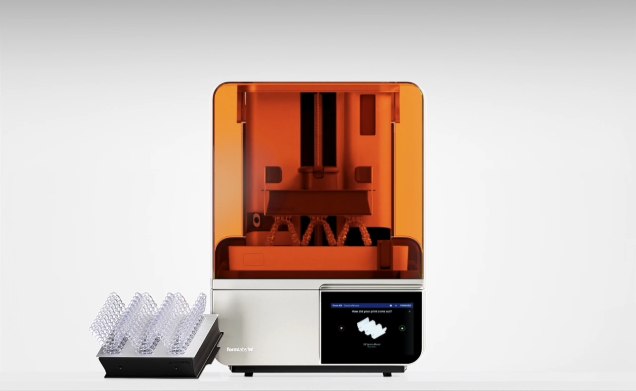
 The Formlabs Form 4B is a dental 3D printer based on masked stereolithography. Its LFD print engine uses a backlight unit, light processing unit, release texture, flexible resin tank, and automated resin handling.
The Form 4B has a 20.0 × 12.5 × 21.0 cm build volume, or 5.25 liters. Its layer thickness ranges from 25-200 μm, with a maximum print speed of 100 mm/hour.
The system supports 38 materials, including 15 biocompatible materials, while Open Material Mode allows the use of third-party materials. It is intended for applications such as models, surgical guides, splints, dentures, temporary restorations, clear aligner models, and more.
Pros
- 5.25 L build volume.
- Up to 100 mm/hour maximum print speed.
- Supports biocompatible materials.
- Open Material Mode provides additional flexibility.
- Automated resin handling simplifies production.
- Integrated camera supports remote monitoring and print history.
Cons
Relatively high procurement costs.

Asiga Max UV
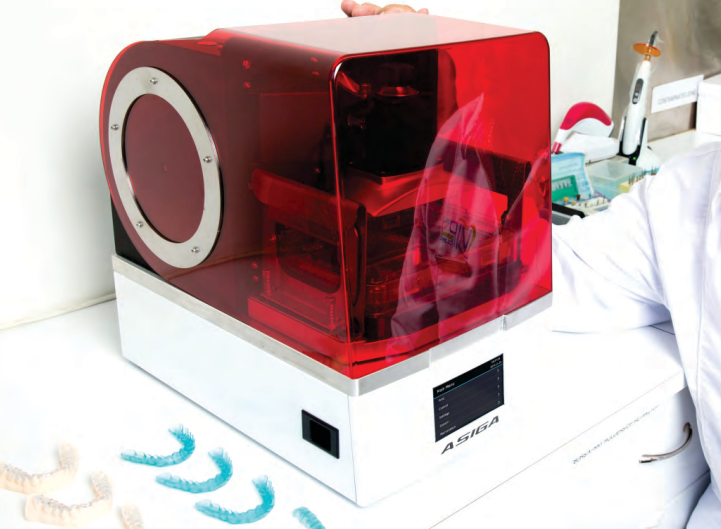
The Asiga MAX UV is a compact DLP printer designed for dental laboratories and clinics that value material flexibility.
It offers a 119 × 67 × 75 mm build volume, 62 μm pixel resolution, and a 385 nm UV LED light source. Asiga uses an open material system, allowing users to work with suitable third-party materials rather than being limited to one manufacturer’s resin portfolio.
Dental applications include orthodontics, crown and bridge, surgical guides, dental models, custom trays, and partial dentures. Asiga’s dental documentation also lists more than 400 validated materials in its online material library.
Pros
- Compact desktop design.
- 62 μm pixel resolution.
- 385 nm UV option.
- Open material system.
- Broad validated material library.
- Suitable for models, guides, splints, trays, and restorative applications.
Cons
- Smaller build volume limits total parts per build tray.
- Relatively high procurement costs.
 SHINING 3D AccuFab-F1
 SHINING 3D AccuFab-F1
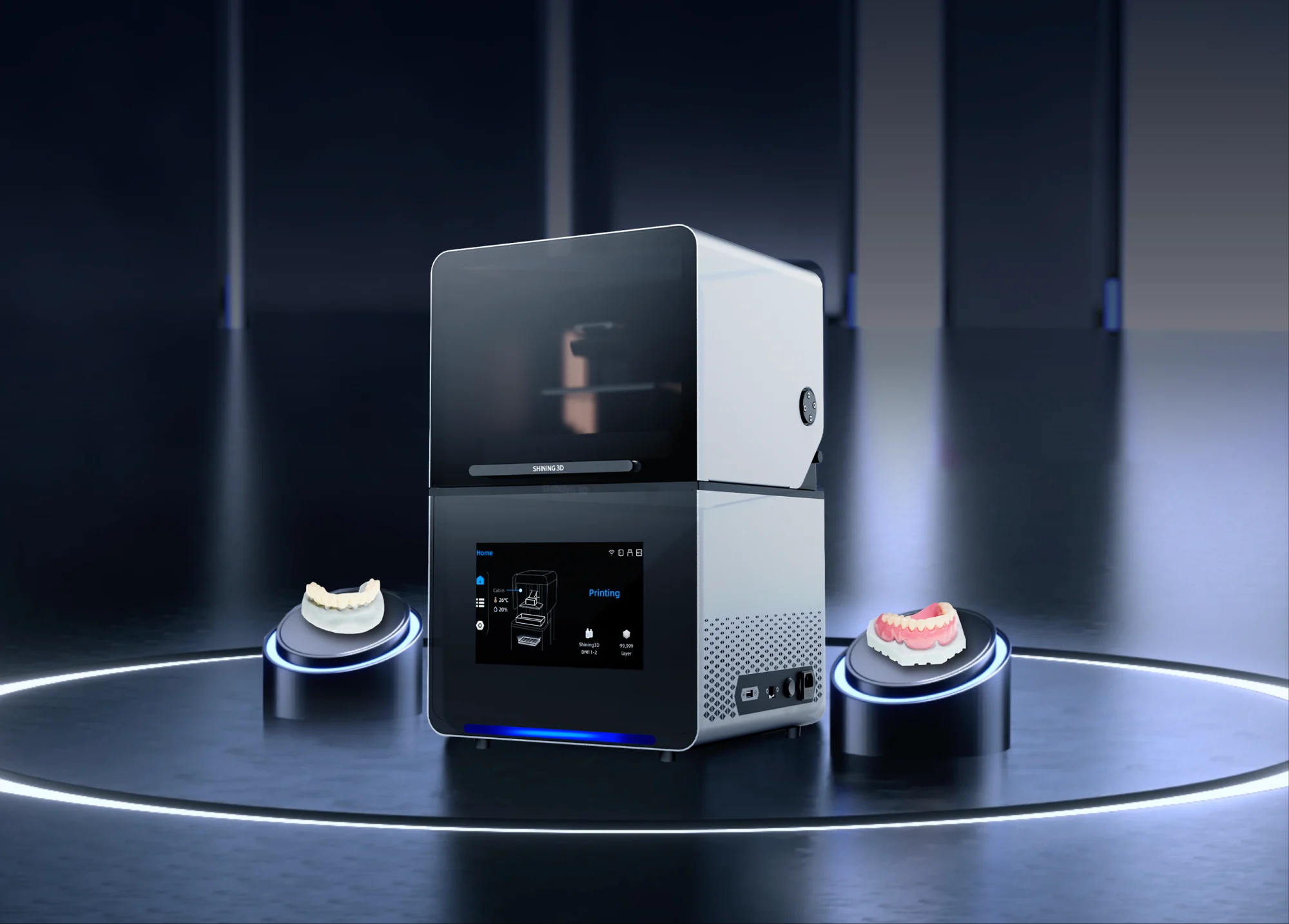
 The SHINING 3D AccuFab-F1 is a DLP dental 3D printer designed for broader production requirements than the compact Ceramix-Nano.
It has a 144 × 81 × 75 mm build volume, a 1920 × 1080 optical resolution, adjustable 50-100 μm layer thickness, a maximum print speed of 150 mm/h, and an accuracy up to ±25 μm.
One major advantage is its open material system. SHINING 3D lists 13 resins for different applications and also works with third-party dental material manufacturers.
The F1 also uses dual heating for both the build platform and resin tray. This is particularly useful for high-viscosity resins through enhanced resin flow.
Pros
- 150 mm/h maximum rated speed.
- ±25 μm stated accuracy.
- DLP technology.
- Open material system.
- Dual heating for platform and resin tray.
- Suitable for models, surgical guides, splints, dentures, and All-on-X workflows.
- Intelligent residue and component detection.
- Compatible with automated washing and curing workflows.
- AccuWare provides one-click nesting and slicing for supported products.
Cons
Some third-party materials are still undergoing validation.

How to Choose the Right Dental 3D Printer?
- Main Applications: Choose a printer based on your needs, such as chairside restorations, multi-applications, as well as multi-material, full-color complex cases.
- Printing Technology: Select DLP for pinpoint precision on small parts, mSLA/LCD for high-speed batch production at lower entry costs, or PolyJet for complex multi-material cases.
- Printing Speed: Prioritize print speeds above 50mm/hour if your clinic aims to provide same-day chairside treatments while patients wait in the office.
- Printing Accuracy: Ensure the printer maintains tight dimensional tolerances to guarantee accurate margin fits over time.
- Material Compatibility: Open systems offer cost flexibility and broad material choices.
- Ease of Use: Look for automated features like smart resin detection, pre-calibrated build plates, and intuitive nesting software to minimize daily staff training and print failures.
- Post-Processing: Factor in washing and curing units during budgeting, as proper post-processing is strictly required to achieve full physical strength and biocompatibility.
Conclusion
Overall, there is no single best dental 3D printer for every clinic. The right choice depends on your applications, production volume, materials, accuracy requirements, and post-processing workflow.
- SHINING 3D Ceramix-Nano: Best for compact, same-day chairside restorations.
- Stratasys J5 DentaJet: Best for multi-material dental parts production.
- SprintRay Pro 2: Best for high-throughput dental workflows.
- Formlabs Form 4B: Best for versatile dental applications.
- Asiga MAX UV: Best for open-material flexibility.
- SHINING 3D AccuFab-F1: Best for clinics and labs seeking a balance of speed, accuracy, and material flexibility.
FAQs
-
What is the best dental 3D printer for a small clinic?
The best 3D printer for dental practices with limited space is a compact desktop system like the SHINING 3D AccuFab-F1 or Ceramix-Nano. These machines offer one-click operation, small footprints, fast print times, and validated workflows for common appliances like crowns and surgical guides.
-
How much does a dental 3D printer cost?
An entry-to-mid-level dental resin printer typically costs between $5,000 and $10,000. High-end multi-material printers designed for high-volume labs can cost over $100,000. Total investment should also account for post-processing washing and curing units.
-
Are dental 3D printers difficult to use?
Modern dental printers are designed for convenient operation for clinical staff. Integrated software automatically nests CAD files, generates necessary support structures, and sends optimal curing profiles to the machine. Automated resin management systems make daily operations as simple as operating an office paper printer.