As the curtain falls on 2025, the global cybersecurity landscape has not quietly faded into the new year. Instead, the final weeks of December delivered a series of high-octane wake-up calls that have sent shockwaves through the boardrooms of Energy, Logistics, and Critical Infrastructure sectors.
From the hijacking of legitimate administrative tools in Romania to the “side-door” exploitation of global airlines, the message is clear: the traditional fortress model of cybersecurity is dead. We are entering 2026 in an era of asymmetric warfare where your most trusted partner, or even your own security software, could be your greatest vulnerability.
- The Anatomy of the “Side Door” Breach: Korean Air
On the morning of December 29, Korean Air became the latest casualty in a trend that Shieldworkz researchers call the “Supplier ROI Move.” The breach did not originate from the airline’s fortified core; it came through KC&D Service, a provider of in-flight meals and logistics.
The Impact at a Glance:
- Scale: Nearly 30,000 employee records exposed.
- Sensitivity: Names, phone numbers, and, crucially, bank account numbers.
- The Danger: This data allows threat actors to validate credentials across multiple breach datasets (including the recent Coupang and Asiana Airlines incidents), creating a “Master Jigsaw” for sophisticated phishing and financial fraud.
Why Suppliers are the New Primary Target:
- Trust by Association: Suppliers often hold “privileged” access to facilitate operations, bypassing standard friction.
- Resource Disparity: While a global brand may have a world-class SOC, their meal caterer or logistics partner likely does not.
- Lateral Movement: Once the “side door” is open, hackers jump into the client’s network if segmentation is not strictly enforced.
- Turning Security into a Cage: The Romanian Waters “BitLocker” Siege
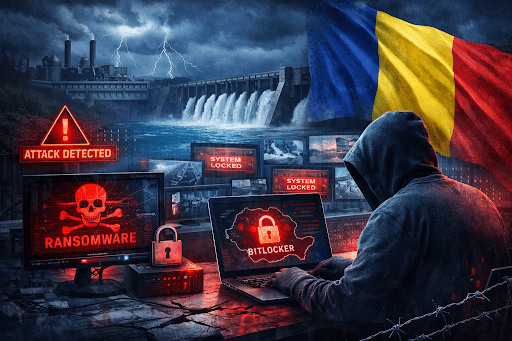
Perhaps the most chilling incident occurred on December 20. Administrația Națională “Apele Române” (Romanian Waters), the apex authority for the nation’s dams and flood defenses, faced a ransomware attack that paralyzed 1,000 IT systems.
However, investigators discovered no conventional ransomware. Instead, the attackers used Microsoft BitLocker, a native Windows encryption tool, to lock the agency’s own files.
“They are using our systems against us,”, a sentiment echoed by researchers as they watched attackers “lock the front door and throw away the key” using trusted administrative privileges.
The Saving Grace: IT/OT Segmentation While the “digital brain” (IT) was scrambled, the “physical hands” (Operational Technology) remained steady. Because Romanian Waters had successfully segmented their administrative networks from their hydrotechnical control systems, personnel were able to manage dam gates and water pressure manually via radio and telephone.
- Geopolitical Warfare: Weaponizing the Holiday Window
While families in France prepared for Christmas, La Poste and Banque Postale were hit by a massive DDoS attack on December 22, claimed by the pro-Russian group NoName057(16).
This wasn’t a heist; it was “propaganda through disruption.” By targeting the year’s busiest logistics window, the attackers achieved:
- Logistical Stress: Forcing a return to manual processing for millions of packages.
- Psychological Impact: Creating national frustration at the dinner table during the holidays.
- Strategic Signaling: Reminding the EU that despite international law enforcement operations (like Operation Eastwood), state-backed actors can resurrect infrastructure in “safe haven” jurisdictions like North Korea or Iran almost instantly.
The Shieldworkz Verdict: Strategic Directives for 2026
For decision-makers in large process industries and critical infrastructure, these events underscore the need for a radical shift in posture. Shieldworkz recommends five non-negotiable controls:
- Adopt Zero Trust Architecture: Never trust a partner’s connection by default. Every interaction between a supplier’s server and your own must be verified.
- Strict Data Minimization: If your catering partner doesn’t need employee bank details to deliver a meal, that data should not exist on their servers.
- Continuous Auditing over Questionnaires: Annual security questionnaires are as effective as “an umbrella in a hurricane.” Real-time monitoring of partner security posture is the new standard.
- Map “Forgotten Data”: Conduct audits to find data parked in old project servers. Hackers proactively seek these “ghost repositories.”
- Harden IT/OT Segmentation: Ensure that a breach in your email server cannot result in the loss of control over a power grid or a water valve.
Moving from Reactive to Resilient
The end-of-year incidents are not discrete lessons but a single narrative: attackers are resourceful, patient, and strategic, they will target the weakest link, weaponize trusted tools, and time disruption for maximum impact. For industrial and critical infrastructure organizations, the answer is simple in principle but demanding in execution: extend security beyond your fence, harden trust relationships, and bake resilience into both IT and OT operations.
If you’d like a Shieldworkz Threat Research Labs briefing tailored to your sector (Energy, Water, Manufacturing, Pharma, or Transportation), we can map your supplier blast radius, run LotL (Living off the Land) detection tests, and exercise your emergency OT playbooks, practical steps to make 2026 the year you move from reactive to resilient.
Contact Shieldworkz OT Security Team Today to receive a custom briefing on specific security measures to segment your OT network and protect your critical infrastructure.