Celebrity investments can be a curious window into where an industry is heading. When actors, musicians, athletes, entrepreneurs, and other high-profile figures put their money behind a technology, it can bring attention to an emerging market that most consumers have barely noticed.
Health technology is one such market.
Celebrities are getting involved in everything from fitness wearables and preventive health screening to AI-powered wellness platforms and digital mental health services.
Cristiano Ronaldo and LeBron James, for example, joined WHOOP’s 2026 funding round, whereas entertainment and business figures such as Jimmy Iovine and Claudia Schiffer have invested in Neko Health.
The appeal is easy to understand. Consumers increasingly want more information about their bodies, and technology is making that information easier to collect, analyze, and access.
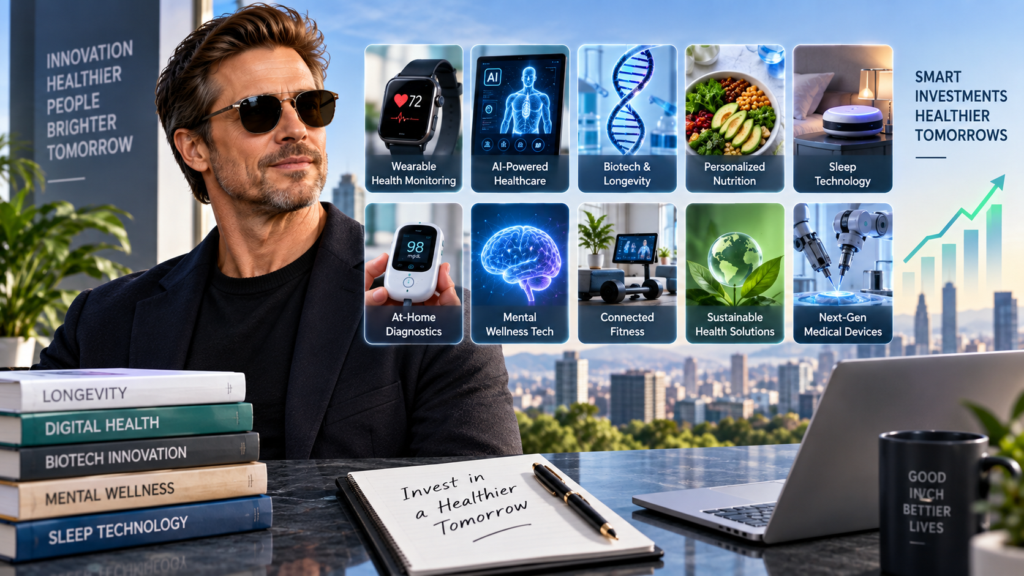
Below are 10 health tech trends attracting investment and celebrity attention.
1. Personalized Health Monitoring
One of the biggest changes in healthcare is the shift from occasional checkups to more continuous health monitoring.
Wearables can track metrics such as heart rate, sleep, activity, and recovery, while newer health platforms combine wearable data with blood tests and other assessments. Neko Health, for instance, combines proprietary body-scanning technology with blood analysis and health information from devices such as Apple Watch, Oura, and WHOOP.
This gives consumers access to a much larger collection of personal health information than they may have had in the past.
It also explains the growing interest in simple tools that help people understand individual measurements. Someone looking through blood-test results, for example, may search for an sgot sgpt ratio calculator to understand the relationship between two liver enzymes. A calculator does not replace medical interpretation, but tools like this reflect a broader trend toward making health information easier for consumers to explore.
The larger opportunity is personalization. Instead of receiving generic health advice, people increasingly want information that relates to their own bodies, habits, and measurements.
2. Smarter Fitness Wearables
Fitness trackers have come a long way from counting steps.
Modern wearables can monitor sleep, heart rate, recovery, exercise intensity, and other signals throughout the day. WHOOP has positioned itself around this broader approach to health and human performance, and its 2026 Series G funding round included celebrity investors Cristiano Ronaldo, LeBron James, Rory McIlroy, and Niall Horan, among others. The round valued the company at $10.1 billion.
The next stage is less about collecting data and more about interpreting it.
For example, someone training for a 10K may want to know whether their cardiovascular fitness is improving. A VO2 max estimator can provide an accessible estimate of aerobic capacity, while a wearable can track related information during everyday workouts.
These tools can make fitness feel more personalized. Rather than simply recording how far you ran, technology can increasingly help explain how your body responded to the workout.
3. AI-Powered Health Insights
Artificial intelligence is becoming increasingly important in consumer health technology because health devices generate enormous amounts of data.
AI can help analyze patterns across sleep, activity, heart rate, nutrition, and other measurements. Instead of presenting users with pages of numbers, AI-powered platforms can turn data into summaries and recommendations that are easier to understand.
Gwyneth Paltrow is an interesting example of the intersection between celebrity culture, wellness, and AI. Through Kinship Ventures, the actor and entrepreneur has invested in AI-enabled consumer technology, beauty tech, and wellness applications. Her investments include the AI-powered meditation app Moments of Space.
The attraction of AI in health is partly its ability to personalize information at scale. However, an AI-generated recommendation should not be confused with a medical diagnosis. The technology may help people organize information and spot patterns, but professional medical judgment remains important.
4. Preventive Health Screening
Healthcare has traditionally been associated with treating problems once they appear. Preventive health technology takes a different approach: look for potential problems earlier.
Neko Health is one of the companies attracting attention in this space. Founded by Spotify co-founder Daniel Ek and Hjalmar Nilsonne, the company uses body scanning, blood analysis, and physician consultations to provide a more comprehensive health assessment. Its 2026 funding round attracted investors from technology, entertainment, fashion, and sports, including Mark Zuckerberg, Claudia Schiffer, Jimmy Iovine, Maria Sharapova, and Thierry Henry.
Neko’s model reflects a broader consumer interest in proactive healthcare. People increasingly want to know what is happening inside their bodies before a problem becomes obvious.
That does not mean everyone needs extensive screening. But the growth of preventive health technology suggests consumers are becoming more interested in taking an active role in monitoring their health.
5. Wearables Moving Into Healthcare
Wearables were once primarily fitness products. Now, companies in the sector are looking toward healthcare.
WHOOP’s recent funding round included strategic investment from healthcare organizations such as Abbott and Mayo Clinic, alongside prominent individual investors. The company has described its ambition as building a broader personal health platform rather than remaining solely a fitness wearable.
This points to an important development: the line between consumer wellness technology and healthcare is becoming less distinct.
A wristband or ring that tracks sleep and heart rate may begin as a wellness product, but the information it collects could eventually become useful in more formal health settings. The challenge will be determining which measurements are clinically meaningful and how that information should be used.
6. Digital Mental Health
Health technology isn’t limited to physical health.
Apps and digital platforms are increasingly being used to provide meditation, mental wellness resources, therapy access, and other forms of support. This makes mental health more accessible to people who may not feel comfortable starting with traditional healthcare settings.
Celebrity involvement has helped bring this category into the mainstream. Gwyneth Paltrow’s investment in Moments of Space is one example of how entertainment and wellness interests are intersecting with technology.
The technology itself can range from guided meditation apps to platforms that connect users with mental health professionals.
As with physical health, the strongest applications are likely to be those that use technology to complement rather than replace appropriate professional care.
7. AI Meets Beauty and Wellness
The beauty industry is also becoming increasingly technological.
AI-powered skin analysis, personalized product recommendations, smart beauty devices, and digital consultations are turning skincare into a more data-driven experience. This is particularly interesting because beauty and health are increasingly overlapping.
Paltrow’s Kinship Ventures specifically identifies AI-enabled consumer technology and beauty tech among its areas of interest, illustrating how these categories are converging.
Consumers may increasingly expect skincare recommendations to reflect their individual skin characteristics rather than simply their age or skin type.
The same principle applies across wellness: technology can collect information about an individual and use it to offer more personalized suggestions.
8. Full-Body Health Data
Another emerging trend is the attempt to bring multiple types of health information together.
Instead of having one app for exercise, another for sleep, another for blood tests, and another for medical records, companies are trying to create platforms that provide a more complete picture.
Neko Health is pursuing this model by combining body scans, blood analysis, body composition measurements, and information from fitness devices.
The attraction is obvious. A person’s health is interconnected, so looking at one metric in isolation may provide an incomplete picture.
The challenge is equally obvious: more data can create more confusion. The companies that succeed may be those that can turn large quantities of information into useful, understandable insights.
9. Technology for Longevity
Longevity has become one of the biggest themes in consumer health technology.
The idea is moving beyond simply living longer. Consumers interested in longevity increasingly want to maintain their physical and cognitive health for as long as possible.
That has created interest in health tracking, preventive screening, exercise optimization, nutrition, sleep, and other technologies designed to help people monitor their health over time. Oura, WHOOP, Neko Health, Prenuvo, and other companies are increasingly positioned within this broader longevity market.
Celebrity participation helps make these technologies culturally relevant. But the more interesting development is that longevity is gradually moving from a niche interest among wealthy consumers toward a wider consumer health category.
10. Health Technology That Feels Like Consumer Technology
Perhaps the biggest trend of all is the changing experience of healthcare itself.
Consumers have become accustomed to technology that is fast, personalized, intuitive, and available on demand. They increasingly expect similar experiences from other parts of their lives, including healthcare.
Neko Health’s model is a good example. Its founders have explicitly focused on making preventive healthcare more accessible and creating an experience that people actually want to use. The company’s upcoming U.S. expansion demonstrates the scale of that ambition.
This may ultimately be what attracts investors, celebrities, and consumers to health tech: the possibility of making healthcare feel less reactive and more connected to everyday life.
From a wearable on your wrist to an AI system analyzing your health information, the technology is becoming increasingly sophisticated. Yet the underlying idea remains simple. People want to understand their health, make better decisions, and spend more years feeling well.
Celebrity investment may bring these technologies into the spotlight, but their long-term success will depend on something more important: whether they can turn impressive technology into genuinely useful healthcare.