Running influencer campaigns for one brand is complex enough. Running them for five, ten, or twenty clients simultaneously – each with different audiences, creator rosters, approval workflows, and reporting requirements – demands a platform built for that kind of scale.
Agencies and growing teams face a specific set of challenges that solo brand accounts never encounter: multi-seat collaboration, client-specific pipelines, scalable outreach that doesn’t bottleneck at one account manager, and reporting clean enough to send directly to stakeholders. When a platform falls short on any of these, the workaround is almost always manual labor – spreadsheets, forwarded emails, screenshot-based reports.
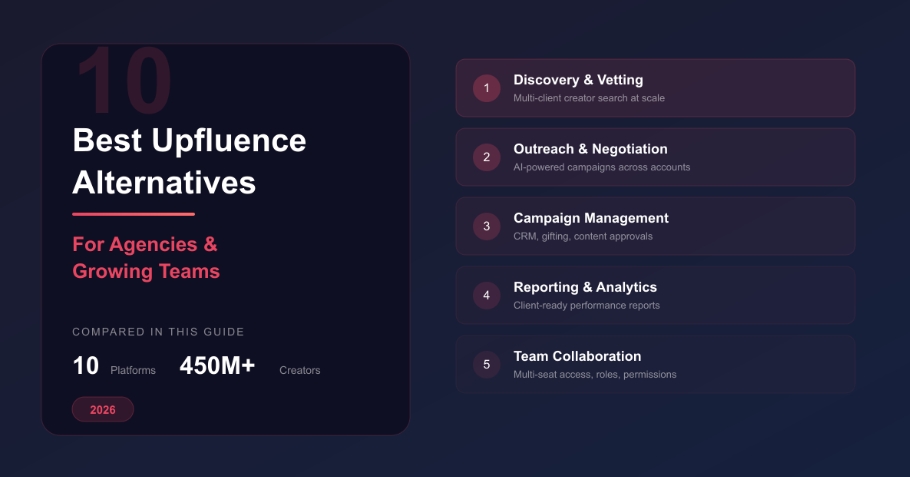
Upfluence has been a familiar name in influencer marketing, but agencies and expanding teams are increasingly finding that its seat limits, pricing structure, and workflow constraints create friction at exactly the moments when speed matters most. If your team has hit that ceiling, this guide covers ten platforms – starting with Influencer Hero – that are better equipped for agency-scale operations and team-based workflows.
- Influencer Hero
- GRIN
- Aspire
- CreatorIQ
- Modash
- Later
- HypeAuditor
- Traackr
- Storyclash
- Heepsy
Why Agencies and Growing Teams Are Moving Beyond Upfluence
Upfluence works for single-brand teams with straightforward campaigns. But once your operation involves multiple clients, shared workspaces, or more than two people touching the platform, several pain points surface quickly:
- Limited Seats at High Cost: Upfluence’s base plan starts at $24,000+ per year for just two seats. For an agency with account managers, strategists, and client-facing team members, the per-seat math becomes prohibitive fast.
- No Multi-Client Architecture: There is no native way to segment campaigns, creator pools, or reporting by client. Agencies end up creating workarounds – separate logins, manual tagging, exported spreadsheets – that defeat the purpose of using a platform.
- 12-Month Contract Lock-In: Agencies operate on client retainers that can shift quarter to quarter. A mandatory annual commitment to a platform creates financial risk when a client churns or a campaign wraps early.
- Outreach Bottlenecks: Upfluence’s outreach is locked inside the platform without native email sync. When multiple team members need to run parallel outreach sequences for different clients, the workflow breaks down.
- Reporting Gaps: Client-ready reporting is table stakes for agencies. Upfluence’s reporting requires significant manual formatting before it’s presentable to external stakeholders.
Best Upfluence Alternatives for Agencies
1. Influencer Hero
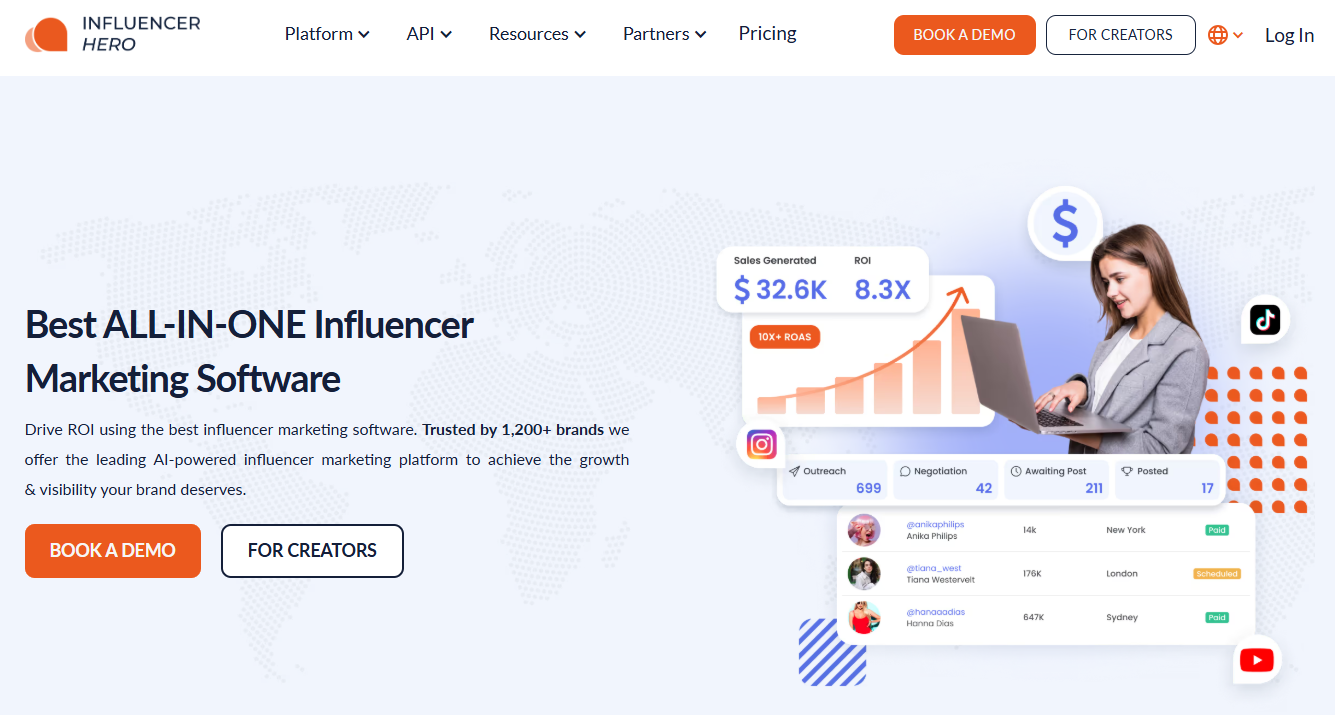
Influencer Hero is built as a true all-in-one influencer marketing platform – discovery, AI-powered outreach, CRM, product gifting, UGC collection, affiliate tracking, analytics, and creator storefronts all operating within a single connected system. For agencies and growing teams, the architecture matters as much as the features: every AI workflow automation runs through the same CRM, which means multiple team members can manage parallel campaigns without stepping on each other or losing context.
The platform’s tiered seat structure scales from solo operators (1 seat on Standard) to full agency teams (8 seats on Business, unlimited on Custom/Agency plans). Automated drip campaigns with AI-personalized first lines mean one account manager can run outreach for multiple clients simultaneously without sacrificing personalization – the 43% average response rate holds even at scale. The automation engine handles repetitive tasks like generating Shopify discount codes on contract sign or advancing pipeline stages, freeing team members to focus on strategy rather than administration.
Best for: Agencies and teams that need an all-in-one platform with scalable seats, CRM-driven collaboration, and AI outreach that handles volume without losing personalization.
Pricing:
- Standard: $649/month (1 seat, up to 1,000 creators, 1,000 outreach/mo)
- Pro: $1,049/month (3 seats, up to 5,000 creators, 5,000 outreach/mo)
- Business: $2,490/month (8 seats, up to 10,000 creators, 10,000 outreach/mo)
- Custom & Agency plans available with unlimited outreach
Standout features:
- 450M+ Creator Database Across 8 Platforms: Instagram, TikTok, YouTube, Pinterest, Snapchat, Twitch, and X — the largest indexed database available within an influencer marketing platform. Agencies can source creators for any client niche without leaving the platform.
- AI-Powered Outreach (43% Response Rate): Automated drip campaigns with AI-personalized first lines. Run thousands of sequences across multiple client campaigns simultaneously.
- CRM With Automation Engine: Campaign boards, deal pages, conversation history, bulk actions, and rules-based triggers. Multiple team members work from the same pipeline with full visibility.
- Five eCommerce Integrations: Shopify, WooCommerce, Magento, BigCommerce, and Prestashop – agencies serving clients across different platforms aren’t limited to a single integration.
- Creator Storefronts (Up to 8x ROI): Branded storefronts where creators sell client products with affiliate commissions – an additional deliverable agencies can offer to clients.
- Fraud Detection and Audience Authenticity: Built into the discovery workflow so teams can vet creators before presenting them to clients.
The comprehensive feature set means teams adopting the platform for the first time should expect an onboarding period. The workflow-driven approach is built for scale, so very small teams running only a handful of campaigns may not use every capability immediately.
2. GRIN
GRIN is built for enterprise eCommerce brands that want unlimited creator partnerships, deep Shopify integration, and AI workflow automation to streamline campaign operations. For agencies, the appeal is in its creator portals—private dashboards where influencers view briefs, submit content, and track earnings independently, reducing the back-and-forth that eats up account manager time.
The platform handles media rights automatically at the booking stage, enhanced by AI workflow automation, which simplifies content licensing across multiple client campaigns. Its UGC library—searchable and including Stories—gives agencies a centralized asset repository they can pull from for client reporting and repurposing.
Best for: Agencies managing enterprise eCommerce clients on Shopify who need unlimited creator capacity and structured content workflows.
Pricing:
- Custom; entry tier typically starts around $2,500/month
- 12-month minimum commitment; $25,000+/year
Standout features:
- Unlimited Creator Partnerships: No caps on active influencer relationships – suited for agencies running large-volume programs.
- Creator Portals: Influencers manage briefs, submissions, and earnings through self-service dashboards, reducing manual coordination.
- AI Discovery (Gia): Intelligent assistant for surfacing and evaluating creators based on brand criteria.
- Automatic Media Rights: Content reuse rights embedded in the booking flow – no separate licensing negotiations per campaign.
- Searchable UGC Library: All creator content including Stories in one repository for cross-channel repurposing.
GRIN’s $25,000+/year minimum and mandatory 12-month contract create the same lock-in friction agencies are trying to escape from Upfluence. The platform doesn’t publish its creator database size, and its interface can slow under heavy use. Agencies needing broader eCommerce support beyond Shopify or CRM automation with rules-based triggers may find all-in-one platforms with wider integration coverage a better fit.
3. Aspire
Aspire has built a distinct model around inbound creator recruitment – over a million creators actively apply to brand campaigns through its marketplace, which can be a significant time-saver for agencies that typically spend hours on outbound sourcing. First-party data integrations with Meta, TikTok, and Pinterest deliver reliable audience metrics that agencies can present to clients with confidence.
The end-to-end workflow covers discovery, contracts, content approvals, and performance tracking in a single pipeline. Dedicated client support with strategic onboarding is included, which helps agencies get new team members up to speed quickly.
Best for: Agencies working with established brands where inbound creator interest is strong enough to supplement outbound efforts.
Pricing:
- Custom; mid-tier packages quoted around $2,300/month
Standout features:
- Inbound Creator Marketplace: 1M+ creators applying to campaigns shifts the dynamic from searching to selecting – valuable for agencies with well-known client brands.
- First-Party Social Data: Direct API integrations with Meta, TikTok, and Pinterest deliver reliable, audit-ready audience data.
- Structured Campaign Workflow: Discovery through tracking in a single pipeline with approval stages that agencies can customize per client.
- Shopify Fulfillment Integration: Creators select products directly from a client’s catalog for gifting campaigns.
Custom pricing limits budget planning for agencies. The inbound model works best for recognizable brands – agencies onboarding newer or niche clients will still need strong outbound capabilities. Platforms with AI-powered outreach personalization and databases of 350M-450M+ creators provide better results for cold outreach at scale.
4. CreatorIQ
CreatorIQ sits at the enterprise end of the market, purpose-built for global brands and the agencies that serve them. Its reporting infrastructure – live dashboards powered by direct API integrations – gives agencies the kind of real-time performance visibility that clients at the enterprise level expect. Advanced CRM features include creator one-sheets for streamlined review and approval workflows.
The platform’s global creator coverage and built-in payment compliance (tax documentation, payout handling) are particularly relevant for agencies running international campaigns across multiple markets.
Best for: Large agencies managing enterprise accounts with complex, multi-market influencer programs.
Pricing:
- Starts at $35,000/year
- Enterprise tiers up to $200,000/year
Standout features:
- Enterprise-Grade Reporting: Live dashboards with direct API integrations – no manual data pulls needed for client reporting.
- Advanced CRM and One-Sheets: Creator profiles formatted for quick client review and approval.
- UGC Rights Management: Request, track, and manage content usage rights across campaigns and clients.
- Global Creator Coverage: Strong international data for agencies running cross-border campaigns.
- Payment Compliance: Built-in tax documentation and payout handling simplifies multi-creator payments across jurisdictions.
CreatorIQ’s pricing puts it out of reach for most mid-sized agencies. The $35,000/year starting point – scaling up to $200,000/year – means the platform only makes financial sense for agencies with large enterprise retainers. Smaller agencies looking for comparable CRM depth and automation at more accessible pricing should evaluate all-in-one alternatives with tiered plans.
5. Modash
Modash offers one of the largest public creator databases at 350M+ profiles and pairs it with Shopify-native affiliate workflows, making it a practical choice for agencies that specialize in eCommerce influencer programs. The month-to-month pricing structure is agency-friendly – no annual lock-in means the cost can scale up or down with client loads.
AI visual discovery is a standout for creative teams: describe a visual style or upload a reference image to surface creators with matching aesthetics. For agencies pitching campaign concepts to clients, this can accelerate the creator selection process significantly.
Best for: Agencies focused on Shopify-based eCommerce clients who want powerful discovery and affiliate tools with flexible, month-to-month pricing.
Pricing:
- Essentials: $199-$299/month
- Performance: $499-$599/month
- Enterprise: Custom (annual billing)
Standout features:
- 350M+ Public Creator Database: Non-opt-in profiles provide one of the widest discovery nets on the market.
- AI Visual Discovery: Describe a vibe or upload a reference image to find creators with matching aesthetics – useful for agency pitch decks.
- Shopify-Native Gifting and Affiliates: Automated discount codes, UTM tracking, and product selection from client Shopify catalogs.
- Automated Affiliate Payouts: Commission tracking and monthly creator payments handled in-platform, reducing agency admin overhead.
Modash’s deep integrations only work with Shopify – a significant limitation for agencies with clients on WooCommerce, Magento, or BigCommerce. The platform lacks native AI-powered outreach personalization, which means manual effort scales linearly as you add more client campaigns. Agencies needing multi-platform eCommerce support and automated outreach across client accounts will need a platform with broader integration coverage.
6. Later
Later expanded from social media scheduling into influencer marketing, and the combination creates an interesting proposition for agencies that manage both content calendars and creator partnerships for clients—much like top project management tools streamline complex workflows. The ability to align influencer output with scheduled brand content in a single platform reduces the coordination overhead that typically exists between social and influencer teams.
Custom application pages let agencies vet creators before onboarding them to client campaigns, and brand safety tools powered by AI scanning add a layer of protection that risk-conscious clients appreciate. Later also offers managed and full-service options for agencies that want to white-glove certain accounts, integrating seamlessly with project management tools for end-to-end campaign oversight.
Best for: Agencies that manage both social media and influencer marketing for clients and want both capabilities in a single platform.
Pricing:
- Social management tiers: Starter $25/month, Growth $50/month, Scale $110/month
- Influencer marketing plans: ~$28,500-$60,000/year
Standout features:
- 15M Contactable Creators: Verified emails attached to creator profiles reduce the sourcing step for outreach.
- Content Planning Synergy: Align influencer deliverables with scheduled brand content in a unified calendar.
- Custom Application Pages: Create branded vetting pages for creator applications – useful for client-specific campaign onboarding.
- Brand Safety and AI Scanning: Automated content review tools flag potential brand safety issues before content goes live.
Later’s entry-level social tools are comparable to much cheaper platforms. The real influencer marketing capabilities require the $28,500-$60,000/year plans, which narrows the value proposition. Its creator database of 15M is significantly smaller than platforms indexing 200M-450M+ profiles, limiting discovery for niche client campaigns.
7. HypeAuditor
HypeAuditor has built its reputation on influencer auditing – fake follower detection, engagement quality analysis, and audience authenticity scoring that agencies can use to vet creators before presenting them to clients. For agencies where brand safety and data credibility are non-negotiable, HypeAuditor’s analytics provide a layer of due diligence that most platforms treat as a secondary feature.
Beyond auditing, the platform includes AI discovery with lookalike search, social listening for competitive monitoring, and Shopify integration for revenue attribution. Content approval workflows and creator application pages add structure to campaign management.
Best for: Agencies that prioritize creator vetting and audience authenticity as a core part of their service offering to clients.
Pricing:
- Business: ~$10,000/year
- Enterprise: up to $60,000/year
Standout features:
- Advanced Audience Authenticity Analysis: Industry-leading fake follower detection and engagement quality scoring.
- AI Discovery With Lookalike Search: Reads captions and analyzes images to surface similar creators – efficient for expanding client rosters.
- Social Listening and Competitor Monitoring: Track hashtags, mentions, and competitor creator partnerships to inform client strategy.
- Content Approval Workflows: Structured review processes agencies can customize per client before content goes live.
HypeAuditor’s strength in analytics comes with complexity – teams new to influencer marketing may find the learning curve steep. Only a small portion of influencers are registered for direct outreach through the platform, so agencies will likely need to pair it with a separate outreach tool or an all-in-one platform with built-in AI outreach for high-volume campaigns
8. Traackr
Traackr is built for agencies and brands that treat influencer marketing as a performance channel. Its Brand Vitality Score (BVS) – a proprietary metric measuring brand visibility, trust, and influence – gives agencies a benchmarking tool they can track over time and present to clients as a measurable KPI rather than just a collection of campaign metrics.
Advanced reporting covers CPC, CPE, CPV, and ROI with historical benchmarking, and the exportable executive reports are designed to be presentation-ready for client reviews without additional formatting.
Best for: Data-driven agencies that need performance benchmarking, executive-ready reporting, and measurable KPIs to justify client spend.
Pricing:
- Starts at ~$32,500/year
Standout features:
- Brand Vitality Score (BVS): Proprietary metric for tracking brand visibility and influence over time – a client-facing KPI agencies can report on quarterly.
- Advanced Performance Reporting: CPC, CPE, CPV, ROI analysis with historical benchmarking across campaigns.
- Exportable Executive Reports: Presentation-ready formats that agencies can send directly to client stakeholders.
- Product Gifting Workflows: Delivery-to-result correlation tracking shows which gifting campaigns actually drive performance.
Traackr’s enterprise focus and $32,500/year starting price make it viable primarily for agencies with substantial influencer marketing retainers. The platform excels at measurement and reporting but doesn’t offer the same breadth of outreach automation or CRM workflow features found in all-in-one platforms – agencies may need to supplement it with additional tools for discovery and outreach at scale.
9. Storyclash
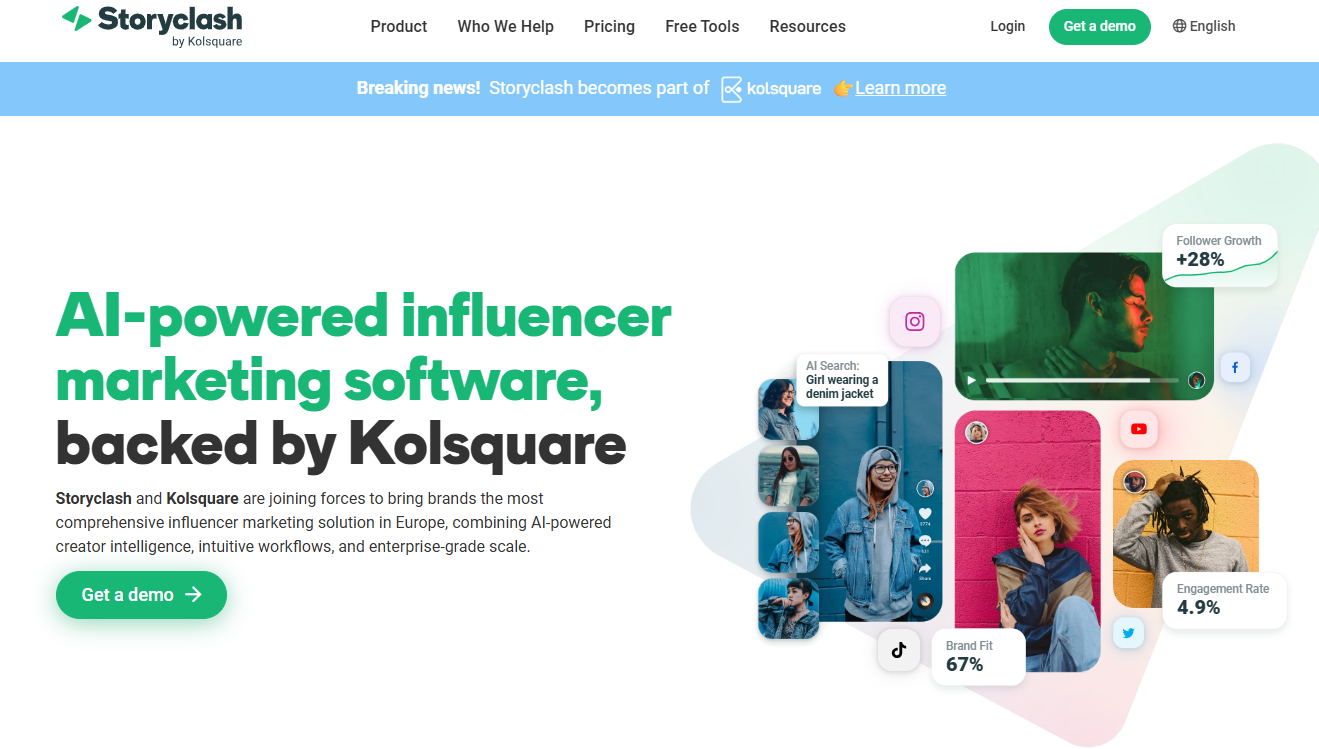
Storyclash differentiates itself through content performance analytics and competitive benchmarking. Agencies can see which creators their clients’ competitors are working with and how those partnerships perform – intelligence that directly informs strategy recommendations and competitive positioning.
The platform indexes 183M creator profiles and includes historical data on expired Stories, which is valuable for agencies evaluating a creator’s full content history rather than just what’s currently visible. AI-driven discovery uses image recognition and natural language prompts to surface creators, and a centralized campaign hub supports team collaboration.
Best for: Agencies that lead with competitive intelligence and content performance data to inform client influencer strategy.
Pricing:
- Business: starts at $870/month
- Enterprise: custom pricing
Standout features:
- Competitive Benchmarking: See which creators competitors are hiring and how those campaigns perform – directly actionable intelligence for client strategy.
- AI-Driven Discovery: Image recognition and AI prompts for finding creators, plus lookalike search based on existing partnerships.
- Historical Data Including Expired Stories: Access to full content history for thorough creator vetting before presenting to clients.
- Shopify Integration for ROAS Tracking: Track ROAS, CAC, and AOV at the campaign and creator level for eCommerce clients.
Storyclash lacks built-in contract generation and content licensing workflows, which means agencies need to manage those processes separately. Manual UGC repurposing rights handling adds administrative overhead at scale. For agencies that need end-to-end workflow coverage including outreach, CRM, and licensing, a platform with integrated automation across all stages may be more efficient.
10. Heepsy
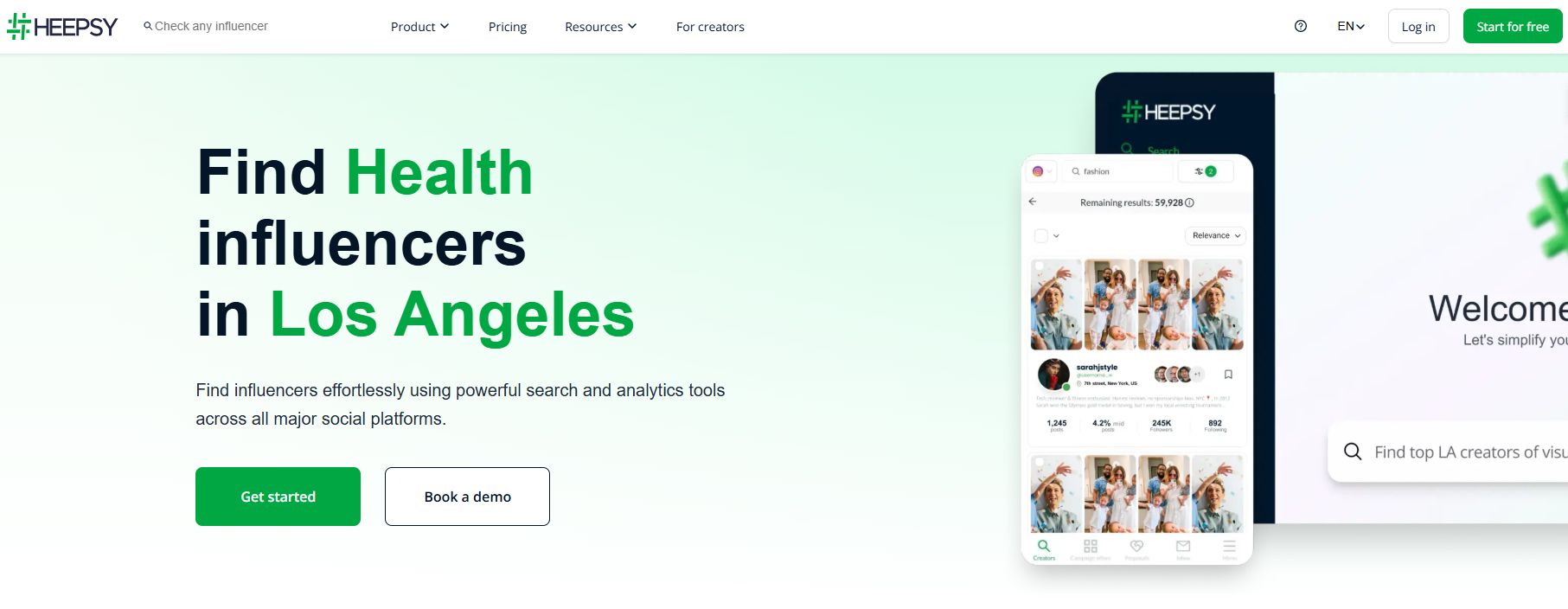
Heepsy offers the most accessible entry point on this list, with a free plan and paid tiers starting at $89/month. For smaller agencies building their influencer marketing practice or teams testing the channel before committing budget, Heepsy provides professional-grade discovery and outreach without the financial risk of enterprise platforms.
The Kanban-style CRM gives teams a visual pipeline for tracking creators through campaign stages, and bulk email outreach supports up to 3,000 emails per month with automated follow-ups. Authenticity filters and fake follower detection help agencies maintain quality standards even at the entry-level price point.
Best for: Smaller agencies and growing teams that need affordable discovery and outreach tools to build their influencer marketing practice.
Pricing:
- Free plan available
- Starter: $89/month
- Plus: $249/month
- Advanced: $369/month (required for Shopify sales tracking)
Standout features:
- 50M+ Influencer Database: Strong US and Europe coverage for primary Western markets.
- Kanban-Style CRM: Visual pipeline that makes it easy for team members to see campaign status at a glance.
- Bulk Email Outreach: Up to 3,000 emails per month with automated follow-up sequences.
- Authenticity Filters: Fake follower detection and audience quality scoring help maintain creator quality for client campaigns.
The best features – Shopify sales tracking, affiliate management – are locked behind the higher-priced plans. Outreach lacks AI personalization, so effort scales linearly with each new client campaign. Agencies that grow beyond 50 active creator partnerships will likely need the automation depth, multi-seat collaboration, and CRM sophistication of a full-suite platform.
Final Thoughts
Choosing an influencer marketing platform as an agency or growing team is a different decision than choosing one as a solo brand. The platform needs to work not just for your campaigns, but for your clients, your team members, and your operational model.
A few principles to guide the decision:
- Prioritize seat flexibility: Your team will grow. Platforms with tiered multi-seat plans – like Influencer Hero’s progression from 1 to 8 seats across standard tiers, with unlimited seats on agency plans – prevent the cost-per-seat spiral that makes platforms like Upfluence unsustainable for teams.
- Evaluate outreach scalability: If you’re managing outreach for multiple clients, you need AI-powered personalization that maintains quality at volume. Manual outreach breaks down fast when you’re running parallel campaigns.
- Match eCommerce support to your client base: Shopify-only integrations work if that’s all your clients use. Agencies with diverse client portfolios need platforms supporting multiple eCommerce platforms.
- Demand reporting that’s client-ready: If you’re reformatting platform data into slides before every client call, the platform isn’t doing its job. Look for exportable, presentation-ready reporting.
It’s also worth noting that many influencer marketing agencies have built their operations on these modern platforms – choosing tools that scale with their client roster rather than constraining it. The right platform should feel like it was designed for how your agency actually works, not how a single brand runs one campaign at a time.
FAQs
1. Which Upfluence alternative is best for agencies managing multiple clients?
Influencer Hero’s tiered seat structure (up to 8 seats on Business plans, unlimited on Agency plans) and CRM-driven workflow make it the strongest option for multi-client agencies. The automation engine lets account managers run parallel campaigns with AI-personalized outreach across clients without manual bottlenecks.
2. How important is multi-seat pricing when choosing a platform?
Critical for agencies and growing teams. Per-seat costs compound quickly. A platform charging $1,599/user/month becomes $4,797/month for just three team members. Compare total cost for your actual team size, not just the base price.
3. Can I avoid annual contract lock-in?
Several platforms offer month-to-month pricing. Influencer Hero, Modash, and Heepsy all provide flexible billing. This matters for agencies because client retainers shift – you don’t want a 12-month platform commitment when a client engagement ends in six months.
4. What features matter most for agency-scale operations?
Multi-seat collaboration, AI-powered outreach that maintains personalization at volume, CRM with pipeline management, multi-client campaign segmentation, and exportable client-ready reporting. The ability to integrate with multiple e-commerce platforms is also important for agencies with diverse client portfolios. Distributed agency teams also rely on tools like remote desktop apps to access client systems and internal platforms from anywhere without VPN friction.
5. Is it worth using a specialized analytics tool alongside an all-in-one platform?
It depends on your client’s expectations. Tools like HypeAuditor and Traackr offer deeper analytics and benchmarking that can supplement an all-in-one platform’s built-in reporting. However, for most agencies, a comprehensive platform with strong native analytics avoids the complexity of managing multiple tool subscriptions.
6. What’s the most affordable way for a new agency to start?
Heepsy’s free plan and Modash’s $199/month Essentials tier provide the lowest entry points. For agencies that want full workflow coverage from day one, Influencer Hero’s Standard plan at $649/month offers the most complete feature set among all-in-one platforms at entry-level pricing.