
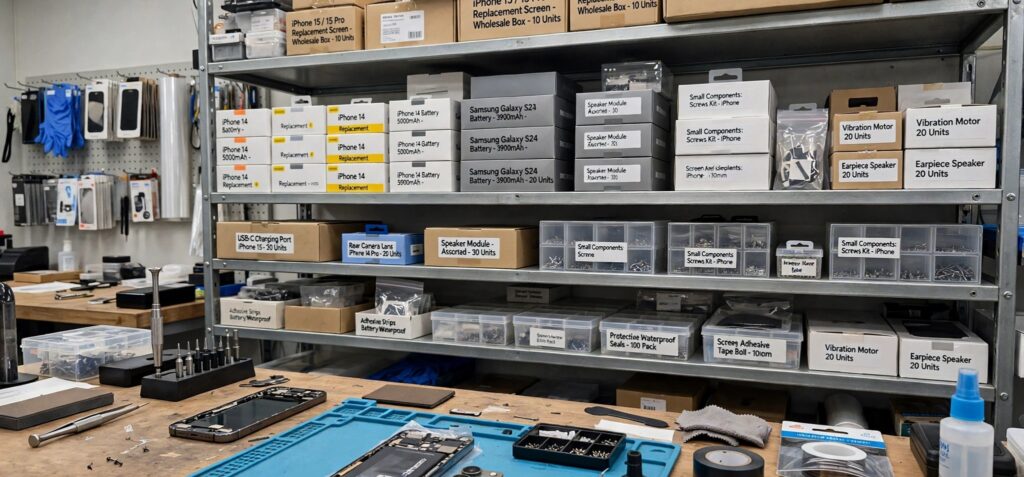
For a phone repair business, sourcing replacement components is an important part of daily operations. The parts selected affect repair costs, turnaround times, inventory management, and the experience customers receive. Buying in larger quantities can help workshops manage regular demand, but bulk purchasing also requires careful evaluation. A low purchase price alone does not establish whether a component is suitable for a particular repair. Product compatibility, condition, grading, supplier policies, and stock availability all deserve attention before an order is placed.
Start With Exact Device Compatibility
One of the most important checks is whether a replacement component matches the device being repaired. Similar phone models can have different internal layouts, display assemblies, connectors, and regional configurations. A part that looks correct may still be unsuitable for a particular variant.
When sourcing cell phone parts wholesale, repair shops should compare the complete model number rather than relying only on the device's marketing name.
For example, a Samsung Galaxy model may have different versions depending on its generation, network configuration, or sales region. Checking the model code against the product listing helps reduce incorrect orders and avoidable returns.
Other details worth checking include:
- Whether the component is designed for the exact device variant.
- Whether the assembly includes a frame or is supplied without one.
- Connector and flex cable configurations.
- Color options where applicable.
- Regional or carrier-specific compatibility.
These details are particularly important when ordering display assemblies, charging components, and internal flex cables.
Understand the Available Part Grades
Replacement components can differ in source, condition, construction, and price. Repair shops should understand how a supplier describes each grade before comparing products.
A clear grading system helps technicians distinguish between different product options and communicate realistic expectations to customers. Listings may identify components as aftermarket, refurbished, or other specified grades. The description should explain the condition and classification rather than relying on broad labels.
Check what the grade actually means
A grade should not be treated as a universal quality measurement across every supplier. One company's grading terminology may differ from another's. Shops should review the product description and any available condition information before placing a bulk order.
Account for refurbished components
Refurbished parts require particular attention because their previous use and condition can affect their suitability. Cosmetic grading, inspection details, and return eligibility should be reviewed separately. A refurbished component should not automatically be described as new.
Repair & Replacement Components for Samsung Devices
Samsung devices cover several product families, including Galaxy S, Galaxy A, Galaxy Z, and Galaxy Note models. Each family contains multiple generations and variants, so maintaining accurate inventory records is important for repair shops handling a broad range of devices.
When sourcing Repair & Replacement Components for Samsung Devices, technicians should identify the exact model and the component required before comparing available listings.
Common replacement categories include:
- Display assemblies: LCD or OLED screen assemblies and digitizers, with frame inclusion checked separately.
- Batteries: Replacement units matched to the correct device model.
- Charging components: Charging ports, dock assemblies, and related flex cables.
- Audio components: Loudspeakers, microphones, and other sound-related parts.
- Internal hardware: Cameras, button flexes, vibration motors, and smaller connectors.
The required component should match the diagnosed fault. For example, a charging problem does not always indicate that the charging port itself needs replacement. Checking the relevant circuitry and connections before ordering can help prevent unnecessary parts purchases.
Evaluate Supplier Testing and Product Information
Product descriptions provide the first indication of what a repair shop is purchasing. Listings should include enough information to distinguish between compatible models, component configurations, and product conditions.
Testing information is another useful consideration. Repair shops should look for clear explanations of what checks are performed and whether those checks apply to the specific product category. A general statement about testing should not be interpreted as confirmation that every possible feature has been evaluated.
For display assemblies, the listing may need to clarify the panel type and assembly configuration. For batteries, the relevant model reference and product condition are important. Smaller components may require close attention to connector design and physical dimensions.
Maintaining records of product references and supplier descriptions can also help workshops identify recurring issues across different orders.
Compare Wholesale Pricing With Total Inventory Costs
Bulk pricing can reduce the per-unit purchase cost, but the financial calculation should include more than the listed price.
Repair businesses should consider how frequently a component is needed, how much stock can be stored, and how quickly inventory is likely to move. Ordering a large quantity of a rarely requested part can tie up working capital and create storage challenges.
A practical purchasing review can include:
- Unit price at different order quantities.
- Shipping charges and delivery options.
- Minimum order requirements, if applicable.
- Return and replacement conditions.
- Current stock availability.
- Expected demand for each model.
It may be more practical to purchase frequently used components in larger quantities while keeping less common items at lower stock levels. Reviewing repair records can help identify which parts deserve priority.
Review Warranty and Return Conditions
Supplier policies can affect the cost of handling defective or unsuitable components. Before purchasing, repair shops should understand the conditions for returns, replacements, and refunds.
Injured Gadgets refers to its coverage as a limited lifetime replacement policy. The applicable conditions should be reviewed rather than assuming every product has identical coverage or that every issue automatically qualifies for replacement.
It is also useful to check the process for reporting a defective item, any documentation required, and whether the original packaging must be retained. Clear procedures can make inventory disputes easier to manage.
Consider Stock Availability and Ordering Reliability
A supplier's catalog may contain a broad range of components, but availability can change. Repair shops managing customer deadlines need to distinguish between products currently in stock and items that may require additional time to source.
For recurring repairs, keeping a record of frequently ordered product references can simplify repeat purchasing. Shops can also review whether alternative compatible options are listed for a particular model, provided the product grade and configuration are suitable.
Delivery methods, dispatch schedules, and order tracking are additional considerations when planning inventory replenishment. These details become especially relevant for workshops that handle a high volume of repairs.
Conclusion
Wholesale purchasing involves balancing compatibility, component condition, pricing, inventory requirements, and supplier policies. Careful product checks can reduce ordering errors and help repair businesses maintain a more organised parts inventory. Injured Gadgets is an independent wholesale supplier of replacement parts for repair shops and resellers, with product listings covering multiple device categories and clearly described component options.
Previously in Business news: How Model-Specific Replacement Parts Improve Smartphone Repairs