
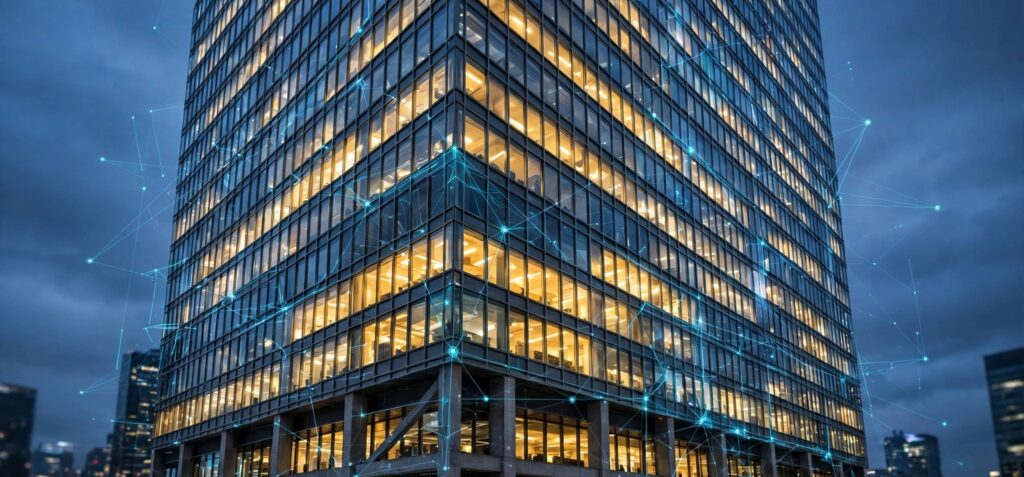
A commercial building can have automated lighting, smart thermostats and hundreds of connected sensors without necessarily being intelligent. Installing advanced technology is one thing. Making those systems work together to improve building performance is another.
For property developers and facility managers, the real value of smart building technology lies in how effectively it supports everyday operations. An intelligent commercial building should use information to manage resources, reduce unnecessary expenses and maintain comfortable conditions for occupants. Achieving those goals requires more than software. It also depends on reliable infrastructure, thoughtful planning and systems that can respond to changing business needs.
Intelligence Starts With Systems That Work Together
Commercial buildings rely on numerous systems to function properly, including heating, ventilation, lighting, security and access controls. When each operates independently, building managers may struggle to identify inefficiencies or coordinate adjustments.
A building management system can help connect these functions through centralized monitoring and control. For example, occupancy sensors might communicate with lighting and ventilation systems to reduce unnecessary operation when meeting rooms are empty.
However, integration needs to serve a practical purpose. Connecting equipment simply because the technology allows it may introduce unnecessary complexity. The objective should be to make building operations easier to understand and manage.
Smart Technology Needs Reliable Energy Infrastructure
Every automated system depends on electricity, making reliable power infrastructure an important part of intelligent building design. Advanced monitoring software offers limited value if a facility experiences frequent outages or lacks sufficient electrical capacity.
Commercial property owners should therefore consider energy requirements alongside their plans for connected technology. This becomes particularly important for facilities operating energy-intensive equipment or anticipating future expansion.
Beyond traditional utility connections, some buildings may benefit from distributed energy systems that provide additional flexibility. Exploring resources such as recpower.com can help developers understand how on-site power generation, battery storage and related infrastructure may support commercial energy requirements.
The right arrangement depends on the property's operating needs, available utility capacity and long-term financial considerations. Reliable infrastructure provides the foundation that allows intelligent systems to perform consistently.
Real-Time Data Should Lead to Better Decisions
Connected buildings can collect enormous amounts of information, but having access to more data doesn't automatically improve performance. Facility managers need information that helps them identify problems and make useful adjustments.
Sensors can monitor electricity consumption, indoor temperatures, equipment performance and occupancy patterns. When this information appears on accessible dashboards, employees can identify unusual conditions without manually checking every system.
Consider an office building that continues consuming substantial electricity overnight. Monitoring data may reveal equipment operating outside scheduled hours, allowing managers to investigate whether changes are necessary.
The important distinction is between collecting information and using it to improve operations. Data becomes valuable when it leads to measurable decisions.
Automation Should Reduce Waste Without Complicating Operations
One advantage of intelligent building technology is the ability to automate repetitive tasks that would otherwise require manual attention.
Lighting systems can respond to occupancy, while heating and cooling equipment can follow schedules that reflect actual building use. These adjustments may reduce unnecessary energy consumption without requiring constant supervision.
However, automation needs appropriate settings and oversight. An office that becomes uncomfortably warm because its cooling system follows an outdated schedule isn't operating intelligently.
Facility managers should regularly review automated processes and make adjustments when occupancy patterns or business requirements change. Effective automation saves effort while preserving the flexibility needed for everyday operations.
Maintenance Becomes More Effective With Better Information
Unexpected equipment failures can interrupt business operations and create substantial repair expenses. Intelligent building systems can help maintenance teams identify potential problems before equipment stops functioning.
Connected monitoring tools may detect unusual temperatures, changing energy consumption or performance patterns that suggest mechanical problems.
For example, an HVAC unit that gradually requires more electricity to maintain the same indoor temperature may need inspection. Recognizing that change early gives maintenance teams an opportunity to investigate before a complete breakdown occurs.
This approach supports more informed maintenance scheduling, although monitoring technology cannot replace professional inspections or routine servicing.
The benefit comes from understanding equipment conditions rather than waiting for obvious signs of failure.
Energy Efficiency Must Be Measured Against Actual Performance
A building equipped with efficient appliances and automated controls isn't necessarily operating at its lowest practical energy consumption.
Electricity use depends on operating hours, occupancy, equipment settings and the condition of building systems. Two similar properties may have different energy expenses because their activities and schedules vary.
Energy monitoring helps property managers identify where electricity is consumed and whether adjustments produce meaningful results.
Comparing performance against historical information can reveal changes that deserve attention. Submetering may also help distinguish consumption associated with different systems or areas.
Property owners should evaluate both electricity consumption and utility costs, since changes in demand and billing structures can influence financial outcomes.
Intelligent Buildings Must Work for Their Occupants
Commercial properties exist to support the people and businesses using them. Technology that reduces operating expenses but creates uncomfortable conditions may undermine that purpose.
Temperature, ventilation, lighting and accessibility all influence how occupants experience a building. Intelligent systems should help maintain appropriate conditions while allowing managers to respond when problems arise.
For instance, occupancy monitoring might help adjust ventilation in a busy conference area. However, employees should still have a straightforward way to report discomfort or equipment problems.
Building intelligence isn't measured solely through energy savings or automation capabilities. Occupant experience remains an important indicator of whether technology is functioning as intended.
Future-Ready Buildings Need Flexibility
Commercial properties rarely maintain identical operating requirements throughout their useful lives. Businesses expand, tenants change and new equipment can increase electricity demand.
Technology investments should account for these possibilities without requiring property owners to replace entire systems whenever circumstances change.
Scalable building controls, adaptable electrical infrastructure and compatible software can make future modifications easier to manage.
Cybersecurity, technical support and equipment maintenance also deserve consideration because connected systems require ongoing attention.
Rather than purchasing every available feature, developers should prioritize systems that address current needs while allowing reasonable room for future changes.
Building Intelligence Is Ultimately About Performance
A genuinely intelligent commercial building does more than connect devices or automate routine tasks. It uses technology and infrastructure together to improve efficiency, maintain reliable operations and support the people who occupy the property.
Successful investments begin with identifying practical challenges and selecting systems that address them. Reliable electricity, useful performance data and adaptable controls all contribute to that process.
Ultimately, the smartest commercial buildings aren't necessarily those with the most technology. They're the ones that use it effectively, consistently and with a clear understanding of what the property needs to accomplish.
Previously in Technology: Best Tempo Marking Guide for Beginners