
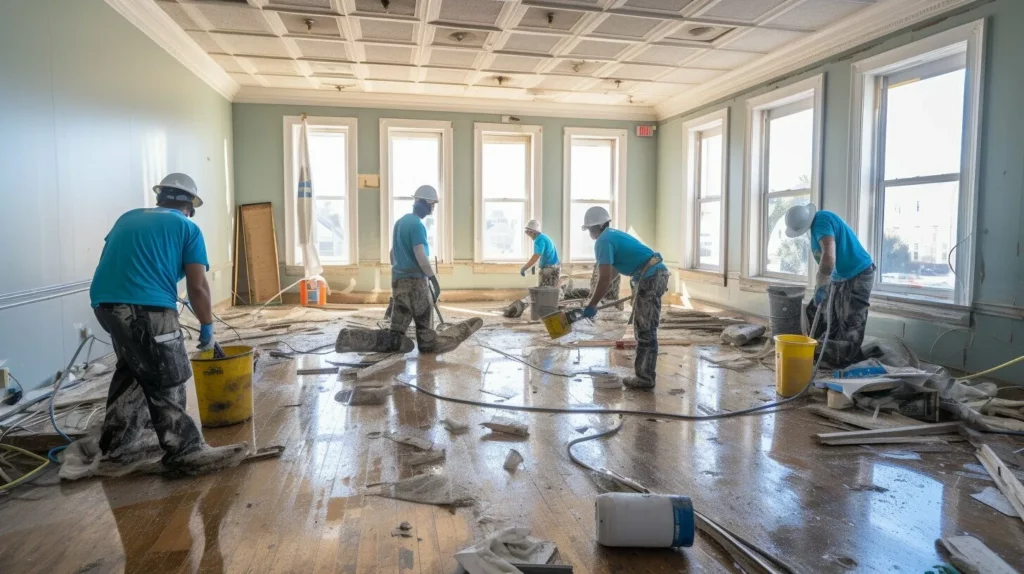
Water damage can destroy homes by causing structural problems, mold growth, and the loss of belongings. To get your home or business back to the way it was before the damage, you need to take care of water damage quickly and correctly. Modern water damage restoration has come a long way, leveraging advanced tools and techniques to ensure efficient and thorough recovery. Here’s an overview of the top tools and methods used by a professional water damage restoration company to bring properties back to life.
- Moisture Detection Tools
Before restoration begins, identifying the extent of water damage is crucial. Restoration professionals use high-tech moisture detection tools, including:
- Moisture Meters: These handheld devices measure moisture levels in walls, floors, and ceilings, helping experts pinpoint areas that need attention.
- Thermal Imaging Cameras: Using infrared technology, these cameras detect hidden water pockets behind walls or under flooring, preventing future complications.
These tools ensure no water is left untreated, reducing the risk of mold growth or structural weakening.
- High-Powered Water Extractors
Removing standing water quickly is a priority in water damage restoration. Water extractors are designed to tackle everything from minor leaks to severe flooding. Key types include:
- Portable Extractors: Lightweight and easy to maneuver, these are ideal for small spaces.
- Truck-Mounted Extractors: These machines have higher suction power and are used for large-scale water removal, such as in commercial spaces or basements.
Efficient water extraction minimizes further damage and accelerates the drying process.
- Industrial-grade dehumidifiers
After water extraction, reducing humidity levels is critical. Dehumidifiers play a key role in drying out affected areas:
- Refrigerant Dehumidifiers: These are commonly used for standard water damage jobs, effectively pulling moisture from the air.
- Desiccant Dehumidifiers: These machines are great for places with low temperatures because they use silica gel to soak up moisture, which makes them good for cold places or materials that are easily damaged.
Dehumidifiers prevent moisture from lingering, which can lead to mold growth or deterioration of materials.
- Air Movers
Air movers, also known as industrial fans, are essential for promoting airflow and speeding up the drying process. They direct air across surfaces, aiding in the evaporation of moisture from carpets, walls, and furniture.
- Axial Air Movers: These fans are designed for large spaces and can move high volumes of air.
- Centrifugal Air Movers: Compact and powerful, these are used to target specific areas like baseboards or under furniture.
By combining air movers with dehumidifiers, restoration professionals create a controlled drying environment.
- HEPA Air Scrubbers
Water damage often leads to poor air quality due to mold spores, dust, and bacteria. HEPA air scrubbers are used to purify the air during the restoration process. These devices:
- Capture airborne contaminants with a high-efficiency particulate air (HEPA) filter.
- Help restore indoor air quality to a safe level for occupants.
Air scrubbers are particularly beneficial in flood situations where contaminants from sewage or chemicals are present.
- Anti-Microbial Treatments
Preventing mold and bacteria growth is a top priority in water damage restoration. Restoration experts apply antimicrobial treatments to affected surfaces to:
- Inhibit mold spores from developing.
- Sanitize materials and prevent odor buildup.
These treatments are a proactive measure, ensuring a safer and healthier environment.
- Controlled Demolition Techniques
In some cases, materials like drywall or insulation may be beyond repair. Controlled demolition involves the strategic removal of these materials to ensure proper drying and restoration.
- Cutting Away Damaged Areas: Professionals remove only the sections of drywall or flooring that are irreparable.
- Replacing Materials: Once the area is fully dry and sanitized, new materials are installed to restore the property’s structure.
Controlled demolition minimizes waste and ensures a precise restoration.
- Advanced Monitoring Technology
During and after the restoration process, monitoring tools are used to track progress.
- Moisture Mapping Software: Restoration companies use software to map out moisture levels throughout the property.
- Data Loggers: These devices track temperature and humidity over time, ensuring the drying process is on track.
Such technologies allow a water damage restoration company to provide transparent updates to property owners.
Conclusion
To get the best results, modern water damage repair uses both cutting-edge tools and tried-and-true methods. Every step of the process, from finding moisture to controlled demolition, is meant to keep damage to a minimum, lower risks, and quickly fix homes. If your home or business has water damage, hiring a professional water damage repair company will put it in the hands of experts who have the latest tools and know-how to do the job. If you take care of water damage quickly and with the right tools, you can save time, money, and stress and get back to normal life faster.