
The fusion of Artificial Intelligence and the Internet of Things, known as AIoT, is reshaping how we live and interact with the world around us. By combining IoT’s connectivity with AI’s analytical power, these systems don’t just collect data. They interpret it instantly, predict needs, and act autonomously. This shift is fueling explosive growth.
According to MarketsandMarkets, the global AIoT market is projected to expand from approximately $25.44 billion in 2025 to $81.04 billion by 2030, growing at a CAGR of 26.1%. Meanwhile, the smart home sector is expected to reach about $95.83 billion in 2026, as consumers increasingly seek devices that deliver convenience, energy savings, health insights, and now—deeper connections to the outdoors.
This article explores AIoT’s evolution, its impact on smart homes, its exciting extension into outdoor ecological monitoring, real-world examples like the Birdfy bird feeder with camera, key challenges, and what lies ahead. Together, these developments show how AIoT is creating seamless, intelligent ecosystems that enhance daily life while fostering environmental awareness.
1. Understanding AIoT: From IoT to Intelligent Ecosystems
AIoT represents the next evolution of IoT. Traditional IoT networks focus primarily on gathering and transmitting data. AIoT goes further by embedding machine learning, edge computing, and real-time analytics, enabling devices to make smart, independent decisions on the spot.
Here’s a quick comparison:
| Feature | IoT | AIoT |
| Core Function | Data collection and transmission | Real-time analysis and autonomous decision-making |
| Processing | Mostly cloud-based | Edge + cloud hybrid |
| Intelligence | Minimal, rules-based | Machine learning-driven, adaptive |
| Response | Reactive | Predictive and proactive |
| Efficiency | Moderate | Optimised through continuous learning |
The AIoT technology stack powering this leap includes:
- Sensors and Edge AI: Devices now capture environmental, behavioral, or biological data and process it locally. This cuts latency and enables instant responses.
- 5G and Low-Power Networks: High connectivity speed is critical to AIoT devices. 5G and LPWAN are used to guarantee reliable communication for both indoor and outdoor applications, like remote monitoring.
- Hybrid Architecture: Edge computing handles immediate tasks for speed and privacy, while the cloud manages long-term storage, deeper analytics, and model updates.
- Privacy and Security: As AIoT devices gather sensitive information, they should be used in accordance with specific rules, including GDPR. Anonymisation, access control, and secure encryption techniques ensure user trust and preserve data integrity.
These building blocks transform simple connected gadgets into adaptive systems that learn from patterns, anticipate needs, and deliver meaningful value, whether optimizing home energy or tracking backyard wildlife.
- AIoT inSmart Homes: From Convenience to Predictive Living
Smart homes have moved beyond basic voice commands and scheduled routines. AIoT-enabled systems incorporate machine learning to analyse trends, streamline their operation, and act independently. It transfers homes to reactive automation to intelligent ecosystems that increase comfort, efficiency, and security.
Key Application areas include:
- Energy Management: AI-powered thermostats and systems analyze occupancy, weather forecasts, and household routines to adjust heating, cooling, and lighting automatically. This reduces waste and lowers utility bills without sacrificing comfort.
- Security Monitoring: AIoT security systems apply machine learning to detect unusual activity, identify intrusions, and distinguish between humans, pets, or moving objects. It reduces false alarms and offers real-time alerts to homeowners, which gives them convenience and peace of mind.
- Health & Comfort: Monitoring interior environmental factors, including lighting, humidity, and air quality, improves well-being. Adaptive lighting systems regulate colour and intensity based on the time of day and activity, whereas the air-quality sensors switch on ventilation or purification systems when they detect any pollutants. It provides a better environment to live in.
- Device Interoperability: The use of standards, like Matter, is eliminating compatibility barriers across devices made by different manufacturers. Unified communication enables users to easily combine smart thermostats, lighting, security cameras, and appliances into one smart ecosystem, which makes it easier to control and automate.
When these applications are combined, AIoT redefines what a smart house is. Beyond ease of use, it makes predictive living possible, transforming homes into adaptable spaces that actively support the lifestyle and well-being of their occupants.
- Extending AIoT to Outdoor Ecological Monitoring: Bridging Homes and Nature
Although AIoT has become more well-known in smart homes, its promise goes much beyond indoor environments. Outdoor ecological monitoring is an organic development that connects human habitations with the environment.
Homeowners and communities can now track local ecosystems in meaningful ways, turning passive observation into active participation.
Typical outdoor use cases include:
- Wildlife Monitoring: AI-enabled cameras detect and identify animals, birds, and insects, revealing migration patterns and species diversity with minimal human disturbance.
- Environmental Tracking: Devices track soil moisture, air quality, and temperature, along with the activity levels of birds and insects. When data is continuously collected, it aids in decision-making regarding urban planning, gardening, and climate adaptation strategies.
- Sustainable Daily Habits: Smart irrigation, compost sensors, and carbon trackers encourage eco-friendly behaviors while integrating effortlessly into backyard routines.
Outdoor deployments face unique hurdles—harsh weather, power constraints, and connectivity issues. Solutions like solar power, rugged weatherproof designs, long-life batteries, and advanced edge AI (achieving high accuracy in species recognition) are making these systems reliable and low-maintenance.
By linking smart homes with nature, AIoT creates a holistic experience: your indoor environment stays optimized while your backyard becomes a living, interactive ecosystem.
- Real-World Impact:Birdfy as a Bridge Between Indorr and Outdoor
Products that successfully merge these worlds stand out. The Birdfy smart bird feeder is a compelling example of AIoT in action, demonstrating how technology can make ecological monitoring accessible, engaging, and fun for everyday users.
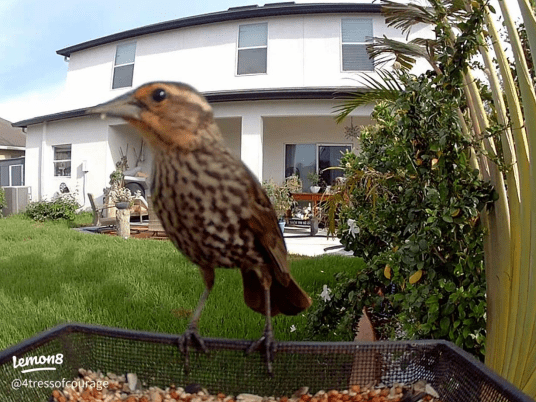
Equipped with a 2K HD camera and solar-powered design, Birdfy uses edge AI to identify over 6,000 bird species in real time. When a bird visits, the system captures clear footage and sends instant notifications to your phone, eliminating the need for constant manual watching.
Beyond simple alerts, it logs species presence, visit frequency, and behavior patterns, turning occasional bird feeding into ongoing backyard biodiversity tracking. Users often shift from passive observers to informed participants, gaining appreciation for local wildlife and making small changes that support sustainability.
Birdfy highlights broader outdoor AIoT trends:
- Ease of Use: Simple setup allows non-experts to contribute meaningful ecological data.
- Edge Intelligence: On-device processing delivers fast insights while protecting privacy.
- Behavioral Change: It encourages regular interaction with nature, blending education with entertainment.
In this way, devices like Birdfy don’t just add smart features to the home—they extend intelligence into the garden, fostering a more conscious connection between daily life and the environment.
- Challengesand the Road Ahead for AIoT
Despite strong momentum, AIoT faces real obstacles that must be addressed for widespread adoption.
- Major Hurdles
- Data Privacy and Security: Collecting behavioral and environmental data raises legitimate concerns. Robust encryption, transparent practices, and regulatory compliance (such as GDPR) are essential to maintain trust.
- Cost and Mass Adoption Barriers: Premium features can limit reach. Scaling production and offering tiered pricing will help more consumers benefit.
- Fragmentation: Proprietary protocols still hinder interoperability. Emerging standards like Matter are promising but need broader adoption.
- Outdoor Durability: Devices must withstand extreme conditions while remaining energy-efficient, a constant engineering challenge.
5.2 2026–2030 Trend Predictions
Expect more powerful edge AI for lower latency and better privacy, deeper integration with 6G networks and digital twins for advanced simulations, stronger emphasis on sustainable design (recyclable materials and green energy), and supportive policies like the EU Green Deal that promote ethical AIoT deployment.
Overcoming these challenges will require collaboration among manufacturers, policymakers, and users. The reward? A more resilient, intelligent, and environmentally attuned future.
Conclusion
AIoT is redefining smart living by extending intelligence from indoor automation to a harmonious blend with the natural world. What began as convenient home gadgets is evolving into systems that help us live more efficiently indoors while becoming better stewards of the environment outdoors.
From predictive energy savings and enhanced security to real-time wildlife insights via tools like Birdfy, AIoT empowers smarter decisions and deeper connections—to our homes and to nature.
For businesses and consumers alike, exploring AIoT solutions represents more than adopting new technology. It’s a step toward sustainable, aware living in an increasingly connected world.
In the end, AIoT is more than just a technological development; it is the foundation of tomorrow’s lifestyle, where intelligence, connectivity, and sustainability come together to make the world smarter and more peaceful.