
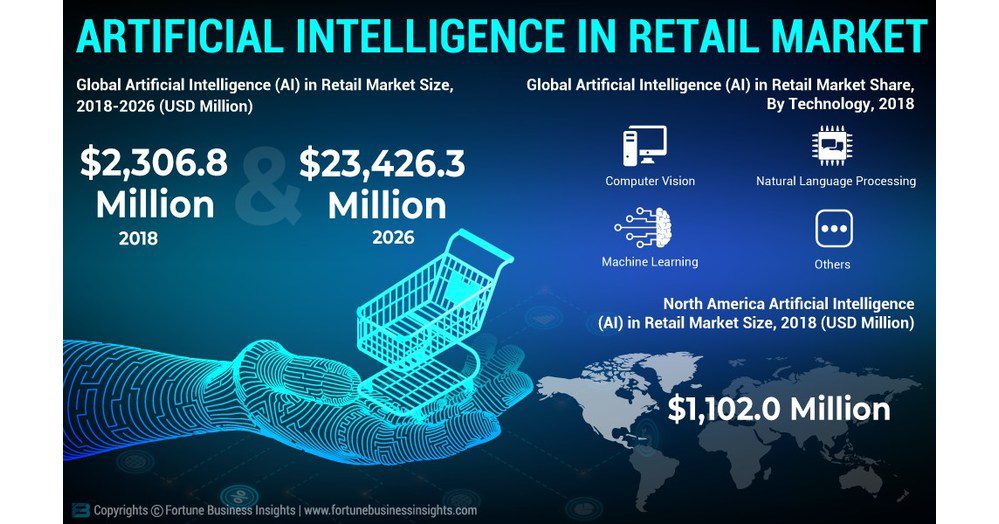
In 2026, the retail industry has moved past the “Omnichannel” era into the age of Unified Intelligence. Shopping is no longer a linear path of discovery, evaluation, and purchase; it is an immersive, highly personalized event orchestrated by Artificial Intelligence. For a modern Business, physical stores have transformed from mere points of sale into high-tech experience centers and micro-fulfillment hubs. Simultaneously, Digital Marketing has pivoted toward “Agentic Commerce,” where marketing is directed as much toward a consumer’s AI shopping assistant as the consumer themselves. This article explores how Technology—from Augmented Reality (AR) smart mirrors to predictive hyper-logistics—has made the “Invisible Purchase” a reality.
The Technological Architecture: Phygital Convergence
By 2026, the boundary between physical and digital (“Phygital”) has virtually disappeared.
-
AR-Enabled Smart Mirrors: In apparel and beauty, the “Fitting Room” has been digitized. Smart mirrors use Computer Vision to overlay 3D garments or makeup on a customer’s reflection in real-time. These mirrors don’t just show the product; they provide AI-driven styling advice based on the user’s past purchases and current fashion trends.
-
IoT-Driven Smart Shelves: Retailers now utilize shelves equipped with weight sensors and RFID tags. When a customer picks up an item, the shelf recognizes the action, potentially triggering a personalized discount on a nearby digital display or automatically adding the item to a “Virtual Cart” for a cashierless checkout.
-
Spatial Computing in the Aisle: Using AR glasses or smartphones, shoppers can see “Digital Overlays” in store aisles—highlighting products that meet their dietary restrictions or displaying real-time customer reviews floating next to the physical product.
Artificial Intelligence: The Rise of the Shopping Concierge
In 2026, Artificial Intelligence acts as the ultimate bridge between consumer intent and product availability.
1. Agentic Commerce and “Machine Customers”
A significant trend in 2026 is the rise of Agentic AI. Consumers now delegate routine tasks—like restocking household essentials—to AI agents. Your “Smart Kitchen” agent monitors stock levels and autonomously negotiates with various retailers to find the best price and delivery slot, completing the transaction without human intervention.
2. Hyper-Personalization at Scale
AI no longer provides “People who bought this also liked…” suggestions. Instead, it creates Situational Recommendations. By analyzing real-time data—including local weather, the user’s calendar (e.g., an upcoming wedding), and biometric sentiment—AI suggests the perfect outfit or gift at the exact moment the need arises.
3. Real-Time Dynamic Pricing
Using AI-driven “Price Elasticity” models, retailers can adjust prices in seconds. If a local event causes a spike in demand for umbrellas, or if inventory levels for a specific electronic item are too high, the AI automatically recalibrates pricing across all digital and physical touchpoints to maximize both margin and turnover.
Hyper-Logistics: The 30-Minute Standard
The Business of retail in 2026 is won or lost on the “Last Mile.”
-
Micro-Fulfillment Centers (MFCs): To meet the demand for “Hyperlocal” delivery (often within 30 minutes), retailers have converted the backrooms of urban stores into automated MFCs. Here, AI-governed robots pick and pack orders with 99.9% accuracy.
-
Predictive Inventory Positioning: AI doesn’t just react to orders; it anticipates them. By analyzing social signals and local trends, retailers “Pre-position” stock in delivery vans or neighborhood hubs before a single order is even placed.
-
Autonomous Last-Mile Delivery: In 2026, sidewalk robots and delivery drones have become common sights in urban areas, significantly reducing the cost and carbon footprint of small-package delivery.
Digital Marketing: Optimizing for the “Algorithm and the Individual”
Digital Marketing for retail has become a dual-track strategy.
-
GEO (Generative Engine Optimization): Marketers now optimize their product data for the “AI Concierge.” Ensuring that an AI agent recommends your brand for “durable, vegan hiking boots” requires high-authority, semantically rich data structures.
-
Experience-Based “Retailtainment”: Since the “utility” of shopping is being handled by AI, physical stores are marketed as destinations. Marketing campaigns focus on in-store yoga classes, digital art installations, or exclusive “VIP” product launches to drive foot traffic.
-
Conversational “Live” Commerce: Social media has evolved into a 24/7 shopping channel. AI avatars host live-stream shopping events, answering thousands of individual viewer questions simultaneously and facilitating “One-Tap” purchases within the video feed.
Challenges: Data Privacy and the “Human Touch”
The “Intelligent Retail” era faces critical hurdles in 2026.
-
The Privacy Paradox: Hyper-personalization requires vast amounts of data. Retailers must navigate strict new “Explainable AI” regulations, proving to consumers exactly how their data is used and ensuring that AI “Nudges” don’t become manipulative.
-
Staff Evolution: As AI handles logistics and basic queries, the role of the retail associate has shifted to “Brand Ambassador.” The challenge for businesses is upskilling workers to provide the high-level empathy and expert consultation that machines still cannot replicate.
Conclusion
The convergence of Technology, Business, Digital Marketing, and Artificial Intelligence has transformed retail from a transactional industry into a relationship-driven service. In 2026, the winners are those who use AI to remove the “Friction” of buying while using human creativity to enhance the “Joy” of shopping. By embracing the “Intelligent Storefront,” the retailers of 2026 are not just selling products; they are curating lifestyles.