
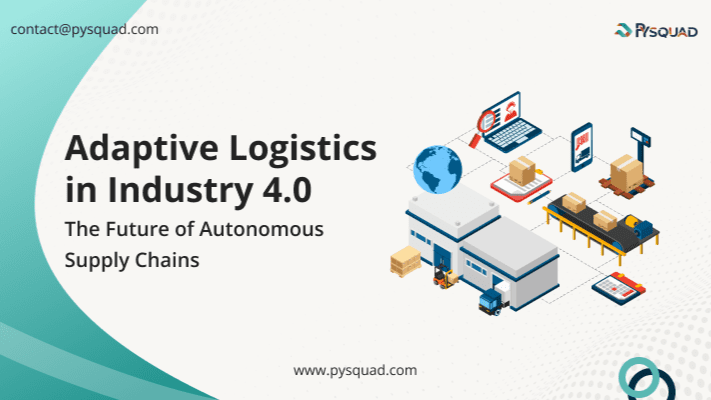
In 2026, the global logistics industry has reached its “Autonomous Inflection Point.” The supply chain is no longer a reactive sequence of events but a Predictive, Self-Healing Ecosystem. We have moved beyond the “Amazon Effect” into the era of Hyper-Logistics, where Artificial Intelligence orchestrates thousands of moving parts in real-time. This year marks the launch of the first fully operational Autonomous Freight Corridors—dedicated highway lanes where driverless Class-8 trucks move goods 24/7 without human intervention. For a modern Business, logistics has shifted from a “Cost Center” to a “Competitive Weapon.” Meanwhile, Digital Marketing has pivoted toward “Radical Traceability,” where the journey of a product is as important as the product itself.
The Technological Architecture: The Infrastructure of Autonomy
By 2026, the physical world has been “instrumented” to support machine-led movement.
-
Autonomous Freight Corridors: Major routes like the “Texas Triangle” (Dallas-Houston-San Antonio) and the Monterrey-Laredo “Green Corridor” now feature dedicated infrastructure for self-driving trucks. These Technology hubs use V2X (Vehicle-to-Everything) sensors, allowing trucks to “talk” to the road and each other to maintain perfect drafting distances, saving 20% on fuel.
-
Operational Digital Twins: Logistics providers no longer look at maps; they look at “Living Simulations.” A Digital Twin of a global shipping network now integrates real-time port congestion data, weather anomalies, and even labor strikes, allowing AI to trigger contingency plans before a bottleneck physically forms.
-
Micro-Fulfillment Centers (MFCs): Urban logistics has been “De-centralized.” Empty retail basements and parking structures have been converted into automated MFCs where AI-governed robots pick and pack orders in under five minutes, enabling the 30-minute delivery standard of 2026.
Artificial Intelligence: The Agentic Supply Chain
In 2026, Artificial Intelligence has transitioned from “Predictive” (telling you what will happen) to “Agentic” (fixing it for you).
1. The Self-Healing Grid
If a port in Shanghai slows down due to a typhoon, an Agentic AI doesn’t just alert the manager. It autonomously renegotiates freight rates with alternative carriers, reroutes containers to a secondary port, and adjusts the “Arrival ETA” across the entire digital marketing stack—all in seconds.
2. Cognitive Human-Machine Orchestration
We aren’t seeing the “end of the driver,” but the “birth of the Fleet Controller.” Experienced truck drivers have been upskilled into Remote Operations Centers, where they use VR interfaces to manage a fleet of 10-20 autonomous trucks, intervening only during complex “Edge Case” maneuvers or urban docking.
3. Hyper-Local Demand Sensing
AI now senses demand at the “Neighborhood Level.” By analyzing social media trends and local events, logistics AI “pre-positions” inventory in local dark stores before customers even place an order, making “Predictive Shipping” a reality for top-tier retailers.
Digital Marketing: Selling “Certainty and Conscience”
Digital Marketing for logistics and e-commerce in 2026 is defined by the “Proof of Journey.”
-
Radical Traceability: Consumers now demand to see the “Carbon Path” of their delivery. Marketers use blockchain-backed data to show that a package was delivered via an electric autonomous van powered by renewable energy, turning “Green Logistics” into a primary brand differentiator.
-
GEO (Generative Engine Optimization): As businesses ask AI, “Which 3PL (Third-Party Logistics) provider has the lowest disruption risk for cross-border electronics?”, providers are optimizing their “Resilience Scores” and “On-Time Performance” data to capture the top spot in AI-driven procurement.
-
Interactive Last-Mile Experience: The “Tracking Link” has evolved. Customers now use AR to see the exact location of their delivery drone or robot in 3D, receiving AI-generated updates that provide “Hyper-Accurate ETAs” within a 2-minute window.
Business Transformation: From “Shipping” to “Synchronized Value”
The internal Business model of logistics has shifted toward “Elasticity.”
-
Logistics-as-a-Service (LaaS): Small businesses can now access “Global-Scale” logistics. Through cloud-based platforms, an SME can plug into an autonomous truck network or a robot-run warehouse on a “Pay-per-Parcel” basis, eliminating the need for massive capital investment.
-
Nearshoring 2.0: High-speed autonomous corridors (like the Nuevo León-Texas link) have made “Nearshoring” more efficient than offshore manufacturing. The business logic has shifted: it is better to produce in Mexico and ship via a 6-hour autonomous corridor than to wait 30 days for a container from overseas.
-
Circular Logistics: In 2026, “Returns” are no longer a loss. AI-driven Reverse Logistics systems automatically grade returned items, route them to the nearest refurbishment center, or re-list them on “re-commerce” platforms, turning waste into a secondary revenue stream.
Challenges: The “Infrastructure Gap” and Regulatory Speed
The 2026 logistics revolution faces two primary speed bumps.
-
The Infrastructure Divide: While “Smart Corridors” exist in tech hubs, the “Rural Gap” is growing. The professional challenge of 2026 is creating a “Universal Autonomous Standard” that allows driverless systems to operate across state and national borders with different infrastructure levels.
-
Cyber-Physical Security: A “Self-Healing” chain is only as strong as its code. In 2026, Cybersecurity for logistics is a national security issue. A single breach could theoretically halt a nation’s food or medical supply, making “Quantum-Safe” encryption (Article 34) a mandatory requirement for logistics providers.
Looking Forward: Toward the “Instant World”
As we look toward 2030, the “Intelligent Flow” will lead to a “Post-Inventory” world. With the combination of Hyperloop for long-haul cargo and autonomous “Last-Inch” robots, the time between “Thinking of a Product” and “Holding the Product” will shrink toward zero.
Conclusion
The convergence of Technology, Business, Digital Marketing, and Artificial Intelligence has turned the “Back-End” of the economy into its most “Forward-Thinking” sector. In 2026, the winners are those who move data as fast as they move boxes. By embracing the “Intelligent Flow,” the logistics leaders of 2026 are building a world where geography is no longer a barrier to growth.