
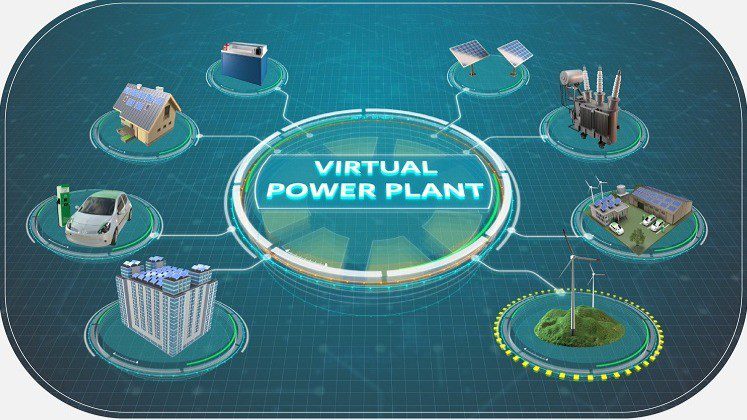
In 2026, the energy sector is facing its most significant “Power Crunch” in a generation. The global surge in Artificial Intelligence data centers—now consuming as much electricity as entire nations like Germany—has turned the grid into the world’s most critical bottleneck. To prevent a total “Gridlock,” the industry has embraced the Smart Grid, a $75 billion market this year where Artificial Intelligence acts as the central nervous system. For a modern Business, energy is no longer a utility bill to be paid; it is a digital asset to be traded via Virtual Power Plants (VPPs). Meanwhile, Digital Marketing has taken on the role of “Energy Transparency,” with utilities competing to prove their reliability to a public increasingly wary of AI-driven price spikes.
The Technological Architecture: The Internet of Energy
By 2026, the grid has become “Software-Defined,” treating electrons with the same precision that the internet treats data packets.
-
Virtual Power Plants (VPPs) at Scale: VPPs have moved from pilot projects to core infrastructure. By aggregating thousands of “Edge” resources—residential batteries, EV chargers, and smart water heaters—utilities can now conjure “Instant Capacity.” In the U.S. alone, VPPs are expected to offset 22% of peak demand growth this year, providing a cleaner alternative to fossil-fuel “Peaker” plants.
-
Intelligent Energy Storage (IESS): Battery technology has transcended simple storage. 2026 systems are “Intelligent,” using AI-driven management to decide—within milliseconds—whether to charge from the sun, discharge to the grid for profit, or hold reserves for a predicted storm. The IESS market has surged to $15.8 billion this February.
-
Grid Protocols & Plug-and-Play: Taking a cue from the internet’s TCP/IP, 2026 is seeing the rise of Unified Grid Protocols. This Technology allows new solar farms or data centers to connect to the grid with minimal custom engineering, drastically reducing the 3-year “Interconnection Backlog” that plagued the early 2020s.
Artificial Intelligence: The Algorithmic Dispatcher
In 2026, Artificial Intelligence is the only force capable of balancing a grid that now includes millions of intermittent renewable sources.
1. Agentic Grid Orchestration
We have entered the era of Agentic AI in utilities. Unlike older systems that just flagged issues, these autonomous agents now manage the “Flow and Forecast.” They scan weather patterns, satellite imagery, and social media signals to predict demand surges, automatically rerouting power across “Micro-grids” to prevent cascading outages before a human operator even sees a warning light.
2. Predictive Maintenance for Renewables
AI is now the “Guardian” of green energy. By analyzing vibration and thermal data from wind turbines and solar inverters, AI algorithms predict structural failures months in advance. Startups like Windrover are using neural networks to “listen” to turbine blades, reducing unscheduled downtime by 30% this year.
3. Data Center “Power Capping”
To survive the 2026 energy shortage, data centers are using AI to manage their own hunger. “Power Capping” algorithms now limit processor usage to 60-80% during peak grid stress, reducing temperatures and energy draw by up to 20% without significantly impacting user latency.
Digital Marketing: The “Grid Citizen” Brand
Digital Marketing in the energy sector has moved from “Save the Planet” slogans to “Grid Participation” rewards.
-
The “Prosumer” Narrative: Marketers are targeting homeowners not just as customers, but as “Micro-Utilities.” Campaigns for home batteries focus on “Energy Sovereignty,” showing users how much they earned last month by “selling” their stored solar power back to the VPP during peak hours.
-
Transparency as a Competitive Edge: With the introduction of the GRID Act in early 2026, large power users (like data centers) are under pressure to prove they aren’t raising residential rates. Marketing teams are using Real-Time Dashboards to show the public exactly how much clean, on-site energy they are generating to “offset” their load.
-
AEO (Answer Engine Optimization) for Utilities: As consumers ask their AI, “Which energy provider has the lowest carbon intensity today?”, utilities are optimizing their data feeds to ensure they are the top recommendation for eco-conscious “Switchers.”
Business Transformation: Energy-as-a-Service (EaaS)
The internal Business model of energy is being “Cloud-ified.”
-
The “Flexible Load” Contract: In 2026, the most valuable commercial customers are those who are “Flexible.” Data centers and manufacturers now sign contracts that give the utility the right to “throttle” their power for short bursts in exchange for significantly lower rates. This “Demand Response” is now a $20 billion business.
-
Micro-grid Franchising: We are seeing the rise of “Private Grids.” Large industrial campuses are building their own AI-managed micro-grids, often using Small Modular Reactors (SMRs) or massive battery arrays, to ensure 100% uptime regardless of the state of the public utility.
-
The “Utility of the Future” Shift: Traditional power companies are transforming into Data Platforms. They no longer make money just by selling electrons; they make it by managing the Information about those electrons, charging fees for the AI-orchestration that keeps the system stable.
Challenges: The “Grid Act” and Cyber-Resilience
The 2026 energy revolution faces a significant political and security “Resistance.”
-
The Legislative Battle: In February 2026, the GRID Act was introduced in the U.S. Senate to tax large data centers that drive up residential prices. The professional challenge is balancing the “AI Gold Rush” with the “Social Contract” of affordable energy for households.
-
Quantum-Threatened Infrastructure: As the grid becomes 100% digital, it becomes a target for state-sponsored cyberattacks. 2026 is the year of “Grid Hardening,” with utilities racing to implement Post-Quantum Cryptography to secure the VPP signals that control millions of home devices.
Looking Forward: Toward “Universal Abundance”
As we look toward 2030, the “Energy Sector” is moving toward a world of “Autonomous Abundance.” We are approaching a future where the combination of AI Grid Management and Fusion Pilot Plants (Article 42) will make the cost of energy so low that it is no longer a constraint on human or AI evolution.
Conclusion
The convergence of Technology, Business, Digital Marketing, and Artificial Intelligence has turned the “Power Company” into a “Tech Giant.” In 2026, the winners are those who realize that a stable grid is no longer about building more wires, but about writing better code. By embracing “Intelligent Energy,” the leaders of 2026 are ensuring that as our digital world grows hungrier, our physical world stays brighter.