
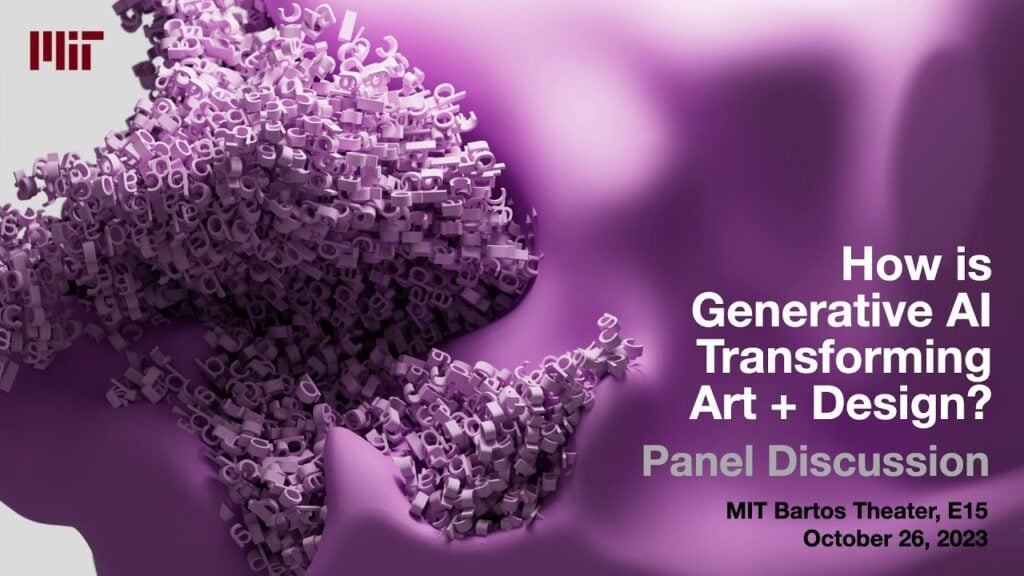
In 2026, the creative economy has moved past the initial “AI Panic” into a state of Augmented Expression. The market for Generative AI in creative industries has surged to $5.38 billion this year, transforming how stories are told, music is composed, and brands are built. We have entered the era of Neural Media, where films and games can adapt their narrative in real-time to the viewer’s emotional state. For a modern Business, the “Cost of Content” has plummeted, but the “Cost of Attention” has skyrocketed. Meanwhile, Digital Marketing has bifurcated: while AI handles hyper-personalized volume, human “Hand-Crafted” art has become the new high-status luxury signal.
The Technological Architecture: The Generative Pipeline
By 2026, the “Standard Workflow” for any creative project begins with an AI-human co-pilot.
-
Text-to-Everything Maturity: We have moved beyond static images. Advanced models like OpenAI Sora and Runway Gen-3 Alpha are now integrated into professional film pre-visualization, reducing storyboarding and “Pre-viz” costs by up to 70%. Filmmakers can now iterate on complex cinematic shots in minutes rather than weeks.
-
Neural Rendering & Virtual Production: The boundary between “Live Action” and “CGI” has blurred. Real-time neural engines now generate photorealistic backgrounds on “Volume” LED stages, allowing indie directors to film a “Martian Sunset” or a “1920s Paris” without leaving a small studio in suburban Ohio.
-
Coded Motion & Procedural Design: In graphic design, “Coded Motion” has become a dominant aesthetic. Designers use AI to create brand identities that are not static logos, but “Living Entities” that pulse, change color, and react to live data feeds on digital billboards.
Artificial Intelligence: The Creative Orchestrator
In 2026, Artificial Intelligence acts as a force multiplier for the individual “Auteur.”
1. Agentic Post-Production
AI “Agents” now handle the labor-intensive “Dull” tasks of creativity. 75% of creative professionals now use AI for automated rotoscoping, object removal, and color matching. This shift has allowed editors to move from being “Technical Operators” to “Strategic Storytellers.”
2. Adaptive Scoring and Soundscapes
The music industry has been disrupted by Generative Soundscapes. For film and gaming, AI now creates “Adaptive Scores” that change tempo and key based on the on-screen action or the player’s heart rate (via wearable integration), ensuring the emotional “vibe” is always perfectly synchronized.
3. Hallucination as Aesthetic
In a world of perfect AI realism, 2026 has seen the rise of “Glitch Beauty.” Creators are intentionally pushing AI models to their breaking points to discover surreal, non-human aesthetics—treating “AI Hallucinations” as a new form of digital surrealism.
Digital Marketing: The Battle for “Authentic Intelligence”
Digital Marketing in 2026 is grappling with a world where “Content is Infinite.”
-
The End of Generic Content: With 90% of marketers using AI for content speed, “Good” content is now a commodity. The winners are those using the 80/20 Strategy: using AI to handle the high-volume “filler” while investing 80% of their budget into high-impact, human-led “Vibe Direction.”
-
GEO & Entity-Based Authority: As AI-generated content makes up 17% of top-ranking search results, marketers are focused on Entity-Based Authority. AI search engines (like Perplexity and Gemini) prioritize content that shows clear human “Authorship” and “Lived Experience” over generic AI summaries.
-
Hyper-Personalized Video Ads: Brands now create “N-of-1” video campaigns. Instead of one generic ad, AI generates thousands of variations with different characters, accents, and backgrounds tailored to the specific micro-community viewing the ad.
Business Transformation: The Democratization of the Studio
The internal Business model of the creative arts has become “Lean and Global.”
-
The $20/Month Studio: A single creator in 2026 with a $20/month subscription to an AI video and music suite can now produce “Studio-Quality” trailers and pilots. This has led to a “Creative Jobs Crisis” for entry-level technical roles, but a “Golden Age” for independent showrunners and “solopreneur” creators.
-
Craft-as-Luxury: As AI-generated content becomes the “fast food” of media, “Handmade” has become a premium marketing label. We are seeing a massive return to frame-by-frame animation, stop-motion, and tactile film photography in high-end fashion and luxury branding.
-
IP-First Business Models: In 2026, the “Asset” is no longer the final film, but the Trained Model. Studios are now “Licensing their Style” or “Licensing their Digital Twins” (de-aged actors), allowing them to generate revenue from their intellectual property without a single day of physical filming.
Challenges: The “CLEAR” Framework and Originality
The 2026 creative sector faces a profound “Crisis of Justice.”
-
The Consent & Licensing Conflict: Recent reports show that 99% of creators claim their work was scraped without consent. This has led to the adoption of the CLEAR Framework (Consent, Licensing, Ethical training, Accountability, Remuneration), as governments begin to mandate “AI Transparency Labels” on all creative media.
-
The Homogenization Risk: There is a growing fear of “Algorithmic Inbreeding”—where AI trained on AI content leads to a “Grey Goo” of creative output. The professional challenge of 2026 is maintaining “Human Friction” to ensure art remains provocative and unpredictable.
Looking Forward: Toward “Neural Storytelling”
As we look toward 2030, the “Creative Sector” is moving toward “Neural Storytelling.” We are approaching a world where your favorite movie might have a different ending every time you watch it, subtly adjusting itself to give you exactly the emotional catharsis you didn’t know you needed.
Conclusion
The convergence of Technology, Business, Digital Marketing, and Artificial Intelligence has turned the “Creative Act” into a partnership between human “Vibe” and machine “Execution.” In 2026, the winners are those who use AI to handle the “How” so they can spend more time on the “Why.” By embracing the “Intelligent Creative” era, the artists of 2026 are proving that while machines can synthesize, only humans can mean.