
The creative world has moved beyond the initial “AI panic” of the early 2020s into a period of sophisticated integration. In 2026, we are living in the “Intelligent Creative Economy,” where the boundary between a human creator and an AI tool has evolved into a deep, collaborative partnership. This shift is powered by the convergence of advanced Technology—specifically generative video and multi-modal models—and Artificial Intelligence, creating a production environment that is as efficient as it is imaginative. For a modern Business in the media and entertainment space, the goal is no longer just content volume; it is “Emotional Resonance at Scale.” Meanwhile, Digital Marketing has transformed into a real-time storytelling engine, allowing brands to create cinematic-quality narratives that adapt to the viewer’s preferences in seconds.
The Technological Architecture of 2026 Media
In 2026, the technological backbone of professional content production is the “Generative Production Pipeline.” This is a cloud-native architecture that treats every creative asset as a modular, adaptable component.
-
Modular Storytelling and Synthetic Media: Studios are no longer filming static “finished products.” Instead, they create “Core Story Assets”—3D environments, digital character doubles, and AI-voice models. Using Artificial Intelligence, a single film can now be dynamically altered in length, language, or even character appearance to suit different cultural markets or individual viewer preferences.
-
Real-Time Cinematic Rendering: Powered by advanced GPUs and AI-driven upscaling, 2026 marks the end of long “rendering” wait times. Filmmakers can now see finished VFX layers in real-time on the set, allowing for a level of “Virtual Production” that was previously the exclusive domain of high-budget blockbusters.
-
Interoperable Identity Layers: To protect creators in the “Intelligent Creative Economy,” Technology like blockchain and encrypted watermarking provides an immutable record of IP ownership. This ensures that every time a creator’s “Digital Double” or artistic style is used by an AI, the original human artist is automatically compensated through smart contracts.
Artificial Intelligence: The New Creative Partner
In 2026, Artificial Intelligence has moved from being a “tool” to being an “agent” within the creative process.
1. Agentic Editing and Post-Production
Post-production, traditionally the most time-consuming part of filmmaking, has been revolutionized by AI agents. These systems don’t just “cut” film; they “understand” narrative pacing, emotional arc, and visual continuity. An editor can now instruct the AI: “Give me a 30-second high-energy teaser focusing on the tension between the two leads,” and the AI will produce several high-quality drafts in minutes, allowing the human editor to focus on the final artistic polish.
2. Synthetic Talent and Digital Doubles
The use of “Digital Doubles” is now a professional standard. High-profile actors can “license” their likeness for commercial projects or minor roles without ever stepping on a physical set. This Business model allows talent to scale their presence across multiple global campaigns simultaneously, while AI ensures the performance remains authentic to the actor’s unique nuances and “brand voice.”
3. AI-Native Narrative Design
For writers and game developers, AI serves as a “World-Building Architect.” By analyzing massive datasets of myth, history, and narrative structure, AI can suggest plot twists, generate consistent character backstories, and even “stress-test” a story for logical inconsistencies. This allows a Business to develop complex, immersive franchises at a fraction of the historical cost.
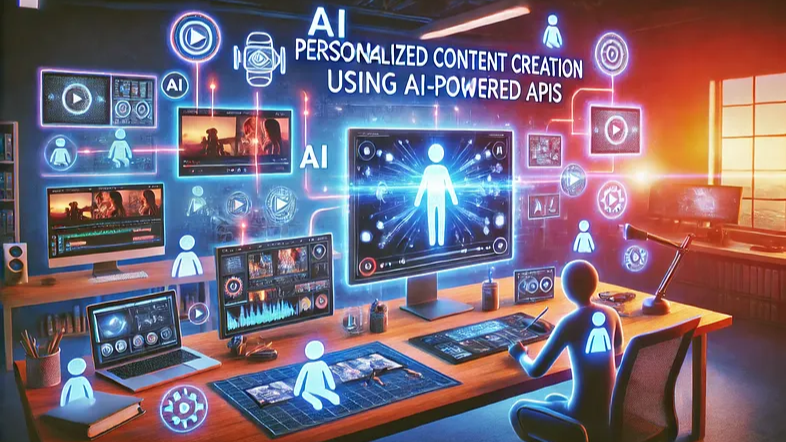
[Image showing an AI-driven video production dashboard with real-time editing, voice synthesis, and character rendering]
Digital Marketing: From Distribution to “Experience Orchestration”
In the 2026 media landscape, Digital Marketing is no longer about “promoting” a story; it is part of the story itself.
-
Contextual and Adaptive Trailers: Using Artificial Intelligence, a film’s marketing campaign is now “hyper-personalized.” A viewer who loves action will see a high-octane trailer, while a viewer who prefers drama will see the same film marketed through its emotional character beats. This “Emotional Targeting” has significantly increased conversion rates for streaming and theatrical releases.
-
The “Search-by-Mood” Era: Traditional SEO has evolved into “Mood-Based Discovery.” Audiences now ask their AI assistants: “I want a mystery movie that feels like a cold winter evening and has a soundtrack similar to 1980s synth-pop.” Professional marketers ensure their content is tagged with “Emotional Metadata” to be discovered in these specific niches.
-
Shoppable Entertainment: Every frame of a video is now a “Storefront.” Through computer vision, viewers can pause a show, identify the lead actor’s outfit, and purchase it instantly via a voice command. This “Contextual Commerce” is a multi-billion dollar revenue stream for modern media businesses.
Business Transformation: The “AI-First” Creative Studio
The internal structure of a professional creative Business has been redefined. We are seeing the rise of the “Vibe Director” and “AI Orchestrator.”
-
Outcome-Based Creative Services: Traditional agencies are moving away from charging for “human hours” and toward “Outcome-Based Billing.” If a video campaign achieves a specific viral threshold or sales lift, the agency is rewarded accordingly. This is only possible because Artificial Intelligence allows for the rapid testing and optimization of thousands of creative variations.
-
The “Creator Pipeline”: In 2026, professional studios treat social media creators as “R&D Labs.” Using AI to analyze what goes viral on short-form video platforms, studios can “test” narrative concepts and characters with live audiences before committing to full-scale production.
-
Ethical AI and Human Oversight: Trust is the most scarce resource in the creative economy. Professionalism in 2026 is defined by “The Human-in-the-Loop.” Every AI-generated output must be reviewed for bias, cultural sensitivity, and brand alignment. The most successful firms are those that use AI for efficiency but “The Human Touch” for truth and empathy.
Challenges: The “Authenticity Gap” and The Future of Labor
The rise of the “Intelligent Creative Economy” brings significant challenges.
-
The “AI Slop” Problem: The ease of content generation has led to a flood of “Generic Content.” Professional firms must work harder to maintain a “Human Spark” that distinguishes their work from the algorithmic norm.
-
Reskilling the Workforce: The most critical skill for a creative in 2026 is “AI Literacy”—the ability to direct and refine AI agents. Organizations are investing heavily in “Creative-Tech” education to ensure their staff can thrive in this new hybrid world.
Looking Forward: The “Direct-to-Brain” Creative Future
As we look toward the late 2020s, the frontier of media is moving toward “Neural Media”—experiences that adapt to the viewer’s physiological responses in real-time. While still in the experimental phase, the professional and ethical frameworks for this level of “Immersive Influence” are already being debated by the leaders of 2026.
Conclusion
The convergence of Technology, Business, Digital Marketing, and Artificial Intelligence has turned the creative process from a linear struggle into an exponential opportunity. In 2026, the “Intelligent Creative Economy” is not about replacing the artist; it is about giving the artist the power to create at the speed of thought. By embracing these tools, professional creators are building a world where the only limit to a story is the imagination of its teller.