
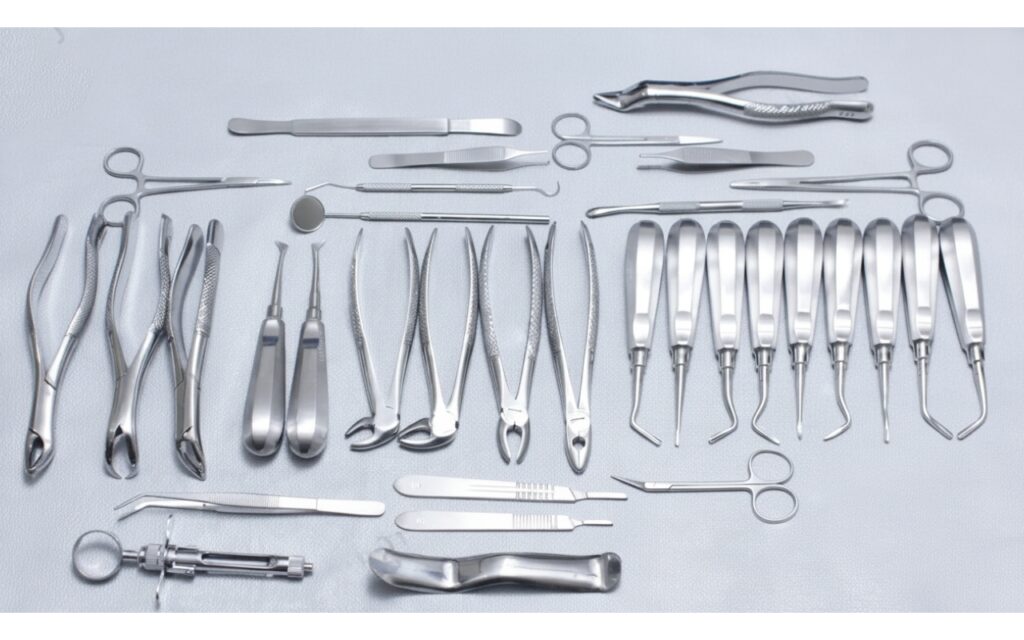
Practicing dentistry often involves more than routine cleanings and checkups. When a patient requires a more involved procedure, the right set of tools becomes paramount. Dentists face the challenge of ensuring their practice is equipped with reliable, effective instruments that can handle a range of surgical needs, from simple extractions to more complex interventions. This can feel overwhelming when considering the sheer variety available.
Understanding Core Dental Surgical Instruments
At its heart, dental surgery relies on a set of fundamental instruments designed for precision and control. These tools are crafted to assist in procedures involving the teeth, gums, and surrounding oral structures. Key categories often include instruments for cutting, grasping, retracting, and manipulating tissue.
A well-stocked dental practice requires a dependable core set of tools that can efficiently manage common oral surgery tasks. The exact combination will vary based on the specific procedures a practice focuses on, but understanding the purpose of each basic instrument is crucial for making informed decisions about equipping your operatory.
A Deeper Look at Essential Surgical Tools
Elevators: The Gentle Manipulators
Dental elevators are indispensable for loosening teeth from their sockets. They work by leveraging the periodontal ligament, allowing for a less traumatic extraction. Different shapes and sizes exist to suit various tooth types and positions. For instance, a 9 Molt Periosteal Elevator is designed for lifting and retracting tissue, while spade tip elevators offer a broader surface for more controlled leverage.
- Function: Loosening teeth and retracting tissue.
- Variations: Straight, angled, and specialized designs for specific anatomical areas.
- Material: Typically made from high-grade stainless steel for durability and sterilization.
Extraction Forceps: The Grasping Specialists
Once a tooth is sufficiently loosened, extraction forceps provide the necessary grip to remove it. These instruments come in a vast array of designs, each tailored for particular teeth, whether it’s incisors, premolars, or molars. The beak shape and angulation are critical for achieving a secure hold without damaging the surrounding bone or gums.
- Purpose: Firmly grasping and extracting teeth.
- Adaptability: Specific forceps for upper and lower arches, anterior and posterior teeth.
- Ergonomics: Handles designed for comfortable and secure grip during use.
Syringes and Scalpel Handles: Precision and Control
Precision tools are vital for delicate work. Aspirating syringes, often of the Cook-Waite (CW) type, are used for administering local anesthetic with a controlled flow. Scalpel handles, paired with disposable blades, allow for precise incisions in soft tissues. These instruments demand a high degree of dexterity and a steady hand from the practitioner.
- Anesthesia Delivery: Aspirating syringes ensure accurate and safe anesthetic administration.
- Incision Tools: Scalpel handles provide a stable platform for sharp blades for precise cuts.
- Sterilization: Reusable components require rigorous cleaning and sterilization protocols.
Retractors and Curettes: Access and Cleaning
Retractors are used to hold back tissues, providing clear access to the surgical site. They come in various forms, from simple self-retaining retractors to those operated manually. Curettes, on the other hand, are designed for scraping and cleaning, often used to remove diseased tissue or debris from bone sockets after extraction. Instruments like the Back Action curette are designed for reaching difficult angles.
- Visibility: Retractors improve visualization of the surgical field.
- Debridement: Curettes facilitate thorough cleaning of extraction sites and lesions.
- Tissue Management: Essential for protecting surrounding soft tissues during procedures.
Common Mistakes and Misconceptions
- Over-reliance on a single instrument: Assuming one type of elevator or forceps will suffice for all situations.
- Ignoring instrument condition: Using dull or damaged instruments which can lead to increased patient discomfort and procedural complications.
- Improper sterilization: Failing to adhere to strict sterilization protocols, risking cross-contamination.
- Purchasing based solely on price: Opting for cheaper alternatives that compromise on material quality and longevity.
- Lack of variety for different procedures: Not stocking specialized instruments needed for specific, less common surgical tasks.
Practical Takeaways for Your Practice
Investing in high-quality dental surgical instruments is a direct investment in patient care and practice efficiency. Prioritize instruments made from surgical-grade stainless steel for their durability and resistance to corrosion. Ensure your team is trained on the proper handling, cleaning, and sterilization of each instrument.
Consider building a foundational kit that covers the most frequent procedures, and then expand based on your practice’s specialization. Regularly audit your instrument inventory to identify any worn-out items that need replacement.
A Decision-Making Perspective
When selecting surgical instruments, dentists often consider several factors beyond the immediate need. Longevity, ease of sterilization, and ergonomic design are critical for long-term usability and practitioner comfort. The manufacturer’s reputation and the availability of replacement parts or complementary instruments also play a role. Understanding the material composition and manufacturing process can help distinguish between instruments that will perform reliably over time and those that may fail prematurely.
Looking Ahead in Surgical Tooling
The field of dental surgery is continually evolving, and so too are the tools that support it. Innovations in material science are leading to lighter, stronger, and more corrosion-resistant instruments. Advances in ergonomic design aim to further reduce practitioner fatigue and enhance precision. As minimally invasive techniques gain traction, there’s a growing demand for specialized micro-instruments and advanced imaging integration within surgical tool systems, promising even greater control and improved patient outcomes.