
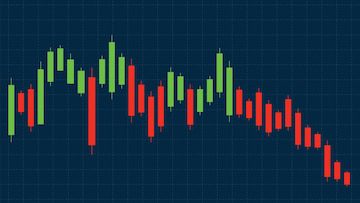
Global markets are experiencing renewed volatility today, with financial stocks under pressure as investors weigh ongoing trade tensions and uncertainty around U.S. government operations. In addition, traders are approaching the upcoming Federal Reserve meeting at the end of the month with caution, as the data available may not provide clear guidance for monetary policy decisions. For traders in forex, stocks, CFD indices, and metals, understanding how to navigate this uncertainty is crucial for effective risk management and potential opportunities.
Forex Market Strategies Amid Volatility
The forex market is particularly sensitive to global risk sentiment. In times of market uncertainty, the U.S. dollar typically strengthens as a safe-haven currency, while emerging market currencies may experience wider fluctuations. Forex CFD trading opportunities are present in the market and traders can monitor key currency pairs such as EUR/USD, GBP/USD, and USD/JPY for volatility-driven opportunities.
- Hedging: Using CFDs on currency pairs can allow traders to hedge exposure against broader portfolio risks.
- Volatility Trading: Short-term traders may consider scalping strategies around news releases or market-moving events to capitalize on rapid price swings.
- Diversification: Including a mix of major and minor pairs can help balance risk in uncertain conditions.
Stock Market Insights
Financial stocks are currently under pressure, reflecting broader market uncertainty. For CFD traders, indices such as S&P 500, Dow Jones Industrial Average, and NASDAQ 100 provide exposure to a diversified basket of equities.
- Risk Management: Traders should consider adjusting leverage to manage exposure in volatile conditions.
- Sector Focus: While financial stocks are under pressure, defensive sectors such as utilities or consumer staples may offer relative stability.
- Index CFDs: Trading index CFDs allows participation in broader market moves without taking individual stock risk.
CFD Indices Strategies
Indices reflect collective market sentiment and are often used to gauge overall market direction. During periods of uncertainty, indices may see amplified swings.
- Trend Following: Identify clear support and resistance levels and consider trend-following strategies when markets show directional bias.
- Range Trading: In choppy conditions, traders can focus on range-bound strategies using technical indicators like RSI or Bollinger Bands.
- Hedging Across Indices: Consider holding positions in correlated indices to hedge exposure and reduce volatility impact.
Metals as Safe-Haven Assets
Precious metals, including gold and silver, often act as a hedge against market volatility and currency fluctuations. With uncertainty surrounding trade issues and monetary policy, metals can provide both protection and trading opportunities.
- Gold CFDs: Gold remains a popular asset during risk-off periods, offering potential gains when equities falter.
- Silver CFDs: Silver combines safe-haven characteristics with industrial demand, creating opportunities for swing trading strategies.
- Technical Analysis: Monitoring key support and resistance levels can guide entry and exit points for metal CFDs.
Key Takeaways for Traders
- Stay Informed: Monitor market news and economic releases to anticipate volatility in forex, stocks, and metals.
- Risk Management is Crucial: Adjust leverage and position sizes to align with market uncertainty.
- Diversify Strategies: Using CFDs across currencies, indices, and metals allows traders to manage risk while accessing multiple market opportunities.
- Focus on Education: Understanding how macroeconomic factors affect different asset classes can improve decision-making in CFD trading.
In conclusion, today’s market environment underscores the importance of strategic planning and risk management. By analyzing trends across forex, stocks, CFD indices, and metals, traders can navigate volatility effectively, hedge portfolios, and identify actionable opportunities even in uncertain conditions.