
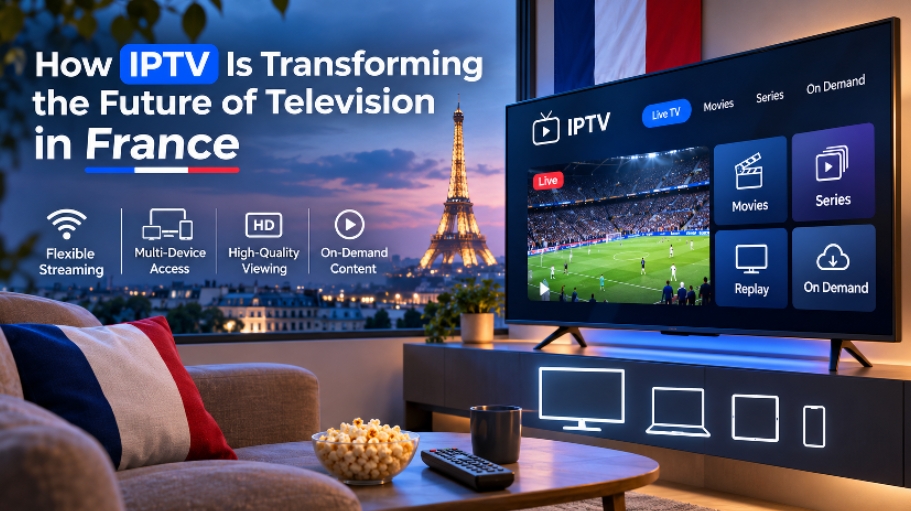
The way people watch television has changed dramatically over the past decade. Traditional cable and satellite subscriptions, once the standard for home entertainment, are increasingly competing with internet-based streaming solutions that offer greater flexibility, device compatibility, and personalized viewing experiences.
In France, this shift reflects a broader transformation in digital entertainment. As fiber-optic networks expand and connected televisions become commonplace, consumers are discovering new ways to access live programming and on-demand content.
Among the technologies driving this evolution, iptv has emerged as an important component of modern television distribution, combining traditional broadcasting with the convenience of internet connectivity.
The Technology Behind Internet-Based Television
Internet Protocol Television, commonly known as IPTV, delivers television programming through IP networks rather than conventional terrestrial, satellite, or cable broadcasting infrastructure.
Instead of relying exclusively on a dedicated television signal, IPTV systems transmit audiovisual content as data packets across a network. Compatible applications and devices decode these streams and display them on the viewer’s screen.
This architecture introduces several advantages.
First, it allows television content to be delivered through devices consumers already own, including smart televisions, smartphones, tablets, and streaming boxes.
Second, internet-based delivery makes it possible to integrate additional features such as electronic program guides, video-on-demand libraries, and interactive navigation.
Finally, viewers can benefit from a more flexible entertainment experience, without necessarily depending on a traditional set-top box or satellite installation.
However, the quality of the experience depends on network performance, streaming infrastructure, software compatibility, and the reliability of the content provider.
Why France Is an Important Market for IPTV
France offers favorable conditions for the development of internet-based television services.
The country’s extensive fiber-optic infrastructure and widespread adoption of connected devices have created an environment where high-quality video streaming is increasingly accessible.
French households have also become accustomed to switching between traditional television channels, subscription streaming platforms, and on-demand entertainment services.
This changing behavior has influenced consumer expectations.
Viewers increasingly want to watch content on multiple screens, navigate channels through intuitive applications, and access entertainment without complicated installations.
As a result, interest in IPTV solutions has grown alongside the broader development of streaming technology.
Consumers researching iptv france can explore examples of services designed for French-speaking audiences, including their subscription structures, supported devices, and installation methods.
Nevertheless, comparing technical features is only one part of choosing a service. Consumers should also verify that providers have the necessary rights to distribute the content they offer.
Smart TVs Are Changing the Viewing Experience
One of the most significant developments in modern television is the evolution of the smart TV.
Manufacturers such as Samsung, LG, and Sony now offer televisions with integrated operating systems, application stores, and internet connectivity.
These capabilities allow viewers to access entertainment directly from their television interfaces, reducing their dependence on additional hardware.
IPTV applications can contribute to this ecosystem by organizing compatible live streams, program information, and on-demand content within a unified interface.
Dedicated streaming devices, including Android TV boxes and Amazon Fire TV devices, provide similar functionality for televisions that do not support a particular application natively.
The result is a more adaptable viewing environment, where hardware choice and content delivery are no longer as closely connected as they were in traditional broadcasting.
Streaming Quality Depends on More Than Internet Speed
A fast internet connection is essential for high-definition streaming, but bandwidth alone does not guarantee a smooth experience.
Several technical factors influence streaming reliability.
Network latency and congestion: Delays or congestion between a streaming server and a viewer can contribute to interruptions, particularly during periods of high demand.
Video compression: Modern codecs such as H.264 and H.265 help deliver high-resolution video while controlling bandwidth consumption.
Server capacity: Streaming platforms need infrastructure capable of handling large numbers of concurrent viewers.
Home network stability: A wired Ethernet connection or reliable Wi-Fi network can significantly improve performance on compatible devices.
Application optimization: Well-designed video players manage buffering, stream decoding, and playback controls efficiently.
For consumers, these details matter more than marketing promises about picture quality. A properly configured Full HD stream with stable delivery may provide a better experience than an unreliable 4K stream.
The Growing Importance of On-Demand Entertainment
Traditional television schedules require viewers to adapt their routines to predetermined broadcasting times.
Internet-based entertainment reverses much of that relationship.
Video-on-demand technology allows consumers to select films, series, and other content according to their own preferences and availability.
Replay and catch-up functions, where supported, provide additional flexibility by allowing users to revisit previously broadcast programs.
This transition is especially relevant for households where family members have different interests.
One person may prefer live sports, another may watch documentaries, while others spend more time exploring films and series.
The ability to navigate different categories of entertainment through connected devices has become an important expectation rather than a premium novelty.
What Consumers Should Check Before Choosing an IPTV Service
With many television and streaming services available, choosing a suitable provider requires careful evaluation.
Device compatibility should be one of the first considerations. Consumers need to determine whether a service works correctly with their television, streaming device, or mobile operating system.
Streaming reliability is equally important. A service should be evaluated under realistic conditions, including busy evening viewing periods.
Transparent pricing also matters. Subscription duration, simultaneous connection limits, renewal conditions, and refund policies should be clearly explained.
Customer support can make a significant difference, especially when users encounter configuration issues or need to transfer access to another compatible device.
Most importantly, consumers should examine the legality of the content distribution. IPTV technology itself is legal, but distributing copyrighted television channels, films, or sporting events without authorization may violate applicable law.
Extremely low prices combined with promises of unrestricted access to premium content can be a warning sign. Users should seek clear information about licensing, provider identity, and terms of service.
What Comes Next for Television Streaming?
The future of television will likely involve closer integration between conventional broadcasting, internet delivery, and personalized content discovery.
Improvements in broadband connectivity, video compression, and streaming infrastructure will continue to influence how television services operate.
Artificial intelligence may also play a larger role in helping users discover relevant programs, organize content libraries, and navigate increasingly extensive catalogs.
Meanwhile, improvements in connected-device software could make television interfaces more consistent across different screens.
For service providers, the challenge will be to combine technical reliability, intuitive applications, transparent pricing, and lawful content distribution.
For consumers, the priority remains straightforward: accessing the entertainment they want through a convenient, dependable, and secure experience.
Conclusion
IPTV represents an important stage in the evolution of television technology. By delivering audiovisual content through internet networks, it helps connect traditional broadcasting concepts with the flexibility of modern digital platforms.
France’s connected-device ecosystem and broadband infrastructure make it a particularly relevant market for this transformation.
As television consumption continues to evolve, the services that deliver the greatest value will be those that balance streaming quality, accessible technology, consumer trust, and respect for content rights.
The future of television is not simply about offering more channels. It is about creating a viewing experience that adapts to the way people live, connect, and consume entertainment.