
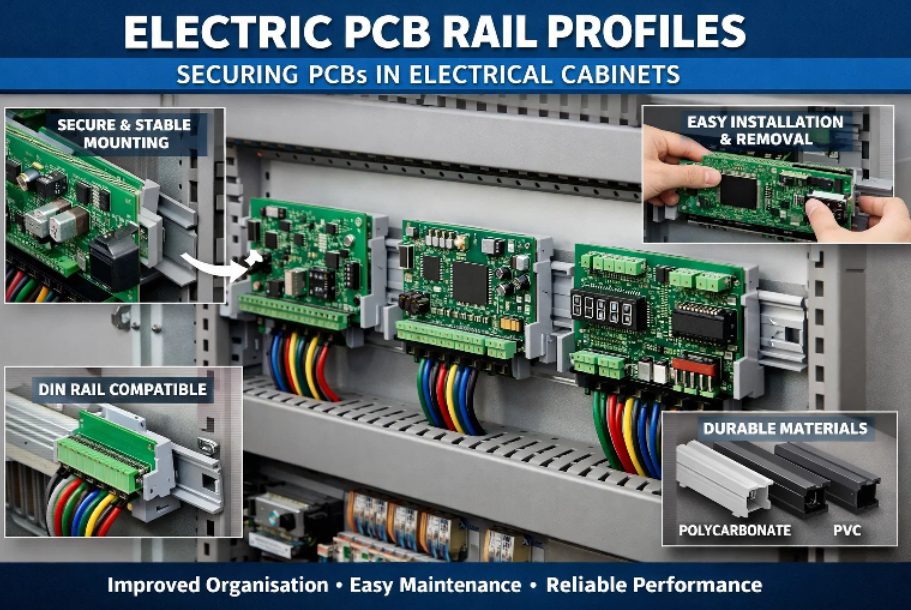
If you have ever opened an electrical cabinet during maintenance, you probably noticed one common issue. The wiring may be fine, but the circuit boards are not always properly secured. Loose mounting, vibration, or poor alignment can create real problems over time.
This is where custom PCB rail extrusion profiles come into play. A well-designed electric PCB rail profile is not just a support part. It plays a key role in keeping circuit boards stable, aligned, and safe inside electrical panels.
From my experience on shop floors and panel assembly lines, the difference between a stable system and a problematic one often comes down to how well the PCB is mounted.
What Is an Electric PCB Rail Profile?
An electric PCB rail profile is a specially designed plastic or polycarbonate component used to hold and secure printed circuit boards inside electrical cabinets.
It works as a support structure that keeps PCBs fixed in position while allowing easy installation and removal when needed.
You will often hear it referred to as:
- PCB rail profile for electrical panels
- PCB mounting rail profile
- PCB holder rail system
- Electrical panel PCB mounting profile
In simple words, it is the backbone that keeps circuit boards organised and stable.
Why Proper PCB Mounting Matters
Many issues in electrical systems start with poor PCB support.
Here are common problems I have seen:
- Boards moving due to vibration
- Misalignment causing connection issues
- Difficulty in maintenance and replacement
- Increased risk of damage during operation
Without a proper PCB support rail extrusion, even a well-designed electrical system can fail over time.
How Electric PCB Rail Profiles Solve These Problems
1. Secure and Stable PCB Mounting
The main job of an electric PCB rail profile is to hold the circuit board firmly in place.
It helps:
- Prevent movement during operation
- Maintain proper alignment
- Reduce stress on connectors
This is especially important in industrial environments where vibration is common.
- Easy Installation and Maintenance
A good PCB mounting rail profile simplifies the assembly process.
What works well:
- Snap-fit or slide-in designs
- Easy removal for maintenance
- Clean arrangement inside panels
From practical experience, technicians always prefer systems that allow quick access without damaging components.
- Better Organisation Inside Electrical Panels
Messy panels are harder to maintain and troubleshoot.
Using a proper PCB holder rail system helps:
- Keep boards aligned in rows
- Improve airflow
- Make wiring more organised
This becomes very important in large control panels.
- Material Strength and Electrical Safety
Most profiles are made using a polycarbonate PCB rail profile or other durable plastics.
These materials offer:
- Electrical insulation
- Heat resistance
- Long-term durability
In some cases, rigid PVC extrusion profiles are also used depending on application needs.
- Compatibility with DIN Rail Systems
Many systems use a DIN rail PCB mounting solution for standardisation.
Electric PCB rail profiles can be designed to:
- Fit DIN rail setups
- Support modular panel designs
- Allow flexible configuration
This makes them suitable for modern electrical cabinets.
Real-World Example
In one control panel project, the team used basic mounting without proper rails. Within a few months:
- PCBs started shifting
- Connections became loose
- Maintenance time increased
After switching to a proper plastic PCB rail profile system:
- Boards stayed aligned
- Panel layout improved
- Maintenance became faster
This is a small change that makes a big difference in daily operations.
Types of PCB Rail Profiles
| Type | Use Case |
| Polycarbonate profiles | High strength and heat resistance |
| PVC profiles | Cost-effective and durable |
| DIN rail compatible profiles | Standard panel systems |
| Custom extrusion profiles | Specific design requirements |
Each type is selected based on application and environment.
Choosing the Right PCB Rail Profile
Selecting the right profile is important for long-term performance.
Here is a simple approach:
1. Check Board Size and Weight
Ensure the rail can support the PCB properly.
2. Consider Panel Design
Match the profile with the layout of the electrical cabinet.
3. Evaluate Material
Choose between polycarbonate or PVC based on strength and environment.
4. Look for Custom Options
Standard profiles may not always fit perfectly.
If you are planning a new setup, it is also useful to understand choosing the right electric PCB rail profile based on your specific application and panel requirements.
Key Benefits at a Glance
- Secure PCB positioning inside cabinets
- Easy installation and maintenance
- Improved panel organisation
- Strong and insulating materials
- Suitable for custom and standard designs
Conclusion
Electrical panels are only as reliable as the way their components are mounted. From what I have seen, ignoring PCB support is a common mistake that leads to long-term issues.
Using a proper electric PCB rail profile solves this at the root level. It keeps boards secure, improves organisation, and reduces maintenance problems.
M3 Extrusion provides custom PCB rail extrusion profiles designed for consistent fit and reliable performance in electrical panels. Once you use the right rail system, the difference in stability and ease of handling is clearly visible.
FAQs
1. What is an electric PCB rail profile used for?
An electric PCB rail profile is used to securely hold printed circuit boards inside electrical panels. It ensures proper alignment, reduces movement, and helps maintain a stable and organised panel structure.
- Why is PCB mounting important in electrical cabinets?
Proper PCB mounting prevents vibration damage, ensures stable connections, and makes maintenance easier. Without proper support, circuit boards may shift or get damaged over time, affecting system performance.
- What materials are used in PCB rail profiles?
PCB rail profiles are usually made from polycarbonate or PVC. These materials provide electrical insulation, durability, and resistance to heat and environmental conditions, making them suitable for industrial use.
- Are PCB rail profiles compatible with DIN rails?
Yes, many PCB rail profiles are designed to work with DIN rail systems. This allows easy installation and integration into standard electrical panel designs.
- Can PCB rail profiles be customised?
Yes, custom PCB rail extrusion profiles can be designed based on specific PCB sizes, panel layouts, and technical requirements. This ensures a perfect fit and better performance.
- How do PCB support rail extrusions improve panel organisation?
They help arrange circuit boards in a structured manner, improving airflow and making wiring easier to manage. This leads to better maintenance and quicker troubleshooting.
- Are plastic PCB rail profiles durable?
Yes, plastic PCB rail profiles are designed for long-term use. They resist wear, environmental stress, and electrical issues, making them reliable for industrial applications.