
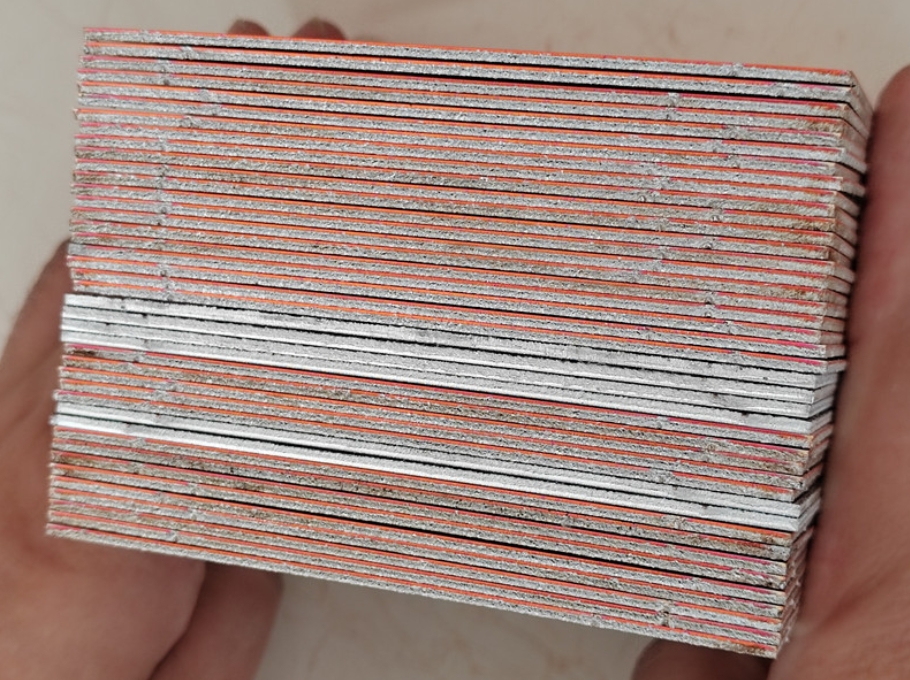
In photovoltaic plants, utility-scale energy storage cabinets, new energy distribution hardware and high/low-voltage switchgear, copper-aluminum dissimilar metal connections remain a persistent engineering pain point. Equipment designers routinely combine copper for superior conductivity with aluminum to cut weight and material costs, yet direct copper-to-aluminum contact triggers galvanic corrosion, rising contact resistance, joint overheating, arcing and unexpected shutdowns — one of the leading hidden causes of energy-site maintenance failures.
Many field teams rely on basic workarounds: simple copper-aluminum shims, conductive grease or local tin plating. An important industry distinction is often overlooked: conventional copper-aluminum shims are merely separate copper and aluminum foils stacked physically, with no metallurgical bond between layers. Microscopic gaps remain at the interface, letting moisture, air and dust seep in, so galvanic corrosion cannot be stopped at its source. These fixes only deliver short-term improvements. Under sustained high-current loads, thermal cycling and humid outdoor environments, stacked shim interfaces degrade, loosen and heat up over time, driving higher maintenance expenses and safety hazards.
1. Why Cu-Al Bimetallic Transition Materials Are Indispensable for Energy Storage
Copper offers excellent conductivity, oxidation resistance and current-carrying capacity, but its high cost and density make full-copper assemblies prohibitively expensive and heavy. Aluminum is lightweight, cost-effective and widely available for large busbars and energy-storage module structures, yet native aluminum oxide formation prevents reliable direct mating with copper components.
Cu-Al bimetallic composite sheets resolve this core conflict through explosion welding or roll-bonding processes that fuse copper and aluminum at the molecular level. Unlike loosely bonded assemblies, the finished sheet resists delamination, with one solid pure-copper face and one pure-aluminum face. Each side mates to its matching metal component, fully isolating dissimilar-metal contact and eliminating galvanic corrosion at the joint.
Custom-cut cupal metal sheet Cu-Al bimetallic transition plates with pre-fabricated mounting holes have become standard components for energy storage cabinets, grid-connected distribution panels, photovoltaic box transformers and lithium-ion battery PACK assemblies.
2. Key Product Variants: Square Bolted Transition Plates & Lithium-Battery Bimetallic Connection Sheets
Raw cu-al composite plate blanks are laser cut and machined into custom shapes and hole layouts based on current rating and fastening requirements. Two major application families dominate the renewable-energy sector: busbar transition plates for power cabinets, and thinner interconnection sheets built for lithium-ion battery modules.
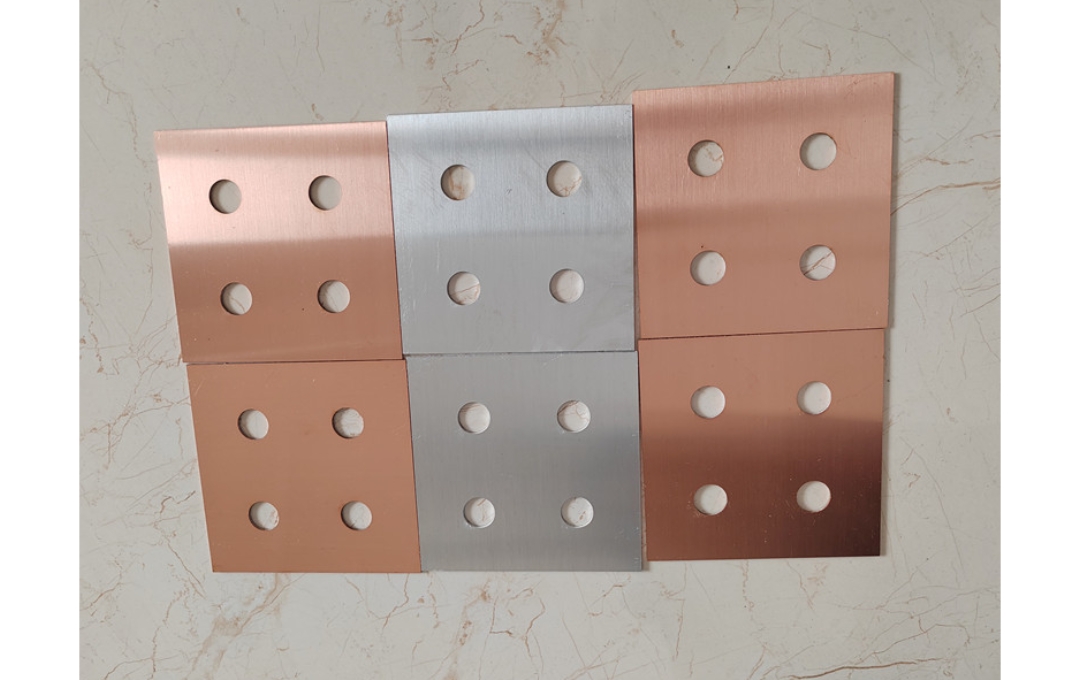
1. 4-Hole Square Cu-Al Bimetallic Plate (Most Widely Deployed)
The square profile distributes clamping force evenly across the joint, while four symmetric bolt holes maintain consistent contact pressure for medium-to-high current transmission. This design greatly reduces hot-spot risks from loose single-point connections and fits most mainstream switchgear and energy-storage cabinet models.
2. 2-Hole Elongated Cu-Al Transition Plate
Optimized for small energy-storage modules and low-current shunt wiring. Its compact footprint supports lightweight assembly for lower-power circuits.
3. Large-Format Multi-Hole Custom Plate
Built for heavy-duty busbar transitions inside substations and large grid-tied cabinets, oversized multi-hole plates reliably handle ultra-high-current power transfer.
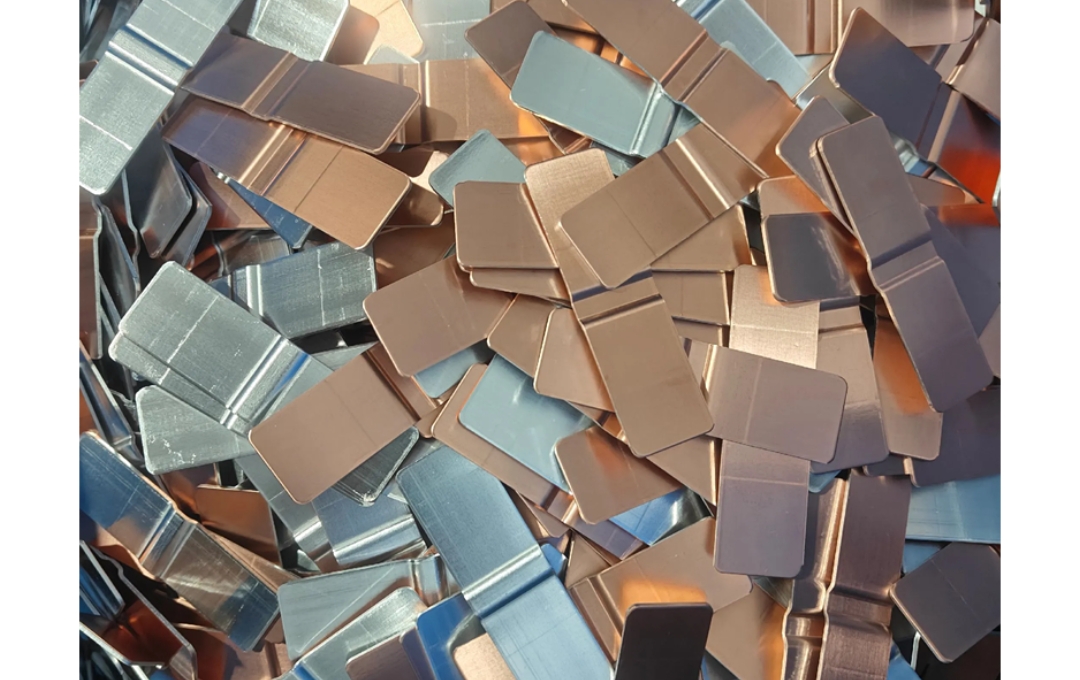
4. Cu-Al Bimetallic Connection Sheets for Large-Format Lithium-Ion Battery PACKs
Lithium cells use aluminum for positive tabs and copper for negative tabs, creating a welding challenge during series-parallel pack assembly. Integrated cupal metal sheet Cu-Al bimetallic connectors enable robust joining: the copper side welds securely to negative copper tabs, and the aluminum side bonds to positive aluminum tabs. This eliminates common failures such as poor dissimilar-metal laser welds and welded-interface corrosion cracking.
Monolithic bimetallic battery connectors have lower internal resistance than mechanically assembled copper-aluminum joints, reducing heat buildup during charge-discharge cycles while cutting pack weight versus all-copper alternatives. These battery-grade sheets are thinner than busbar transition plates, often shaped into strips or custom outlines with optional welding alignment holes to fit tight module packaging.
Every variant supports customization of thickness, copper-aluminum layer ratio, overall dimensions, hole diameter and hole spacing to suit both standard and non-standard project specifications.
3. Core Engineering Advantages of Cu-Al Bimetallic Composite Sheets
3.1 Galvanic Corrosion Resistance
Metallurgical fusion locks the copper-aluminum boundary inside the material, sealed away from ambient air and moisture. This protection works equally well for cabinet busbar junctions and lithium battery tab connections.
3.2 Stable Low-Resistance Conductive Interface
With no gaps or oxide layers between the two metals, the composite sheet maintains consistently low contact resistance under high-current operation, far outperforming stacked shims, conductive grease and tin-plated workarounds. For lithium batteries, reduced connection heat directly enhances pack thermal safety.
3.3 Balanced Cost & Weight
Replacing partial full-copper components with cu-al composite material cuts raw material expenditure and assembly weight, supporting the low-cost, lightweight design goals of solar farms, energy-storage stations and lithium-ion PACK systems.
3.4 Broad Machining Flexibility
The base bimetallic blank can be laser cut, drilled and bent. Fabricators can produce thick square bolt-down plates for switchgear or thin stamped profiles for battery welding, delivering high adaptability across renewable-energy use cases.
4. Industry Trend: Custom Bimetallic Components Become Renewable Infrastructure Staples
Global energy-storage deployment, photovoltaic expansion and large-format lithium-ion battery production continue rapid growth, raising project requirements for safe, low-maintenance and cost-effective conductive connections. Legacy solutions including simple copper-aluminum lap joints and stacked shims no longer satisfy long‑term reliability standards for modern energy storage sites and large battery packs.
Standardized, customizable cupal metal sheet Cu-Al bimetallic transition sheets are progressively replacing outdated connection hardware, emerging as core components for new-energy distribution systems, energy storage cabinets and lithium-ion battery PACK manufacturing.
As power‑equipment design continues shifting toward lightweight, low‑carbon architectures, cu‑al bimetallic composites will expand further across renewable infrastructure, industrial power distribution, grid retrofitting and battery assembly, serving as critical foundational materials for dependable power‑system operation.
As a professional manufacturer specializing in customized bimetallic conductive materials,Shenzhen Chinalcometal provides high-precision cupal metal sheet Cu-Al bimetallic products with stable metallurgical bonding, diverse customizable specifications, and reliable performance, perfectly matching the iterative upgrading needs of modern new energy and power infrastructure projects.