
As summer temperatures climb, so do the concerns about the cost of keeping households cool and comfortable. Long hours of air conditioning mean higher energy consumption costs. Finder’s research data shows that around 4.4 million Australian households plan to reduce their air conditioning to save on energy bills.
For many homeowners, this raises the question of what could cool their homes efficiently without skyrocketing energy costs. Evaporative cooling is one option worth considering. Before making the switch, it helps to understand how these systems perform in different climates, how they rely on airflow and water, what they cost to run, and how to make them last.
Key Questions Worth Asking Before Owning an Evaporative Cooling System
1. Can My Local Weather Affect Evaporative Cooling Performance?
Recall that sudden burst of coolness you feel when you stand near the ocean or a river? The water evaporates when it absorbs heat from the surrounding air, lowering the temperature.
An evaporative cooler works on that same principle. It draws in warm outside air and filters it through water-saturated pads. The water in the pads evaporates, cooling the warm air, which is then pushed through your ducts.
Because the process depends on evaporation, the climate matters. These systems perform best in hot, dry climates, where low humidity allows moisture to evaporate more easily. They are particularly suitable for regions with consistently dry summer conditions, including parts of South and Western Australia.
In humid areas like Far North Queensland, the air already holds a lot of moisture. High humidity makes it harder for the water to evaporate, reducing the system’s cooling performance.
2. Can I Run the System With My Windows and Doors Closed?
With standard air conditioners, keeping doors and windows closed is vital. Otherwise, cooled air escapes. This forces the system to work harder, consuming more energy and increasing your energy bill.
Evaporative cooling works differently. Rather than recirculating indoor air, the unit continuously brings in fresh, cooled outdoor air. As this air enters your home, it pushes warm indoor air out through open windows, doors, or other suitable ventilation outlets.
Opening a couple of windows at the opposite end of the house, or installing vents or up-ducts, creates that exit path. This lets warm indoor air escape while the filtered outdoor air circulates throughout your rooms. Without proper ventilation, humidity can build up, and the house may feel muggy.
Leaving a window open doesn’t drain the power, but a part of how the whole system works.
3. Is It Cheaper to Run Than Standard Air Conditioning?
The financial advantage here is significant. Air conditioning systems rely on a compressor, which draws considerable electricity, particularly on hot days.
An evaporative cooler has a far simpler mechanical design. Its main electrical loads are the fan and the water pump. Since evaporative cooling does not require an energy-intensive refrigeration compressor, it requires less electricity than conventional refrigerated air conditioning. Seeley International estimates that its evaporative cooling systems can save up to 85% on energy bills, as compared to conventional reverse-cycle air conditioning, depending on operating conditions. This means you can keep your home comfortable in the hot, dry summer weather. Also, your quarterly power bills are less likely to spike.
4. What Can I Expect in Daily Water Use?
Living through intense summer dry spells makes every litre count. That naturally raises the question: just how much water does an evaporative cooling system pull from your taps?
These systems draw from your main supply to keep their cooling pads wet. So water use is a reasonable consideration, particularly where water restrictions apply.
The actual usage depends on temperature, humidity, and your unit size. Some modern models feature automatic water management systems that monitor water quality and drain water when salt and mineral levels become too high. This helps control mineral buildup, maintain water quality, and manage water consumption. The specific features depend on the model.
5. What Does Seasonal Upkeep Involve?
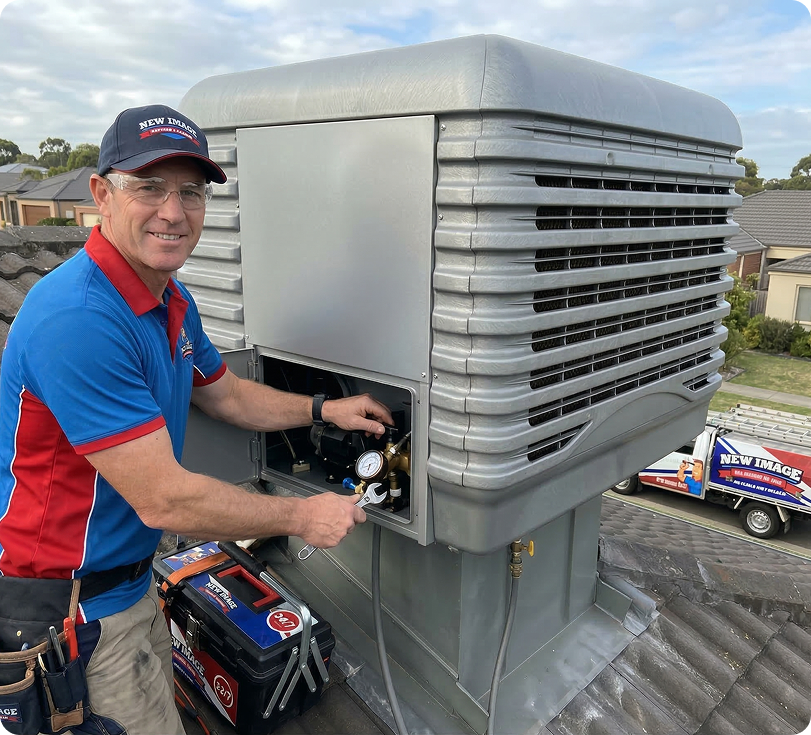
Regular maintenance helps the system perform well and last longer. Always inspect your cooler before switching it on for summer. Is the water pump working properly? Have the cooling pads collected too much mineral residue? Depending on the model, clean or replace the cooling pads, check the various components, clean the water tank, and inspect the pumps and filters.
Follow the instructions mentioned in the product manual. There’s also one thing you shouldn’t put off once summer is over. Empty the unit completely before winter. Stagnant water can cause mould growth and mineral build-up. It takes minimal effort and can save you trouble when you bring the cooler out again next year.
Conclusion
Keeping cool should not put immense pressure on your finances. Your local climate should always guide your cooling choices. Keep fresh air moving through your home and choose a setup that suits your climate. Explore Seeley International’s range of modern evaporative cooling systems to find an option that suits your home and local climate.
Read More From Techbullion
Previously in Business news: Precision container liners are helping industrial manufacturers cut bulk material waste