
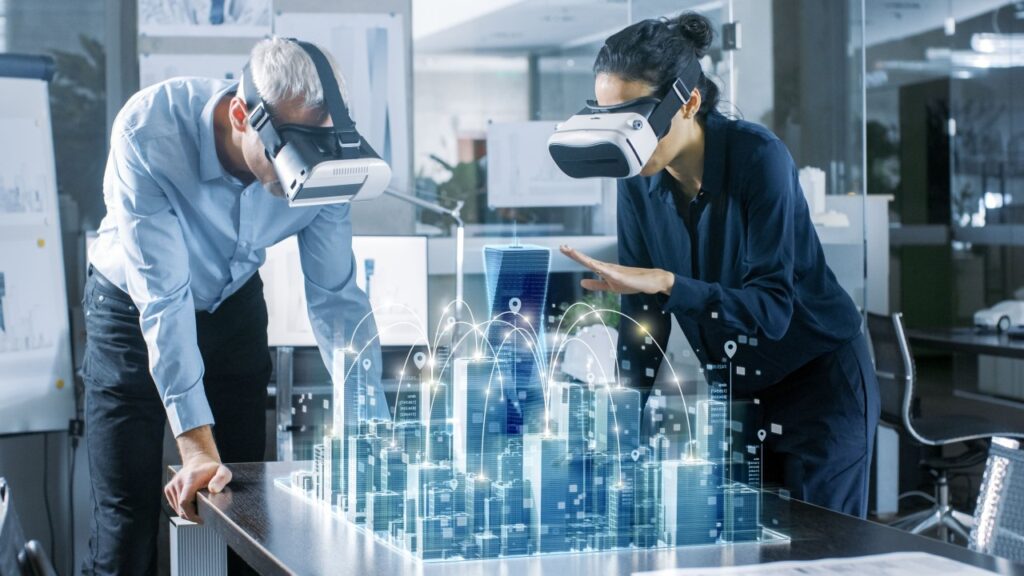
Augmented Reality (AR) is transforming industries worldwide, and civil engineering is no exception. By overlaying digital models onto real-world environments, AR enables professionals to enhance design visualization, streamline workflows, improve accuracy, and reduce costs. This technology provides innovative solutions to common challenges in construction and infrastructure projects, ensuring better project outcomes and greater efficiency.
Solutions Offered by Augmented Reality in Civil Engineering
AR in civil engineering bridges the gap between digital designs and real-world execution. It allows engineers, contractors, and stakeholders to visualize 3D models directly on-site, identify potential issues, and collaborate effectively. This technology is used at every stage of a project, from planning and design to construction and maintenance. Below is an overview of key solutions:
- Real-time Design Visualization: View 3D models overlaid on actual construction sites for better accuracy and insight.
- Site Planning Optimization: Strategically place equipment and materials to ensure smooth workflows and minimal disruptions.
- Enhanced Construction Guidance: Use AR tools to guide workers with precise, real-time visual instructions.
- Quality Control and Assurance: Spot and address quality issues during construction, avoiding costly rework.
- Collaborative Communication: Share detailed 3D models and annotations with teams and clients to improve understanding and decision-making.
- Training and Safety Simulations: Provide immersive safety training and simulations to reduce on-site risks.
These solutions demonstrate how AR improves processes, reduces inefficiencies, and adds measurable value to civil engineering projects.
How AR Enhances Design Visualization
One of the most impactful applications of AR is design visualization. By overlaying 3D models onto the physical site, engineers can ensure that the designs fit perfectly with existing conditions. This process eliminates discrepancies between the design and actual execution, reducing errors and preventing delays.
Augmented Reality in Civil Engineering Examples:
- Overlaying virtual blueprints on-site to verify the placement of columns and beams.
- Simulating the appearance of completed bridges or buildings in their environments.
- Identifying clashes between different structural components during the pre-construction phase.
AR for Site Planning and Workflow Optimization
Proper site planning is critical for smooth construction operations. AR tools help project managers visualize the most efficient placement of equipment and materials on-site. This prevents bottlenecks, minimizes waste, and ensures that workflows proceed seamlessly.
Practical Examples:
- Mapping out heavy machinery routes to avoid obstructing ongoing work.
- Identifying safe storage locations for materials to reduce damage or contamination.
- Virtually testing site layouts to optimize space utilization.
Augmented Reality for Real-time Construction Guidance
AR provides construction teams with step-by-step, real-time guidance on installing components and assembling structures. Workers can follow visual instructions overlaid onto the construction site, ensuring precision and reducing the likelihood of mistakes.
This application is particularly beneficial for complex installations where accuracy is paramount. For instance:
- Guiding workers to place prefabricated elements exactly as specified in the design.
- Providing visual cues to identify the correct placement of utilities like pipes and cables.
- Assisting in the alignment of structural frameworks.
Using AR for Quality Control and Assurance
Maintaining quality standards is essential in civil engineering, and AR tools can play a significant role. By comparing digital models to the actual structure in real-time, AR highlights discrepancies and potential quality issues. This allows engineers to take corrective actions immediately.
Examples:
- Detecting uneven concrete surfaces that deviate from the design specifications.
- Ensuring welds or connections meet safety and quality standards.
- Verifying that installed components align with the original blueprint.
Collaboration and Communication Made Easier with AR
AR fosters better collaboration among project stakeholders by enabling real-time sharing of 3D models, annotations, and updates. Teams can visualize and discuss project changes together, reducing miscommunication and improving decision-making.
Practical Use Cases:
- Conducting virtual site walkthroughs with clients to explain project progress or changes.
- Collaborating remotely with experts to address on-site challenges in real-time.
- Using shared AR visualizations to obtain quick approvals on design modifications.
AR for Training and Safety in Civil Engineering
Safety training is another area where AR shines. By creating immersive simulations, AR prepares workers for real-world scenarios without exposing them to risks. It also helps familiarize new employees with complex equipment and procedures.
Applications:
- Simulating emergency scenarios to train workers on evacuation protocols.
- Demonstrating how to operate heavy machinery safely.
- Creating interactive safety drills to improve hazard awareness.
Benefits of Augmented Reality in Civil Engineering
The advantages of AR in civil engineering extend beyond improved visualization and guidance. Here are some of the key benefits:
- Improved Accuracy: Spotting design flaws and potential conflicts early reduces errors and rework.
- Enhanced Efficiency: Streamlining workflows and providing real-time guidance saves time and effort.
- Cost Reduction: Avoiding mistakes and delays leads to significant cost savings.
- Better Client Communication: AR helps clients visualize the final outcome, making it easier for them to approve designs.
- Increased Safety: Immersive training reduces on-site accidents and prepares workers for challenging conditions.
Real-world Examples of Augmented Reality in Civil Engineering
- Underground Utility Mapping: Visualizing utilities beneath the surface before excavation to prevent accidental damage.Virtual Site Tours: Allowing clients to explore design changes through AR glasses without visiting the physical site.
- Overlaying Construction Plans: Using AR to ensure that structural components are placed correctly during assembly.
The Role of AR in the Future of Civil Engineering
As AR technology continues to evolve, its applications in civil engineering are expected to expand further. From smart infrastructure to automated construction systems, AR will play a crucial role in modernizing the industry.
For example, Pape-Dawson Engineers have integrated augmented reality (AR) into their workflow to enhance design precision and project efficiency. For a recent urban development project, they utilized AR to overlay 3D design models onto the real-world site during the planning phase. This allowed their engineers to:
- Identify and Resolve Potential Conflicts: By visualizing underground utilities and infrastructure in real-time, they avoided potential clashes between existing utilities and proposed designs.
- Streamline Construction: AR was used to provide workers with real-time visual guidance on the placement of structural elements, ensuring that each component was installed accurately and efficiently.
- Improve Client Communication: The team conducted virtual walkthroughs with stakeholders, allowing them to experience the proposed development layout and suggest modifications before construction began.
This innovative use of AR not only improved project accuracy and safety but also reduced delays and rework, reinforcing Pape-Dawson’s reputation as a leader in adopting cutting-edge technologies in civil engineering, as a leading civil engineering company in Austin, Texas.
Conclusion
Augmented reality is not just a futuristic concept—it is already transforming civil engineering today. By providing real-time insights, enhancing collaboration, and ensuring accuracy, AR has become an indispensable tool for engineers and contractors alike. Its ability to bridge the gap between design and execution offers immense value to projects of all sizes.
As the technology matures, the potential for AR in civil engineering will only grow, shaping a future where innovation and efficiency go hand in hand.