

16 Unconventional Hiring Strategies That Transformed Startups
Startups are rethinking hiring with practical strategies that reveal how candidates actually work. From AI-scored assessments to paid auditions and live-event recruiting, these approaches focus on judgment, adaptability, and real results. Insights from experts in the field show how unconventional hiring can help growing companies find stronger teams.
- Favor Demonstrated Output Over Credentials
- Set Fit Standards Before You Expand
- Codify Roles Before You Add Staff
- Test Judgment Through AI-Enabled Simulations
- Cultivate Insurance Talent From Back-Office Roles
- Assess Habits Through Vehicle Care
- Recruit From Live Industry Events
- Test Requirement Handoffs Under Ambiguity
- Probe Values With Challenging Culture Questions
- Recruit People Who Outperform You
- Choose Support Veterans for Fundraiser Success
- Grow Interns Into Technical Experts
- Use AI to Score Technical Assessments
- Favor Adaptable Self-Starters Over Credentials
- Let Paid Auditions Reveal Real Fit
- Seek Curious Problem Solvers With Ownership
Favor Demonstrated Output Over Credentials
I stopped hiring from resumes. I’ll be honest, it felt risky at first. A resume tells you what someone claims they did. It doesn’t tell you how they think. The change: we started with proof of work. Before any interview, I asked for one thing the person actually shipped — a repo, a project, a write-up, anything real. One candidate had been out of work for a year and his resume kept getting tossed. His GitHub had hundreds of commits and a side project that solved exactly our problem. He got the role, and he stayed. Team dynamics changed too. People hired on proof of work trust each other faster, because everyone in the room earned the seat the same way. There’s less second-guessing and fewer debates about who belongs. My advice to founders: pick one role and try it. Ask for the work before the resume. You’ll move slower for a week and faster for a year.
 Pankaj Khurana, Founder, Firki
Set Fit Standards Before You Expand
Slowing down was probably the most unconventional call I made. After 23 years at a big firm, the obvious move when I started Abundance Wealth Solutions was to staff up fast and build the client list to match. I did the opposite. Kept the practice small on purpose, so every hire and every client had to pass a fit test before anyone worried about a capacity test.
Most founders I talk to treat an open seat like a problem to solve. I treat it more like a question like what are we actually promising people here? In this business, that promise is judgment and trust, so I care a lot less about a long resume and a lot more about how someone handles a hard conversation. Think of a family sitting across from me, nervous about selling the company they spent decades building. Skills you can teach. Temperament you mostly can’t. I also don’t try to own every skill in-house. I coordinate with clients’ CPAs and attorneys, and I refer out when someone else is genuinely the better fit. That keeps our own team focused on what it actually does well instead of stretching into places it doesn’t belong.
On team dynamics, a small group with clear roles means nobody is guessing who owns a client relationship or a decision. Fewer handoffs. Fewer places for things to slip through. People speak up sooner because the room is small and there is nowhere to hide, which sounds uncomfortable but honestly makes the work better.
I can’t put a number on what that calm has been worth to me (and I’d be skeptical of anyone who claimed they could). My setup is a small advisory firm, which looks nothing like a venture-backed startup, so I won’t pretend this scales everywhere. What I can say is the revenue I passed on to stay focused never felt like much of a loss once I saw what the alternative looked like for other people.
If I had to give other founders one thing to do before their first hire, it would be this: decide what you’ll say no to first. Write down the kind of work and the kind of customer you refuse, then hire for that standard. Growth that doesn’t fit usually costs more than it brings in.
 Aaron DelSignore, CRPC, CPFA, Founder, and Advisor, Abundance Wealth Solutions
Codify Roles Before You Add Staff
I am a solo-founder with 4-5 people on the team in rotating basis. Instead of making a first marketing hire, I wrote the job down as rules and gave the repeatable parts to AI agents. I kept the approval step.
The rules cover how each step is done: finding sites to pitch for backlinks and collabs, checking whether a site sells links before we email it, drafting the email, logging every send and reply. Agents do those steps. Nothing goes out until I read it and send it.
This helped me hone the job requirements, and now instead of fishing from candidates, I was able to give a task and allowing the candidates to finish it however they like. Then one meeting with me to discuss the approach, and one final intro type interview with others in the team.
We now have the tools with AI to accomplish many tasks and faster, what we need is the brain behind running it, thinking in systems and the ability to guide AI. This helps me as a solo founder to find candidates who can work independently and hands-off.
Startups should always write the playbook before hiring for a role. If you cannot write down how the job is done, you are not ready to hand it to a person or to software.
 Nishant Modi, Founder , careerkit.me
Test Judgment Through AI-Enabled Simulations
The most unconventional thing we did was stop treating the resume as a primary filter. When anyone can generate a flawless, keyword-optimized application in seconds, everyone looks exceptional on paper. The resume no longer proves how well someone can do the job, only that they know how to prompt an AI.
Here at VA Masters, a global virtuall assistant staffing agency, we put candidates through practical, real-world task simulations instead, and we actively encourage them to use AI during them. What we measure is their judgment, their critical thinking and their ability to catch where the AI output falls short. The skill in 2026 isn’t generating text with AI. It’s knowing when the AI is wrong.
For our recruitment and talent acquisition team, the biggest change is where their time goes. AI does the first-pass sorting at scale, so our recruiters can focus their human judgment where it counts. People make the actual decisions here and that’s non-negotiable.
My advice to other recruiting agency founders is to judge the demonstration rather than the document. Tell candidates and applicants up front whether AI is allowed, then give them real work to do. Presenting yourself well has never been the same thing as doing the job well.
 Alon Pearl, Founder & CEO, VA Masters
Cultivate Insurance Talent From Back-Office Roles
We hire people who have never worked in insurance, start them in the back office, and put them on a path to get licensed. Most agencies hire licensed producers and hope they learn the operations. We do it the other way around.
I came into trucking and insurance with no background myself, so I know the industry can be learned by someone curious enough. What can’t be taught is integrity and ownership, so that is what we interview for. For some roles we also use a real task from our actual work instead of a long interview process. How someone handles a messy, incomplete file tells me more than a resume does.
The impact on the team is that the people who move into client-facing and licensed roles already understand the paperwork behind every promise. They know what a missing document does to a quote, so they don’t promise what operations can’t deliver. Sales and back office stop being two camps, because some of our best client-facing people came from the back office.
My advice to founders: hire for how fast someone learns and how honest they are when something goes wrong, then give them a clear path up. A visible next step keeps good people longer than a title does.
Zebo Karim, Founder, Get Logan, a trucking insurance agency
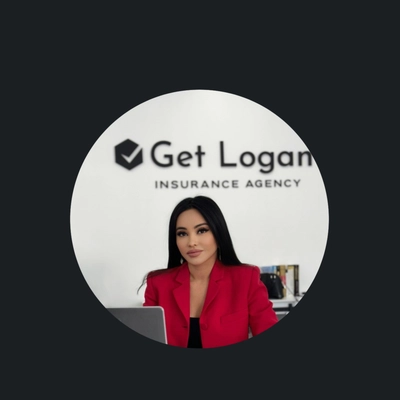 Zebo Karim, Founder, Get Logan Inc
Assess Habits Through Vehicle Care
One hiring filter I use is simple, and a little awkward to say out loud: find a way to look at a candidate’s car. Not the make, the model, or how fancy it is. How they keep it.
A messy car usually means messy habits around organization, structure, and cleanliness. A tidy, well-maintained car usually means they’ll treat the workspace the same way. It cuts past the interview answers.
At Bloomin’ Blinds, which I founded in 2014 and stepped out of in 2025, we used that kind of consistency filter while we built a corporate office team that peaked at 17 people. We were not looking for the same personalities. We were looking for the same standard. If the team is organized and one person is not, that person hurts morale, creates frustration, and chips away at a culture of excellence.
The impact was a team that moved in the same direction without constant hand-holding. The downside is real too: you will pass on some talented people whose private life looks chaotic, even when their resume looks great. That trade-off is worth it when you are building a small team that has to depend on each other.
Advice for other founders: pick one plain filter that shows how someone actually lives, not how they interview. Use it the same way every time. Consistency in mindset builds a cohesive team. Different styles are fine. Different standards are not.
 Kelsey Stuart, Founder, Waypoint Franchise Advisors
Recruit From Live Industry Events
We’ve partnered with more than 40 blockchain and digital asset events worldwide, so I spend much of my year in conference halls, and I’ve started treating those rooms as our recruiting pipeline.
Watching someone work an event shows you how they handle a panel that goes sideways, and whether they stop to help a stranger find the right room. I’ve met collaborators on a conference floor, watched them operate under real pressure for two days, and made a decision before the closing party.
People who join this way tend to be self-directed. They earned the invitation by how they showed up when nobody was grading them, and that takes away the question I’d otherwise have about whether the polished version of them was the real one.
 Kelly Ann Collins, Founder, Unstoppable Future Corporation
Test Requirement Handoffs Under Ambiguity
We give engineering candidates an ambiguous task from the kind of work our team handles and ask them to turn it into requirements another person could build and verify. Technical trivia tells us little about that handoff. We changed the evaluation because how someone handles an unclear request matters to daily delivery: they have to decide what is known, what needs clarification and how a reviewer will recognize the finished work.
Our delivery tickets answer four questions. What needs doing? What result do we expect? How will we check it? Which supporting materials, such as a design link or screenshot, belong with the request? We use that structure when discussing a candidate’s decomposition. Someone who describes a plausible result but can’t explain how to verify it has exposed a gap before implementation. So has someone who silently supplies a missing requirement instead of asking about it. The exercise gives both sides a piece of work to discuss rather than a performance of confidence about tools.
The change improved our hiring and collaboration because we can assess how a person will hand work to the team. A developer needs an intended outcome they can build toward, and a reviewer needs a testable basis for accepting it. When those are explicit, the original request doesn’t have to be reconstructed from memory during review. The candidate’s questions also show whether they take ownership of ambiguity instead of passing it to the next person.
Founders can take a small task from their own workflow, leave enough uncertainty to require clarification, then ask the candidate to state assumptions and a verification method. Judge the reasoning in the handoff and keep using the same requirements discipline once the person joins. Otherwise the interview measures a habit the team doesn’t practice.
 Roman Surikov, Founder & CEO, Ronas IT | Software Development Company
Probe Values With Challenging Culture Questions
One thing we have learned as we have scaled Doctify internationally is that building a high performing team goes beyond hiring the strongest CVs.
We do all the usual competency questions but we also dedicate time to getting to know the candidate on a personal level. We ask about their interests, what their idea of a good team social would be, but we also ask some testing questions other companies would probably shy away from.
One of my favourites is “Think about the person you’ve found most challenging to work with. What was it about them that made the relationship difficult?”.
It’s a deceptively simple question, but the answers reveal a lot about someone’s character, what they value personally and how that aligns with the team we already have here.
This matters even more at Doctify because we always try to hire for potential, which means we have a young team that is learning together and getting along on a professional and personal level really counts. We believe our approach works and we see our 4.6/5 score on Glassdoor as proof that we are getting this right.
My advice to other founders is to not be afraid to ask candidates unconventional and challenging questions. Make sure that culture fit is a key assessment in the hiring process rather than an afterthought next to experience and competencies.
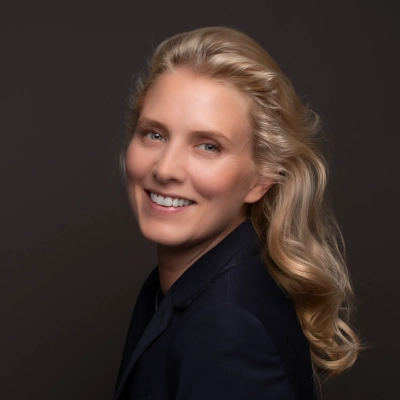 Stephanie Eltz, CEO and Co-Founder, Doctify
Recruit People Who Outperform You
“One of my most unconventional hiring strategies is to hire people who are smarter, more talented, and more capable than I am with the mindset that they could eventually replace me. Too many founders let their egos get in the way of building a great company, surrounding themselves with people who make them comfortable rather than those who challenge them. I don’t hire based on whether I click with someone personally or whether they make me feel like the smartest person in the room. I hire for exceptional talent, work ethic, expertise, untapped potential, and, most importantly, what they know that I don’t. This philosophy brings fresh perspectives, challenges conventional thinking, strengthens decision-making, and creates a team that can accomplish far more than I ever could alone. It also builds a culture of mutual respect, where talent is valued over titles and people are empowered to grow beyond their current roles. My advice to founders? Check your ego at the door. If you’re always the smartest person in the room, you’re hiring the wrong people and limiting your company’s potential.”
 Maureen Edwards, Founder/CEO, Ingennicom
Choose Support Veterans for Fundraiser Success
When we built our fundraising support team, I did something that felt a little backwards: I hired for customer support experience instead of traditional sales experience. I’d seen how overwhelmed fundraising organizers get. One PTO volunteer called us in tears the night before her first campaign launch, convinced she’d missed a crucial step. A teammate with a support background didn’t pitch her anything. She slowed the conversation down, walked through the checklist with her, and made sure she felt ready. That volunteer ended up running one of our most successful campaigns.
I used to assume the best people for the job were the ones who could close. But moments like that showed me that calm, empathetic problem-solving builds trust faster than any sales technique. It also changed our team, which now values relationships over transactions.
My advice to other founders is to look past what “looks good” on a resume and think about the skills your customers actually need from you. Your team’s unseen strengths might surprise you, and one thoughtful hire can change the way you operate.
 Chantel Wilt, Manager of Operation, Good Clean Fundraising
Grow Interns Into Technical Experts
One hiring approach that has worked well for us is hiring interns and developing them into full-time technical resources rather than always looking for experienced people in the market.
We hire interns, train them in our core areas, and set clear targets for completing the required technical certifications within the first three months. During this period, we also observe how they work, how quickly they learn, their work ethics, and how committed they are to improving. Once they are ready, we start involving them in live projects.
There are a few advantages to this approach. First, we get a chance to understand a person’s capabilities before assigning them major responsibilities. Second, people who grow within the company tend to develop a better understanding of our processes and often stay with us longer. It is also more cost-effective than hiring experienced resources, where the hiring cost can be five times higher, while there is still no guarantee that the person will fit into the team or meet expectations.
This approach has also helped us build a team where people are willing to learn from each other and grow together.
My advice to other founders is not to focus only on experience when hiring. Sometimes, a person with the right attitude and willingness to learn can become a much better long-term resource than someone who already has years of experience.
 Inder Singh, CEO, Geeks Solutions
Use AI to Score Technical Assessments
In startups, things can get messy; with people wearing multiple hats and navigating startup chaos, the availability for multiple interviews can be limited which increases the time to hire. What I did at one of the startups I worked at recently, I used AI to build a skill that will rate a candidate’s technical skills based on the completed assessment. It took time initially to create the assessment and skill with the hiring manager but once that was done, as soon as any assessment was completed by a candidate, we had AI skill grade it, and the ones who did well were moved to the interview. This really helped close the gap and made the process efficient.
 Susan Snipes, Head of People, Remote People
Favor Adaptable Self-Starters Over Credentials
A hiring approach that has worked well for us is looking beyond a candidate’s previous credentials that are listed on the resume. In a startup, roles and priorities can change quickly, so it is important to know whether people can take ownership, adapt to unfamiliar problems and work independently – this is what I pay attention to.
The team we have built has been moulded where people are more comfortable stepping in to take up initiative to contribute wherever it can make a difference outside their narrowly defined responsibilities. This slowly but surely changes the dynamic of the team because people start seeing problems as something they can solve themselves rather than play ball with other departments.
My advice to founders would be to be a little forward-thinking in your approach – don’t hire people for the roles and responsibilities they are expected to take presently. Look at how they think, how they respond when things don’t go as planned and whether they have the initiative to grow with the company. Technical skills and experience matter, but how they adapt and take ownership and be accountable for the ever-changing responsibilities in a startup, matters more.
 Adithyan RK, CEO, Hyring
Let Paid Auditions Reveal Real Fit
Paid task auditions are much more effective than swimming through resumes for an indeterminate amount of time. If someone has what we’re looking for on paper, they can complete a task, and based on that work, along with how well they mesh with the team, we can make a much better hiring decision than with credentials and experience alone. A person with the best credentials may not be able to find their place in the company, or they may just be very skilled at resume building and totally ineffective in real world problem solving. Like social media profiles, resumes only show a fraction of the person. Bring them in and see what they can do and how they could fit.
 Arif Ali, Technical Director, Just After Midnight
Seek Curious Problem Solvers With Ownership
In technical hiring, I believe practical problem-solving ability often matters more than an impressive resume. A candidate may have the right qualifications, but what matters is how they approach an unfamiliar problem and take on the responsibility of solving it.
At RalanTech, where we deal with database management and enterprise IT operations, I value people who are curious, willing to learn and comfortable taking ownership. Certifications and experience are important, but I also look at how candidates think, troubleshoot problems, and communicate their decisions. Someone who can explain their approach to a difficult technical problem can sometimes bring more value than someone who simply lists qualifications.
I also believe in giving responsibility to people instead of limiting them to instructions. Database operations involve performance, availability, and security, so team members need to understand the importance of their work. When people have clear ownership and know when to ask for support, they become more confident and accountable.
This approach also encourages better team dynamics. Experienced professionals can share their knowledge, while new team members bring fresh perspectives and a willingness to question existing practices. Open communication makes it easier for people to learn from each other.
My advice to other founders is simple: Hire based on competency, curiosity, and accountability, not just degree or job title. Use insightful interview questions, look beyond traditional career paths and give people a chance to prove themselves. A strong team is created by finding people who can think independently and work responsibly.
 Raju Chidambaram, Database managed services consulting and Support, RalanTech
Related Articles
- Startup Hiring Hacks: Unconventional Methods That Build Strong Teams
- Unconventional Hiring Practices: 18 Startup Success Stories
- Unconventional Ways Startups Boost Efficiency: Founders Share Advice
Previously in Latest News: Turning Cyber Resilience Into Your Next Big Advantage in Singapore