
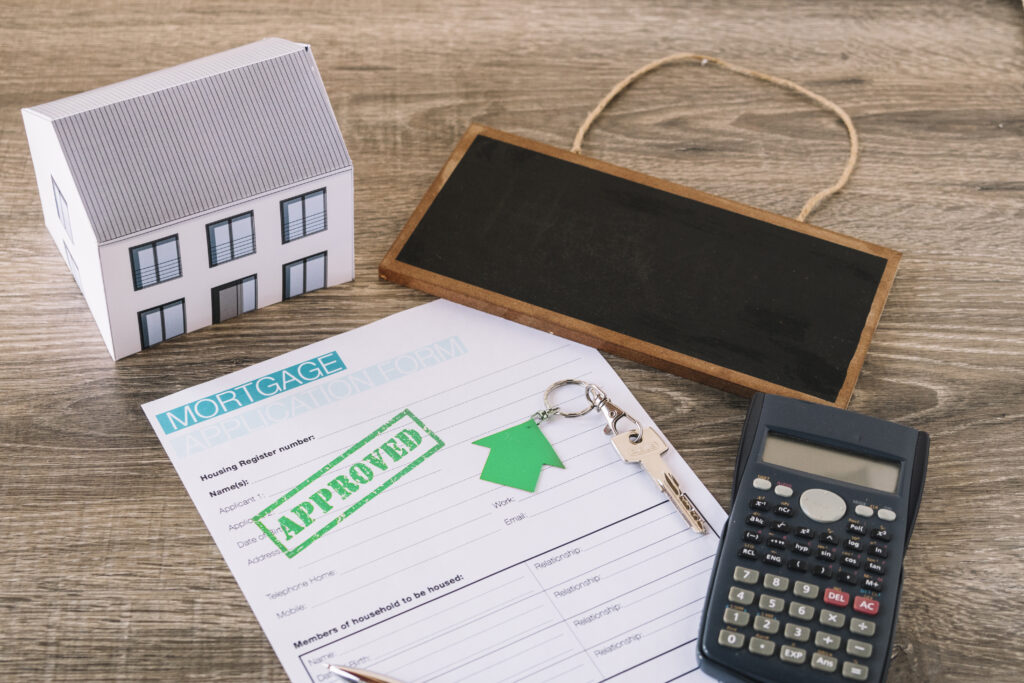
You’ve probably Googled “can I buy a house with bad credit” about seventeen times this month. Maybe you’ve read articles that either made it sound impossibly hard or suspiciously easy. Let me give it to you straight: yes, you can buy a house with a 580 credit score. But it’s going to take some work, some time, and a realistic game plan.
I’m not going to tell you it’s simple or that you just need to “believe in yourself.” I’m also not going to tell you it’s hopeless. What I am going to do is give you the actual roadmap—the one that shows you what to do this week, next month, and over the next year to get from where you are now to holding keys to your own place.
The Real Timeline (No Sugarcoating)
Here’s what nobody wants to tell you: your timeline depends on more than just your credit score. It depends on what’s dragging that score down and how much cash you’ve got saved. But let’s break this into three real-world scenarios:
Scenario 1: You’re at 580-620 Right Now
Timeline: 6-12 months
If you’re already at 580 or just above, you’re technically at the minimum for an FHA loan with 3.5% down. But here’s the thing—just because you CAN get approved doesn’t mean you SHOULD apply today. Most FHA loans in Utah and across the country will technically approve you at 580, but you’ll get better interest rates if you can push that score up even 20-30 points.
Spend 6 months cleaning up your credit, saving aggressively, and you’ll save yourself thousands over the life of the loan. That’s not just feel-good advice—that’s math.
Scenario 2: You’re at 540-579
Timeline: 12-18 months
You’re close, but you need that score to climb. The good news? If you’ve got recent late payments or high credit card balances, you can move that needle fairly quickly with focused effort. We’re talking about getting strategic with paydowns, handling collections the right way, and letting some time pass so those recent dings matter less.
This isn’t a sprint. It’s a power walk with a finish line you can actually see.
Scenario 3: You’re Below 540
Timeline: 18-24+ months
Real talk: you’ve got some heavier lifting to do. But that doesn’t mean you’re years away from homeownership—it means you need to be methodical. Bankruptcy? Foreclosure? Multiple collections? These things take time to recover from, but they DO recover. And while you’re recovering, you’re also saving money, which means when you’re ready to buy, you’ll be in a stronger position than if you’d rushed it.
What You Can Do RIGHT NOW (Like, This Week)
Forget the vague advice. Here are the specific actions you should take before this weekend is over:
Step 1: Pull All Three Credit Reports
Go to AnnualCreditReport.com (the actual free one, not the sketchy knock-offs) and pull your reports from Experian, TransUnion, and Equifax. Yes, all three. Why? Because mortgage lenders look at all three and typically use your middle score. You might be 580 on one and 545 on another—you need to know what you’re working with.
Don’t just look at the score. Read the whole report. What’s on there? When did it hit? How much do you owe? This is your baseline.
Step 2: Identify Your Biggest Score Killers
Your credit score gets dragged down by a few main culprits:
- Recent late payments (especially within the last 12 months)
- High credit card balances (using more than 30% of your available credit)
- Collections accounts (even small ones hurt)
- Judgments or liens (these are serious and need addressing)
- Recent hard inquiries (applying for credit you didn’t get)
Circle the worst offenders. Those are your targets.
Step 3: Handle Collections the Smart Way
If you’ve got collections on your report, don’t panic and don’t ignore them. Here’s what to do:
For small collections (under $500): Consider paying them off, but ONLY if you can get a “pay for delete” agreement in writing first. This means the collection agency agrees to remove the entry from your credit report once you pay. Not all will do this, but many will. Never pay a collection without getting this agreement first—paying it without deletion won’t help your score much.
For larger collections: You might negotiate a settlement (paying less than the full amount). Same rule applies: get the deletion agreement in writing before you pay a dime.
Important: Don’t just start calling collectors randomly. That can restart the statute of limitations on old debt. If something is really old (like 6+ years), talk to a credit counselor or attorney first. Some debt is better left sleeping.
Step 4: Pay Down Credit Card Balances Strategically
If your cards are maxed out or close to it, this is your fastest path to score improvement. The goal is to get below 30% utilization on each card, but under 10% is even better.
Here’s the strategy: focus on the card that’s closest to being under 30% first. If you’ve got $500 to put toward debt and one card is at 95% and another is at 35%, put it all on the 35% card to get it under 30%. That gives you a quicker score bump than spreading it around.
Step 5: Dispute Legitimate Errors
Look for mistakes on your credit report—accounts that aren’t yours, late payments that you actually paid on time, wrong balances. These happen more than you’d think. Dispute them through the credit bureau’s website. It’s free and it works.
But let’s be honest: don’t dispute accurate information hoping it’ll just go away. That’s not fixing your credit, that’s wasting your time.
Step 6: Become Boring (In a Good Way)
From this moment forward, your job is to be the most reliable, on-time, boring bill payer in America. Set up auto-pay on everything if you can. Pay every single bill early or on time for the next 6-12 months. No exceptions.
New payment history is like new paint—it covers up the old stuff over time.
The Money Reality Check: How Much Do You Actually Need?
Let’s talk dollars and cents, because you can have perfect credit and still can’t buy a house if you’re broke.
The Down Payment: 3.5%
FHA loans require 3.5% down if your credit score is 580 or above. If you’re between 500-579, you’ll need 10% down (which is why getting to 580 matters so much).
What does 3.5% actually look like?
- $200,000 house = $7,000 down
- $250,000 house = $8,750 down
- $300,000 house = $10,500 down
Can you get down payment assistance? Yes, in many states and cities there are programs that will help. Some are grants (free money), some are second loans with favorable terms. Google “[your state] down payment assistance programs” and you’ll find options.
Closing Costs: Another 2-5%
People forget about this part. Closing costs include things like the appraisal, title insurance, attorney fees, lender fees, and prepaid property taxes and insurance. They typically run 2-5% of the purchase price.
On that $250,000 house, you’re looking at $5,000-$12,500 in closing costs on top of your down payment.
Can you get help with this too? Absolutely. You can:
- Ask the seller to pay some of your closing costs (up to 6% with FHA)
- Use lender credits (you take a slightly higher interest rate in exchange for the lender covering some costs)
- Look for state and local programs that help with closing costs
Reserves: The Safety Net
Here’s where it gets tricky. FHA doesn’t technically require you to have money left over after you close, but many lenders will want to see 1-2 months of mortgage payments in the bank as a cushion. Why? Because they want to know you won’t immediately default if your water heater dies three weeks after closing.
This might add another $2,000-$4,000 to your savings goal depending on your payment.
The Bottom Line Number
For a $250,000 house, you’re realistically looking at needing:
- $8,750 (down payment)
- $7,500 (closing costs, if you can get seller to cover half)
- $3,000 (reserves)
- Total: $19,250
That’s a lot of money. But it’s a specific number you can work toward, which is better than a vague “save as much as you can.”
The Lender Conversation: When and What to Ask
Here’s a mistake people make: they wait until they think they’re “ready” to talk to a lender. Don’t do that.
You should talk to a lender EARLY in your journey—like in the next 2-4 weeks. Not to apply for a loan, but to get a game plan. Many mortgage lenders who work with challenged credit will do a free consultation where they pull your credit, look at your situation, and tell you exactly what needs to happen before you can close.
This is called a pre-qualification conversation, and it’s different from a pre-approval. You’re not applying for anything yet. You’re just getting intel.
Questions to Ask Your Lender
When you have that conversation, here’s what you need to know:
- “What’s my middle credit score across all three bureaus?” (This is the score that matters for FHA.)
- “What specific things on my credit report are the biggest obstacles right now?” (They can see things you might miss.)
- “If I do X, Y, and Z, how much will that likely improve my score and when can we revisit this?” (Get a specific action plan.)
- “What’s the minimum down payment and reserves I’ll need for a house in my price range?” (Get real numbers.)
- “Are there any down payment assistance programs I should look into?” (They should know the local options.)
- “What interest rate range should I expect with my current credit profile?” (This helps you budget accurately.)
Red Flags to Watch For
Be careful of lenders who:
- Promise you a loan without pulling your credit
- Charge you money just to talk to them
- Push you to apply before you’re actually ready
- Can’t explain why you’re not approved or what to fix
A good lender will be honest with you about where you stand and what needs to happen. They’re not doing you any favors by approving you for a loan you can’t actually afford.
The Other Stuff That Matters
Let’s cover a few things that don’t fit neatly into categories but are important:
Your Job History
FHA wants to see two years of steady employment. That doesn’t mean the same job for two years—it means consistent work with explainable gaps. If you job-hopped but stayed in the same industry, that’s usually fine. If you’ve got six months of unemployment, be ready to explain it.
Your Debt-to-Income Ratio
Lenders look at how much debt you have compared to your income. They take all your monthly debt payments (car loans, student loans, minimum credit card payments, child support, etc.) and divide it by your gross monthly income.
For FHA, they typically want to see this ratio at 43% or below, though some lenders go up to 50% in certain situations.
If your ratio is too high, you’ve got two options: increase your income or decrease your debt. Sometimes that means paying off a car loan before you buy a house. Sometimes it means getting a side hustle for a few months to show higher income.
The Type of House Matters
FHA loans have property requirements. The house needs to be in decent shape—no major safety issues, no structural problems, working systems. You’re not buying a fixer-upper with an FHA loan unless those fixes are cosmetic.
The property will need to appraise at or above the purchase price, and it needs to pass an FHA appraisal inspection. If it doesn’t, the seller either needs to make repairs or you need to walk away.
Your 12-Month Action Plan
Let’s put this all together into a month-by-month plan. Adjust the timeline based on where you’re starting from.
Months 1-2: Information Gathering
- Pull credit reports from all three bureaus
- Talk to a lender for a pre-qualification consultation
- Create a specific savings plan with target numbers
- List out every debt and bill you have
Months 3-4: Quick Wins
- Dispute any errors on credit reports
- Pay down credit card balances to get under 30% utilization
- Set up auto-pay on all bills to ensure on-time payments
- Research down payment assistance programs in your area
Months 5-7: Debt Strategy
- Negotiate pay-for-delete on collections
- Continue aggressive saving (automate it if possible)
- If self-employed, make sure your tax returns are clean and consistent
- Keep credit card utilization low (pay them off multiple times a month if needed)
Months 8-9: Lender Check-In
- Have another conversation with your lender to see where your score is now
- Get pre-approved if your credit is in good shape
- Start casually looking at houses in your price range to get a feel for the market
- Make sure you have all required documents organized (pay stubs, tax returns, bank statements)
Months 10-12: House Hunting and Closing
- Work with a real estate agent who understands FHA loans
- Make offers on houses that meet FHA property requirements
- Get through the appraisal and inspection process
- Close on your house and celebrate the win
The Truth About Why This Works
Here’s something most articles won’t tell you: the path from 580 credit to homeownership isn’t about gaming the system or finding some secret loophole. It’s about proving to a lender that you’re a good risk.
That might sound harsh, but it’s actually good news. It means you have control. Every on-time payment improves your case. Every dollar you save strengthens your position. Every month that passes puts distance between you and your past financial mistakes.
The FHA loan program exists specifically for people who don’t have perfect credit and don’t have 20% to put down. It’s designed for people rebuilding, people starting out, people who need a shot. But it’s not a charity—it’s still a loan that needs to be repaid.
Your job over these next 6-12 months is to show that you’re someone who pays their bills, saves their money, and takes homeownership seriously. Do that consistently, and the loan will come.
Final Real Talk
Is this going to be easy? No. Will there be moments when you want to give up? Probably. Will you have to make some sacrifices—skipping dinners out, saying no to trips, driving your current car longer than you’d like? Yes.
But here’s the other side of that coin: in 12 months, you could be holding keys to your own place. You could be building equity instead of paying rent. You could be proving to yourself that you can set a big goal and actually hit it.
A 580 credit score isn’t the end of your homeownership dreams. It’s just your starting point. And now you know exactly what to do next.
Start with the credit reports. Talk to a lender. Make a plan. And then work that plan, one month at a time, until you’re signing closing papers.
You’ve got this. It’s time to get to work.