
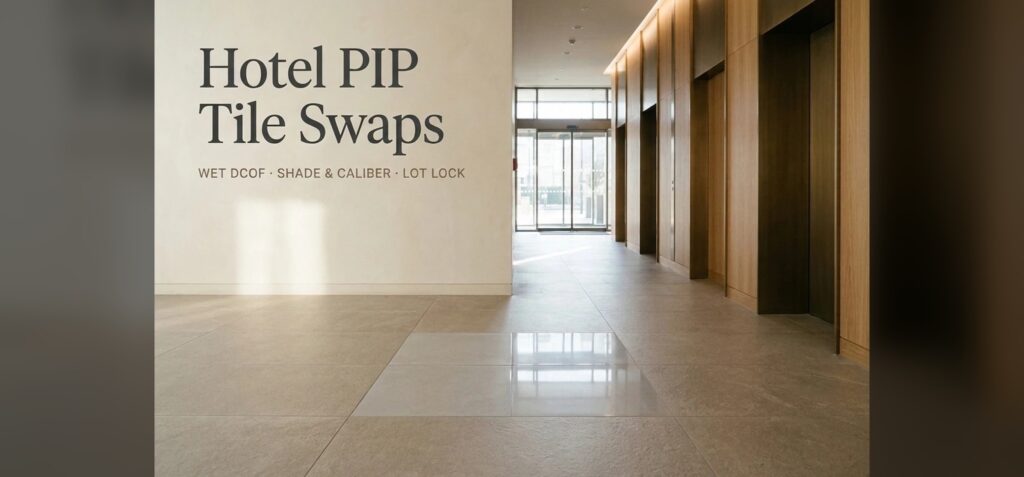
A last-minute tile substitution under a property improvement plan (PIP) deadline can match the approved color and even the same porcelain or ceramic classification. It can still miss the original's slip rating, wear rating, shade, or size. Those gaps tend to surface after reopening, as slip complaints, worn walkways, and repair patches that do not match.
The brand sets the PIP completion date, and late approvals can shrink the ordering window to weeks. Ordering the commercial tile package with its test evidence and production lots locked before that window closes keeps the risk off the property.
How Tight Deadlines Force Field Swaps
Phased renovations leave contractors narrow turnover windows with little margin for shipping delays. When a specified line is backordered, crews may fill the gap with nearby stock that has not been through the same technical review. The pressure to reopen rooms before a brand inspection makes it easy to skip checking ratings and batch codes on the replacement.
A simple rule closes that gap: no substitute goes in without written approval from the specifier, backed by the same documents the original tile needed. Brand-specified finishes may also need the brand's sign-off, so the approval path belongs in the schedule before a shortage appears.
Why Swaps Fail on Slip and Wear
A substitute chosen by color can miss the performance limits that hotel floors need. Lobbies and corridors take tracked-in rainwater, rolling luggage, and strong cleaners, so an unverified tile can fail early.
A Porcelain Label Is Not a Floor Rating
Teams sometimes treat the word porcelain as proof of floor safety, which confuses the body classification with surface performance. Under ANSI A137.1, porcelain means a tile body with water absorption of 0.5 percent or less when tested to ASTM C373. That classifies the body only, so slip and wear suitability still need separate product evidence.
Wet DCOF as a Starting Point
ANSI A326.3 measures the dynamic coefficient of friction (DCOF) of hard flooring. Its Interior, Wet category requires a wet DCOF of 0.42 or higher, or a manufacturer declaration for that use. Water, soap, grease, slope, and footwear all change slip risk on site. The product use classification therefore has to be compared with the actual location, not read as a pass. Results also belong to the tested finish, so a polished version of an approved matte tile needs its own data.
Wear Ratings for Carts and Luggage
Grit, suitcases, and service carts wear down weak glazes near entries and elevators. Glazed tile is checked for visible abrasion under ASTM C1027, and unglazed tile for deep abrasion under ASTM C1243. Breaking strength and the floor assembly need review as well.
Why Split Orders Show Shade and Size Drift
Splitting orders across phases or regional distributors brings in firing and sizing differences. Even with matching product codes, separate lots can show color shifts and uneven joints along a corridor.
Shade and Caliber Codes
Kiln firing varies color and final size, so factories sort tile into shade and caliber codes. Mixing caliber groups on one floor disrupts grout lines and can cause lippage when installers force narrow joints on non-rectified edges. Recording both codes from the first delivery lets later phases order the same lot.
Blending and Repair Stock
ANSI A137.1 grades visual variation from V1, uniform, to V4, substantial. Crews should dry-lay and blend cartons within the approved shade. Rush buying also tends to skip a separate repair reserve, which leaves maintenance teams unable to match damaged tiles after opening. The owner and installer should size that reserve from the room layout and expected repairs, not a default percentage.
| Risk | What to confirm before a substitute goes in |
|---|---|
| Wet-area slip | ANSI A326.3 product use classification for that location |
| Floor wear | ASTM C1027 or C1243 result and a stated floor use |
| Shade and size | Shade and caliber codes that match the installed lot |
| Future repairs | Labeled spare cartons from the same lot |
How Hotel Groups Prevent Repeat Disputes
Multi-property groups cut repeat rework by locking specifications before purchase orders go out. That keeps performance requirements intact when brand deadlines compress supply.
Pre-Approved Alternates and Mock-Ups
Written alternates backed by lab reports give teams a vetted fallback before bidding closes. For repeated guestrooms, a tile mock-up under real lighting checks pattern flow, drain placement, and doorway transitions. It does not replace lab data for slip or wear.
Locked Lots and Spare Stock
Ordering each phase's full quantity against scheduled production runs keeps lots together. Teams should separate installation waste from labeled repair reserves by SKU, finish, shade, and caliber. Local designers and installers still confirm substrates, waterproofing, and code sign-off. One register of room codes, intended surfaces, and approved test files then keeps incompatible tiles off active sites.