
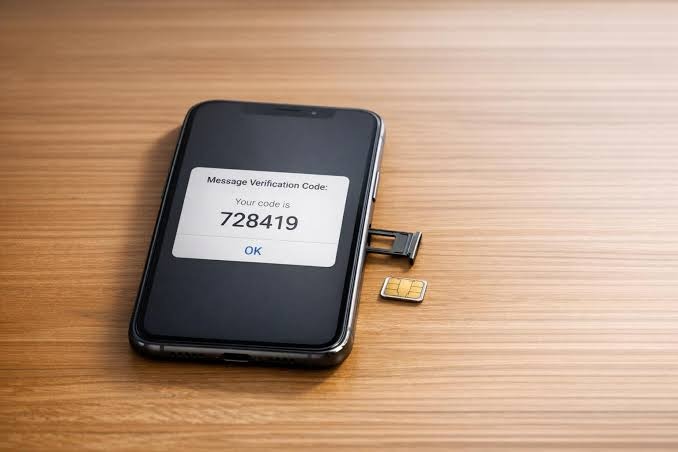
If you have ever tried to open an account on a crypto exchange, a wallet service or a payment app and received the message “this phone number is not supported,” you are not alone. In most cases nothing is wrong with you or with the number itself. The platform has simply decided that the line type does not meet its verification rules.
The type in question is usually VoIP. Understanding why platforms treat these numbers with suspicion, and what non-VoIP numbers are, can save you a lot of time during sign-up.
Why phone verification exists
Crypto and fintech companies operate under strict compliance rules. They have to know who their users are, prevent fraud and limit abuse such as bonus farming, where one person opens dozens of accounts to claim sign-up rewards. A phone number is one of the cheapest and fastest ways to tie an account to something real.
The process is simple. You enter your number, the platform sends a code by SMS and you type it back. If the code arrives, the platform assumes that the number is active and belongs to you.
The weakness is that numbers differ in how easy they are to obtain. A SIM card tied to a mobile carrier usually requires some effort and, in many countries, an ID. An internet-based number can be created in seconds, in bulk, with no paperwork. For a platform fighting fake accounts, that difference matters.
How platforms tell the difference
Every phone number belongs to a range allocated to a specific carrier, and each range is labeled: mobile, landline or VoIP. Platforms use carrier lookup services to read this label in real time, before they even send the code.
If the lookup returns “VoIP,” the platform can react in several ways. Some block the number outright. Some allow it but limit what the account can do. Others ask for additional documents. The exact policy depends on the platform’s risk tolerance, which is why the same number might work on one service and fail on another.
This is also why people are sometimes confused. A number may receive texts perfectly well on one site and never receive a code on another. The number did not change, the rule did.
What a non-VoIP number is
A non-VoIP number belongs to a mobile or landline range. When a lookup checks it, the result looks like a regular carrier line. You may still manage it through an app or a web panel, but the label that platforms see is the one that matters for verification.
For users, the benefit is practical rather than mysterious: the number is far less likely to be rejected during sign-up, so the confirmation code arrives and the process continues.
Who needs this
Not everyone has to think about line types. A casual user with a personal SIM card never will. But there are groups for whom the topic comes up regularly:
- Travelers and expats. If you live abroad and your home number is not accessible, you may need a number from the country where an exchange or bank operates.
- Teams and agencies. Companies that manage several accounts for clients or for testing want to keep numbers separate from personal SIM cards.
- Privacy-minded users. Many people prefer not to share their main number with every platform, since numbers get leaked in data breaches and end up in spam lists.
- Developers and QA specialists. Testing a registration flow in different countries requires numbers from those countries.
Practical tips for verification
Whichever number you use, a few habits make the process smoother:
- Check the supported countries. Some platforms accept numbers only from selected regions. Read the sign-up page before you start.
- Make sure the number receives SMS. Voice-only lines cannot receive text codes. Confirm that inbound SMS is included.
- Use the number consistently. If a number is linked to two-factor authentication, losing access to it can lock you out. Keep the number active for as long as the account exists.
- Do not request codes repeatedly. Too many attempts in a short time can trigger a temporary block, even with a valid number.
- Keep a backup method. Authenticator apps and recovery codes are safer than SMS alone. Treat the phone number as one layer, not the only one.
A note on security
Phone-based verification is convenient, but it is not the strongest form of protection. SIM-swap attacks, where a criminal convinces a carrier to move your number to another SIM, are a known risk. For accounts that hold meaningful funds, it is wise to add an authenticator app or a hardware key, and to use SMS only as a fallback.
It is also worth remembering that a number is a long-term identifier. If you give it up, the carrier may eventually reassign it to someone else, who could then receive reset messages meant for you. Update the contact details on your accounts before you release a number.
Choosing a number responsibly
The goal of verification is to prove that a real person controls an account. Using a number that you legitimately own and can access is in line with that goal. Creating many accounts to exploit promotions is not, and platforms are getting better at detecting it. Stay within each service’s terms and you avoid most of the trouble.
The bottom line
When a crypto platform rejects a phone number, the cause is usually the line type, not the user. VoIP ranges are easy to create in volume, so risk-averse services filter them out. A non-VoIP number looks like a standard mobile or landline and generally passes those checks. Know what each service expects, make sure SMS is supported and protect your accounts with more than a text message, and registration becomes a much shorter task.