
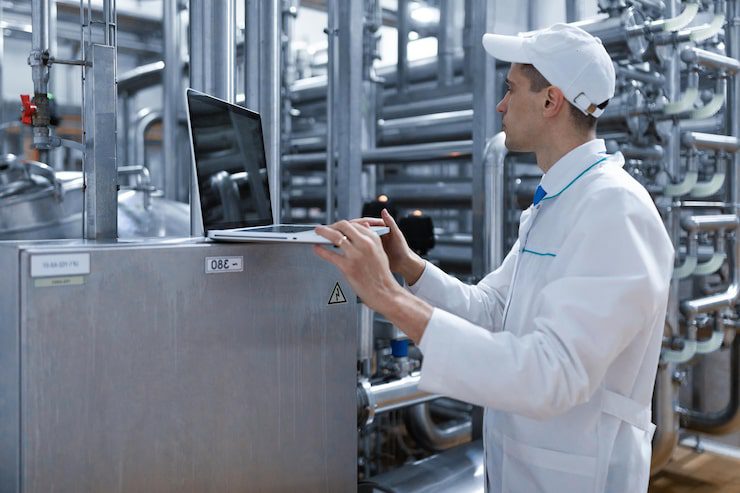
In petrochemical plants, high-heat processes are common, so temperature monitoring is crucial for operations and maintenance. The UAE, with a valuable petrochemical base, faces several problems associated with unmonitored high-temperature processes, including damage to processing equipment, reduced production efficiency, health and safety issues, and even financial losses due to process downtime. This is where a furnace camera comes in, the effective solution for real-time monitoring, remote observation, and precise thermal measurements. This is the enabling technology for modern petrochemical facilities in the UAE to run continuous operations, optimise their energy consumption and ensure compliance and safety in the industry.
How Furnace Cameras Work?
These are process-monitoring cameras for high-temperature industrial processes, and unlike other conductors, they have a special purpose. Designed for toughness, they can operate in hot climates and can provide operators with visual information or thermal imagery information in the field. Petrochemical plants utilise infrared (IR) cameras for heat-pattern measuring, optical cameras for visual inspection, or hybrid systems consisting of both capabilities according to use case.
Key features found in these cameras, which make them ideal for the petrochemical industry, include the camera housing that can tolerate high temperatures, high resolution imaging capability and real-time monitoring functionality. The furnace camera facilitates safety in its operation by enabling operators to ascertain deviations from set thermal profiles without human beings putting themselves in life-threatening circumstances, and precise process control, which is vital in UAE petrochemical plants performing intricate chemical reactions.
Applications of High-Temperature Monitoring for Petrochemical Plants
- The petrochemical industry employs high-temperature processing, and accurately measuring temperatures is essential for both safety and productivity. Processes including crude distillation, catalytic cracking and chemical reaction, produce very high heat, and they can be overheated and damage the equipment if not redirected to a heat sink.
- Unmonitored furnaces in the UAE could result in increased downtime, reduced quality and in the worst case, safety incidents. Also, occupational certification in the area is tight, and they mandate that operations that require such extreme heat conditions be monitored and reported on continuously.
- A furnace camera is the best answer since it provides accurate, real-time data based on how hot the different internal areas of a plant typically operate, enabling operators to take proactive steps to run the plant safely and effectively.
Benefits of Installing Furnace Cameras
The use of a furnace camera in petrochemical plants is beneficial in several ways.
- The hot spots or abnormal temperatures can also be recognised with these cameras and hence save lives and machinery from turning into a major threat.
- Comparing the individual strategies, continuous monitoring helps in optimising the consumption of fuel and energy, leading to overall savings.
- They also enable predictive maintenance by detecting early signs of wear or anomalies, thus limiting unexpected downtime and maintenance costs.
- Operators receive data in real-time and ensure their product quality with this constant data measurement for process control.
Essential Features for Petrochemical Applications
- UAE Petrochemical plants are confident in the selection of furnace cameras based on unique features which ensure durability, reliability and operational integration. In order to provide accurate thermal measurements, however, they must withstand high or low temperatures and industrial environments.
- Real-time monitoring and datalogging with integration into plant control systems. This can be operated remotely, which enhances safety by minimising hot zone personnel exposure.
- The fast identification of important temperature levels based on high-resolution thermal imaging allows the operator to make the right decision in a short time.
These features, when combined, make furnace cameras essential for safe, reliable, and efficient high-temperature monitoring in the region’s petrochemical facilities.
Industry Adoption and Operational Impact
Furnace cameras are an international standard in petrochemical plants, and to a large extent, their usage in UAE furnace monitoring has helped in achieving enhanced operational efficiency and minimal risk. Most of the leading facilities have capitalised on these instruments to proactively prevent expensive downtimes, system breakdowns and also save power.
A fictitious example is a refinery capable of monitoring several furnace zones at once with furnace cameras. The plant detected abnormal heat patterns early enough, making it possible to adapt the operation in a proactive way, avoiding costly shutdowns, while maintaining the production quality. This would enable a quick return on investment and establish petrochemical plants in the UAE as being technologically advanced and compliant with safety standards, which is the most significant competitive edge in the market.
Conclusion
The use of furnace cameras has grown to be an essential tool for maintaining safety, efficiency, and stable process control in petrochemical operations involving high-temperature processing. Delivering real-time monitoring, predictive maintenance, and accurate thermal measurements, these devices allow UAE petrochemical plants to run at peak conditions with reduced risk. These cameras are not only a necessity for the evolution of your industry, but also a way to future-proof your solution, alongside any advanced monitoring solutions. Trusted partners like Tempsens, with years of experience backed by state-of-the-art solutions, help petrochemical plants to be more effective while having a stringent safety process step by step.