
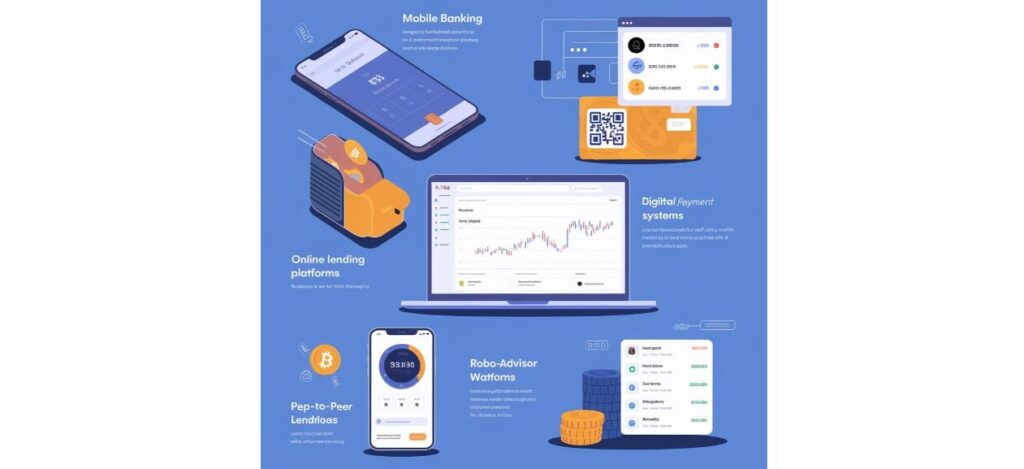
Fintech is an umbrella term for all the technologies delivering financial services more efficiently, securely and in user-friendly manners. In simple words, fintech represents the technologies being used in financial services. Gone are the days, when people used to depend on the traditional banks, the long queues, and the paperwork. “Fintech is not just a trend; it’s the future of the financial industry.” As said Oliver Henry, Manager Apex Digital Agency Perth
Examples of Fintech Products and Services
Fintech companies offer a wide variety of products that cater to the needs of consumers, businesses, and financial institutions alike. Some of the most significant products include:
- Mobile Payments: Mobile payments have been the biggest transformation in financial history. The one-click transaction has brought convenience and security to daily payments. Nowadays, almost every mobile device has one or two mobile apps, banking apps, or digital wallets. Common Examples include PayPal, Venmo, and Square.
- Peer-to-Peer Lending (P2P): Platforms like LendingClub and Funding Circle allow individuals to lend money directly to borrowers, bypassing traditional financial institutions. P2P lending has made borrowing easier for individuals and small businesses, offering lower interest rates and quicker loan approvals.
- Robo-advisors: An automated system for advising about investment planning and other financial services has gained popularity among the masses. Common examples include Betterment and Wealthfront. It would be interesting to know that these robots do not work under human supervision.
- Insurtech: The insurance industry has also undergone significant change thanks to fintech innovation. Companies like Lemonade use AI and machine learning to automate claims processing and improve customer service, offering a more streamlined and customer-centric experience.
Financial Services and Institutions
Traditional financial institutions, such as banks, have always been the backbone of the financial industry. However, with the rapid increase of fintech, these institutions are now faced with the challenge of integrating technology into their core operations to remain competitive. Fintech companies offer a wide range of services that enhance traditional financial models, such as digital payments, mobile banking, and blockchain solutions, helping to drive the transformation of the financial sector.
For example, digital banks like Chime and Revolut offer banking services that don’t require a physical branch. These mobile-first services allow customers to manage their finances through an app, simplifying traditional banking procedures. As digital banking grows, traditional banks have started to offer similar mobile and online solutions, blurring the lines between fintech and established financial services.
The security and transparency have made it possible for online businesses like Website Design Perth Agency to manage their entire operations digitally. From monitoring business activities to ensuring secure payment transfers, Fintech technology has enabled companies to operate with greater efficiency and confidence.

How Blockchain and Cryptocurrencies Are Changing FinTech
Blockchain technology is the foundation of cryptocurrencies like Bitcoin, Ethereum, and Ripple. It acts as a secure digital record that no one can change, making transactions safe and transparent. Unlike traditional banking systems, blockchain removes the need for intermediaries, which means transactions can be faster, cheaper, and more secure. Because records on the blockchain cannot be altered, it also helps prevent fraud.
Cryptocurrencies are digital money that people can use to send, receive, and store value without relying on banks. Many individuals invest in them, while others use them for online payments. They provide an alternative to traditional currencies and offer a new way of handling financial transactions.
Another major innovation in fintech is decentralized finance or DeFi. DeFi platforms like Uniswap and Aave allow people to lend, borrow, and trade digital assets without going through a bank. This system gives users more control over their money and eliminates many of the fees and delays associated with traditional financial services. With blockchain and cryptocurrencies, financial transactions are becoming more open, accessible, and efficient, offering people new ways to manage and grow their wealth.
Fintech Innovations With Artificial Intelligence and Machine Learning
Machine learning (ML) and AI are at the heart of many fintech innovations. Financial institutions and fintech companies are using these technologies to enhance fraud detection, personalize user experiences, and make data-driven decisions.
For example, Ant Financial, the fintech arm of Alibaba, uses AI to evaluate creditworthiness and offer micro-loans to users in China. By analyzing vast amounts of data, Ant Financial can assess a user’s ability to repay a loan with greater accuracy than traditional credit scoring methods.
Digital Banking and Mobile Banking
Digital banking and mobile banking are reshaping the way people manage their finances. Digital-first banks like Monzo and N26 offer a wide range of services, including savings accounts, loans, and payment solutions, all through mobile apps. With no physical branches, these digital banks reduce overhead costs and offer competitive interest rates, attracting customers who are looking for a more streamlined banking experience.
Mobile banking apps from traditional banks, like Chase or HSBC, also allow users to access their accounts, make payments, and manage finances from anywhere. The COVID-19 pandemic has accelerated this digital shift, as more people turn to online solutions to manage their finances safely and efficiently.
Fintech’s Impact on Traditional Financial Institutions
The rise of fintech has forced traditional financial institutions to adapt and integrate digital solutions into their offerings. Banks and other financial institutions are increasingly adopting technology to stay relevant in the evolving market. Some traditional institutions have embraced partnerships with fintech startups, while others have launched their own digital platforms to compete in the new landscape.
For instance, Goldman Sachs launched its digital bank, Marcus, to compete with the growing number of digital-first financial institutions. Similarly, JP Morgan and Bank of America have invested heavily in developing their own mobile apps and digital payment systems to cater to changing customer expectations.
The growing adoption of fintech is also driving a shift in customer expectations. Consumers now demand fast, convenient, and personalized financial services. This shift has led to the rise of digital banking, which provides customers with more flexibility, lower costs, and enhanced user experiences compared to traditional banking.
Recent Trends in Fintech
The fintech industry continues to evolve at a rapid pace, with new trends emerging each year. Some of the most significant trends in fintech include:
- Open Banking: Open banking allows third-party developers to build applications that access bank data, creating new opportunities for innovation. Open banking is gaining momentum in regions such as the EU and the UK, and it is expected to drive more personalized and competitive financial services.
- RegTech: Regulatory technology (RegTech) helps financial institutions comply with regulations more efficiently. With increasing regulatory pressure, fintech companies are developing solutions to help businesses manage risk, prevent fraud, and comply with industry standards.
- Biometric Authentication: As security becomes a top priority, biometric authentication (such as fingerprint and facial recognition) is gaining traction in the fintech space. This technology provides an additional layer of security, ensuring that only authorized users can access sensitive financial information.
The Future of Fintech
As fintech continues to grow, we can expect even greater innovation in the financial services sector. The future of fintech will likely be shaped by the continued expansion of digital banking, the adoption of blockchain and AI technologies, and the increasing integration of financial services into everyday life through mobile apps.
Conclusion
Fintech technology has fundamentally changed the financial landscape, offering consumers and businesses new ways to manage and access financial services in their businesses, websites or Shopify stores. Whether you are in payments, lending, or insurance, staying ahead of trends and ensuring a solid online presence are key to your success in this competitive market.