
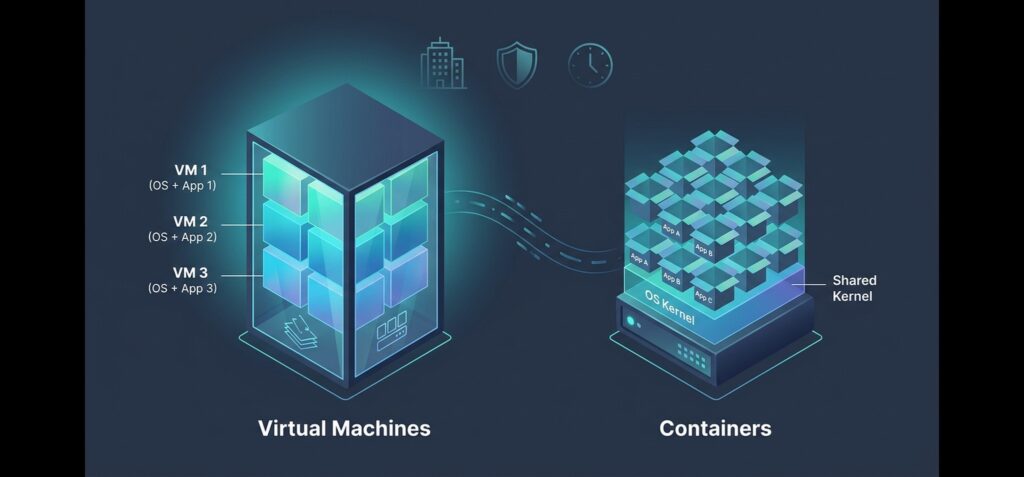
In today’s rapidly evolving technological landscape, businesses are increasingly faced with the decision of how to optimize their IT infrastructure for efficiency, scalability, and cost-effectiveness. Two prominent solutions that often come into play are virtual machines (VMs) and containers. While both technologies enable the deployment of applications in isolated environments, they differ fundamentally in architecture, resource usage, and operational flexibility. Understanding these differences is crucial for organizations seeking to align their choice with specific business needs, whether it’s managing legacy systems, adopting cloud solutions, or enabling agile development practices. This article will explore the key characteristics, advantages, and use cases of virtual machines and containers, ultimately guiding businesses in making an informed decision that best suits their operational goals.
Understanding Virtual Machines: Definition and Use Cases
What Are Virtual Machines?
Virtual machines (VMs) are like digital wizards that create separate environments on a single physical server, allowing you to run multiple operating systems and applications simultaneously. Each VM has its own virtual hardware, operating system, and applications, mimicking a physical computer. Think of it as hosting a mini version of a computer party inside your main computer, where the guests can do their own thing without crashing the whole shindig.
Common Use Cases for Virtual Machines
Virtual machines shine in various scenarios. They’re great for testing and development, as developers can create isolated environments to experiment without risking their main system. VMs also come in handy for running legacy applications that require outdated operating systems. Plus, they are essential for businesses wanting to consolidate servers or run multiple applications on a single piece of hardware, which is like fitting a whole buffet onto a single plate – efficient and slightly impressive!
Exploring Containers: Definition and Advantages
What Are Containers?
Containers are the snazzy, lightweight cousins of virtual machines. Unlike VMs, which bundle an entire operating system, containers package only the necessary parts of an application, including libraries and dependencies, all running on the host’s operating system. It’s like those perfectly portioned meal prep containers that keep your lunch organized without taking up the whole fridge!
Key Advantages of Using Containers
Containers boast a plethora of perks. They’re incredibly fast to start up and require fewer resources, making containerization with managed cloud hosting great for applications that need to scale rapidly. Their portability lets you move your app from one computing environment to another without a hitch. Additionally, containers promote consistency across various stages of development, testing, and production, meaning fewer “it works on my machine” excuses. It’s like finding the perfect pair of shoes that look great and fit anywhere – what a win!
Key Differences Between Virtual Machines and Containers
Architecture and Resource Isolation
The architecture of VMs and containers is where they part ways. VMs virtualize hardware, creating distinct, fully functional operating systems, whereas containers share the same OS kernel, isolating applications at the process level. To see how hypervisors abstract physical hardware to enable dynamic resource pooling and on-demand scaling, explore the role of virtualization in cloud computing across modern data centers. This means VMs can consume a lot of resources, akin to a voracious houseplant, while containers are more like a well-mannered succulent that just needs a little sunshine. The resource isolation also means VMs are often heavier and slower to deploy than their more nimble container counterparts.
Deployment and Scalability
When it comes to deployment and scalability, containers steal the spotlight. With their speedy spin-up time, you can deploy containers in seconds, allowing for quick iterations and scaling out as demand grows. VMs, on the other hand, can take several minutes to boot up and often require more substantial overhead to scale. Picture containers as the high-speed train that zooms between cities, while VMs are the slower freight trains making sure all the cargo (or in this case, applications) are safely delivered – but let’s face it, we’re all trying to catch that first train!
Performance and Resource Efficiency: A Comparative Analysis
Resource Utilization Metrics
When evaluating resource utilization, containers win the race with their minimalist approach. They consume less CPU and memory, allowing you to run many more containers on a single host compared to VMs. This efficiency is akin to choosing a sleek sports car over a hefty SUV for city driving – smaller footprint, faster maneuvering, and just a tad cooler!
Performance Benchmarking
In performance benchmarking, containers typically demonstrate superior speed and responsiveness, especially during high-load conditions. They allow applications to communicate seamlessly and efficiently, reducing latency. VMs, while reliable, can lag behind due to their heavier footprint and extended boot times. It’s like comparing two racehorses in a sprint: one is lean and fast, while the other, though steady, can’t quite keep up with the quick-footed contender on the track!
Security Considerations: Virtual Machines vs Containers
Security Features of Virtual Machines
Virtual machines (VMs) come with a robust set of security features that can make IT administrators feel like they’re wrapped in a warm, cozy security blanket. They operate on hypervisors, which means each VM is isolated from the others, reducing the risk of a breach spreading like a rumor at a family gathering. Additionally, VMs can run different operating systems, allowing for tailored security protocols and the ability to perform regular updates without impacting others. Intrusion detection systems and firewall configurations can also be implemented at a hypervisor level, giving you an added layer of protection against potential threats.
Security Features of Containers
On the flip side, containers offer a different approach to security that can feel more like a trendy, open-concept office – great for collaboration but with some vulnerabilities if not managed properly. While containers share the host OS kernel, they do use namespaces and cgroups to enforce isolation. This can limit the impact of an attack, but it does require diligent management, zero trust Kubernetes security, and best practices (hello, security audits!) to keep everything in check. Moreover, because containers are often transient and ephemeral, you’ll need to ensure that security policies are baked into your CI/CD processes, making security as agile as the deployments themselves.
Use Cases: When to Choose Virtual Machines
Enterprise Applications and Legacy Systems
If your business is still clinging to those trusty legacy applications that run like a well-oiled machine (or at least a machine from the early 2000s), virtual machines are your best bet. VMs can emulate the older environments these applications require, acting like a time machine but without the funky side effects. They allow you to run these applications in their native environments while providing the security and isolation needed when modernizing legacy systems alongside containers. Plus, if anything goes haywire, you can roll back to a previous snapshot – saving you from lengthy troubleshooting sessions that could make even the most patient person pull their hair out.
Complex Multi-Tenant Environments
In scenarios where multiple users or applications need to access the same resources – think shared office space but with more server racks – virtual machines shine. VMs can effectively segment resources for different tenants, ensuring there’s no interference, much like having separate cubicles for each team (no more overhearing your colleague’s “lively” conference call!). This level of isolation is crucial for compliance with regulations and offers peace of mind that sensitive data won’t accidentally stroll into the wrong hands.
Use Cases: When to Choose Containers
Microservices Architectures
If your business is diving into the world of microservices, containers are like that perfect pair of shoes that fits just right. They allow for lightweight, scalable deployments that can efficiently manage the myriad of services involved in a microservices architecture. Each service can run in its own container, making it easy to deploy, update, or scale independently, kind of like a magician with a never-ending supply of rabbits to pull from a hat. Moreover, this statelessness can lead to faster development cycles, helping your team keep pace with the ever-changing demands of the business.
DevOps and Continuous Deployment
For businesses embracing DevOps practices, containers are a match made in tech heaven. Their lightweight nature means teams can spin up environments quickly, allowing for seamless continuous integration and deployment pipelines. With container orchestration tools like Kubernetes, automating deployment, scaling, and management becomes less of a daunting task and more like a well-choreographed dance. This agility not only enhances collaboration but also ensures that new features and updates can reach your end-users faster, keeping them happy and your competitors on their toes.
Making the Right Choice for Your Business: Factors to Consider
Business Goals and Requirements
Before you dive into the VM vs. container debate, take a moment to consider your actual business goals. Are you looking for stability and control, or are you chasing down agility and speed like a kid chasing an ice cream truck? Understanding your specific use cases and requirements will help guide you toward the right solution. Each technology comes with its own strengths, so knowing which aligns best with your strategic goals is essential – unless you enjoy playing a game of tech roulette.
Cost Analysis and Budget Considerations
Next up, let’s talk about the all-important dollar signs. Cost is a significant factor when deciding between virtual machines and containers. VMs can be more resource-intensive, leading to higher operational expenses, while containers can often run on less infrastructure, potentially saving your business some serious cash over time. It’s essential to crunch the numbers and consider not just the initial setup costs, but also ongoing operational expenses, licensing fees, and maintenance. Remember, a penny saved is a penny earned – or enough to treat yourself to a nice cup of coffee.
Future Scalability and Flexibility Needs
Finally, think about your future landscape. Is your business poised for rapid growth, or will it be more of a steady climb? If you anticipate needing to scale quickly, containers might be your golden ticket. They offer unparalleled scalability and flexibility, which is vital in an ever-evolving market. On the other hand, if you foresee a more stable trajectory with established applications, virtual machines might give you the reliability you need. Ultimately, it’s about choosing the option that can adapt as your business continues to grow and change.In conclusion, both virtual machines and containers offer unique advantages that cater to different business needs and operational environments. By understanding their distinct features, use cases, and implications for performance and security, organizations can make informed decisions that enhance their technological capabilities. Ultimately, the choice between these two solutions should align with your specific goals, whether it’s maximizing resource efficiency, ensuring robust security, or enabling rapid development and deployment. As technology continues to evolve, staying informed about these options will help your business remain agile and competitive in the digital landscape.
Frequently Asked Questions
What are the main differences in resource usage between virtual machines and containers?
Virtual machines require a hypervisor and allocate separate operating systems for each instance, leading to higher resource consumption. In contrast, containers share the host OS and are more lightweight, allowing for faster deployment and efficient use of system resources.
Can I run containers inside virtual machines?
Yes, running containers inside virtual machines is a common practice. This setup allows businesses to benefit from the isolation and resource management of VMs while also leveraging the efficiency and speed of containerization.
Which technology is better for microservices architecture?
Containers are generally considered better suited for microservices architecture due to their lightweight nature and ability to scale quickly. They facilitate the development, deployment, and management of microservices more efficiently than virtual machines.
Are virtual machines more secure than containers?
Virtual machines can offer greater security through stronger isolation, as each VM runs its own operating system. However, containers have improved significantly in terms of security features, and the choice often depends on the specific security requirements of your applications and infrastructure.