
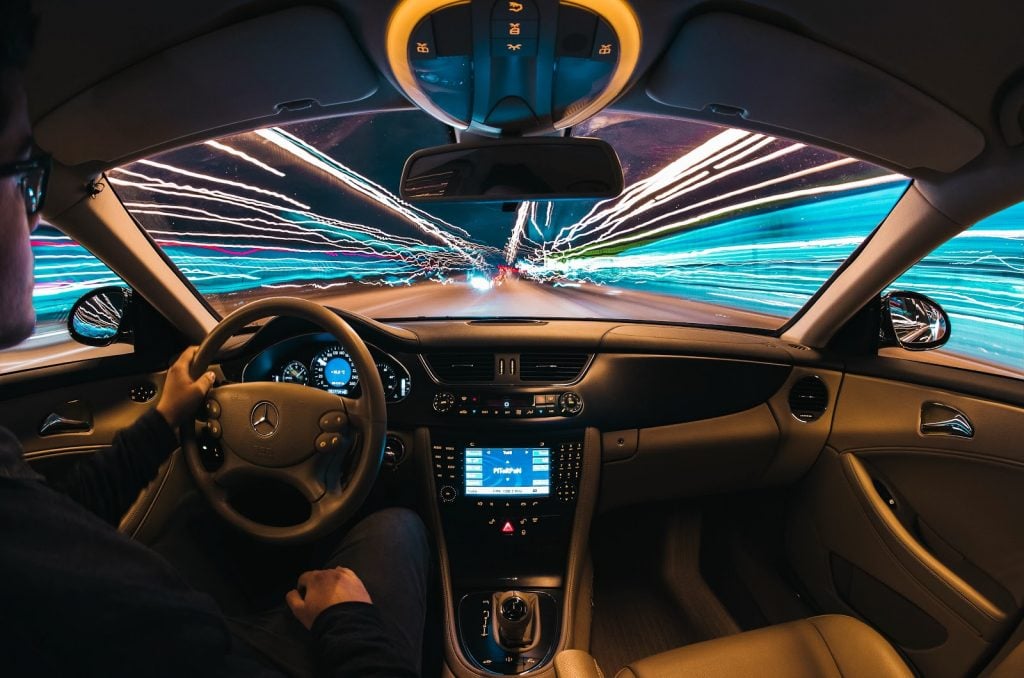
Driverless cars, officially known as “autonomous vehicles,” are being tested by auto manufacturers worldwide, and might make their way onto more streets and highways sooner than we think. Early in October 2020, autonomous car company and ride hailing service Waymo shared plans to allow people in Phoenix, Arizona to book rides in autonomous cars through the company’s app.
This isn’t the first time a driverless car company has offered services, and cars with autopilot features have been on the market for a few years now, with safety and convenience being major selling points. But just like standard vehicles with human drivers behind the wheel, driverless cars can be involved in accidents. And as you might imagine, there are plenty of questions about who’s responsible in the event a driverless car crashes.
When are drivers responsible for accidents?
Knowing when drivers are considered at fault may inform future decisions, particularly if the driver of a standard vehicle collides with a driverless car. According to the experts at Skaug Law, drivers can be at fault in collisions that involve:
- Drunk driving and driving under the influence of drugs
- Distracted driving
- Inattentive driving; for example, looking at a smartphone while driving
- Drivers who fall asleep at the wheel
- Speeding and reckless driving
- Illegal turns and illegal stops
Who is at fault in a driverless car accident?
Without a driver in control, who is to blame when an autonomous vehicle collides with another motorist or strikes a pedestrian? After all, passengers cannot jump into the driver’s seat and take over.
In cars equipped with autopilot mode, is the driver to blame when the car makes a mistake? Are drivers held responsible for being distracted if a car crashes or hits pedestrians while in autopilot mode? Should the law dictate when it’s OK for a driver to take their hands off the steering wheel and allow the autopilot to take charge, and should there be restrictions about using electronics such as smartphones when autopilot is engaged?
As it turns out, the National Highway Traffic Safety Administration (NHTSA) already has guidelines in place, and these clarify certain gray areas. The agency released Ensuring American Leadership in Automated Vehicle Technologies: Automated Vehicles 4.0 in January 2020. This and other NHTSA materials guide cars with six levels of automation:
- Level 0: A human driver does all tasks associated with driving.
- Level 1: Advanced driver assistance systems (ADAS) helps drivers with steering or braking and accelerating but do not simultaneously assist with both tasks.
- Level 2: ADAS can control steering and breaking slash accelerating simultaneously under certain circumstances. The human driver must always pay full attention, monitoring the driving environment in handling the remainder of driving tasks.
- Level 3: Automated driving systems (ADS) can perform all aspects of driving under certain circumstances. However, the human driver must be prepared to resume control whenever the ADS requests them to do so.
- Level 4: An ADS can perform all driving tasks and monitor the driving environment in certain circumstances. When the ADS is in control, the human driver does not need to pay attention.
- Level 5: The ADS can handle all driving tasks in all circumstances. There is no human driver; all occupants are passengers and are never involved in driving the car.
When human drivers are meant to be responsible, human error could likely be blamed when automated vehicles are involved in collisions. When humans aren’t meant to be in control of the vehicle, a mechanical error might be to blame, or the actions of another driver might be cited as the primary collision factor.
New challenges for drivers and lawyers alike
With so much innovation and questions concerning product liability, privacy, insurance, customer data, and security in the balance, it’s easy to understand how important it is for anyone involved in a driverless car accident to contact a knowledgeable lawyer. Not only do attorneys help their clients navigate their way through the legal system, but they can also access evidence that can help determine fault when a vehicle driven by a human is involved in a collision with a driverless car or when a driverless car strikes a vehicle, pedestrian, or property, causing severe damage or perhaps even death.
With a limited number of cases and past decisions involving driverless cars to provide a precedent, court officials will need to rely on evidence and testimony. Anyone who is a party to an accident in which an autonomous vehicle is involved — whether they are the automated vehicle’s “driver,” a passenger in either vehicle, the driver of another vehicle, or a property owner — should seek representation.
Just like drivers and passengers who are involved in accidents that occur in standard vehicles, people who are impacted by driverless car accidents may be able to receive compensation for damages including:
- Hospital bills, emergency transport via ambulance, emergency towing services, and emergency room costs emergency towing services.
- Medical care and future medical care, including the cost of rehabilitation, medication, and assistive medical devices.
- Pain and suffering.
- Loss of enjoyment of life.
- Emotional distress.
- Loss of income and loss of future earning capacity
- Costs associated with repairing and replacing vehicles.
- Compensation for property damage.
Final thoughts
Driverless cars may not be common yet, but in the coming years, we’ll surely see how they impact the legal landscape and how they change our lives — often for better — and sometimes for worse.