
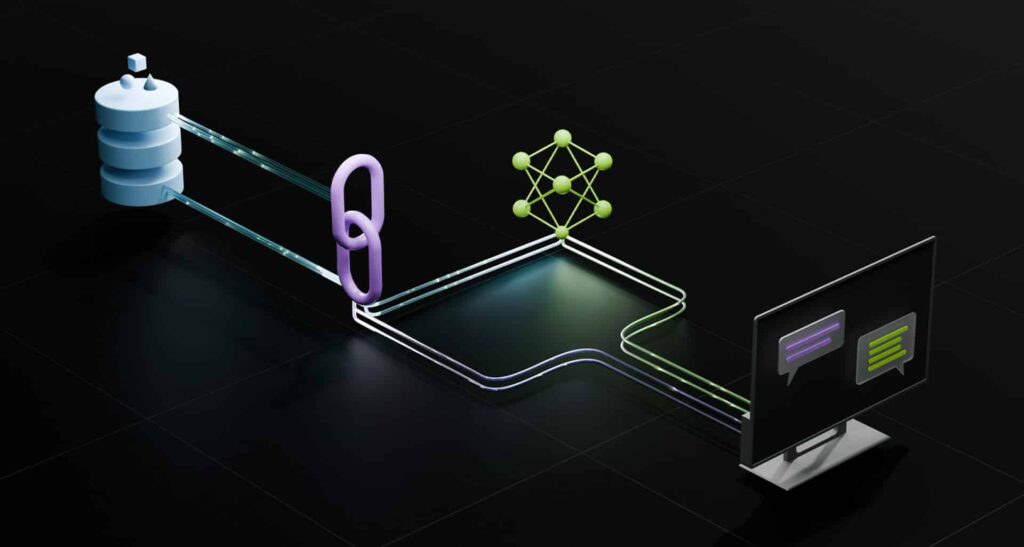
Retrieval-Augmented Generation (RAG) is a transformative approach in artificial intelligence (AI) that enhances the performance of large language models (LLMs) by incorporating data from external, reliable sources. Unlike traditional LLMs, which rely solely on pre-existing training data, RAG connects these models to dynamic knowledge bases, enabling real-time, domain-specific responses. This innovation not only improves accuracy and relevance but also introduces a cost-effective method to adapt LLMs for specialized applications without retraining. Let’s explore how RAG works, its benefits, and its challenges while integrating key concepts like prompt engineering, AI observability, and AI security.
What is RAG and Its Importance in AI?
At its core, RAG bridges the gap between static training data and the need for real-time, precise information retrieval. By using external knowledge repositories, RAG mitigates issues such as hallucination, outdated responses, and inaccuracies often found in standalone LLMs. These models sometimes hallucinate—or generate fabricated data—due to gaps in their training. Additionally, they may fail to account for updated information, leading to irrelevant or unreliable outputs.
The RAG framework introduces a modular architecture, allowing LLMs to access curated data sources dynamically. This ensures the information is accurate and contextually relevant. For instance, in enterprise applications, RAG enables AI systems to answer questions using proprietary databases, creating outputs tailored to organizational needs. This feature has made RAG pivotal in improving AI quality and agent evaluation helping organizations build transparent and secure AI systems.
How RAG Works: The Architecture Explained
RAG operates through three core phases: indexing, retrieval, and generation. These stages work together to ensure the seamless integration of knowledge with language model outputs.
1. Indexing
Indexing is the preparatory step where raw data is curated, segmented, and transformed into a searchable format. Key tasks in this phase include:
- Data curation: Collecting and cleaning data from formats like PDFs, websites, or markdown files.
- Vectorization: Converting text chunks into vector representations using an embedding model.
- Storage in vector databases: Organizing these vectors in specialized databases optimized for similarity-based searches.
This phase lays the groundwork for efficient and precise information retrieval, enabling AI observability by tracking how data is processed and stored.
2. Retrieval
Retrieval involves identifying and fetching the most relevant information based on user queries.
- Query encoding: User input is converted into a vector representation.
- Similarity scoring: The query vector is compared with stored vectors to find matches.
- Chunk prioritization: The top-ranked chunks of data are retrieved and compiled.
These steps ensure the AI can leverage multi-modal datasets, combining text, images, or structured data, to provide comprehensive responses. Enhanced retrieval also supports AI security by ensuring the retrieved content aligns with organizational standards and guardrails.
3. Generation
In the final step, the system synthesizes retrieved data into a coherent and relevant response.
- Prompt engineering: The query and retrieved chunks are merged into a prompt for the LLM.
- Dynamic response generation: The model formulates an answer using both its trained knowledge and the augmented data.
This process emphasizes AI evaluation to ensure high-quality outputs while minimizing biases, irrelevance, or hallucinations.
Overcoming Challenges with Advanced RAG
While basic RAG offers significant improvements, it faces limitations in retrieval precision, coherence, and response reliability. These challenges include:
- Hallucination: Fabrication of unsupported information despite the presence of reliable data.
- Redundancy: Repeating similar details due to overlapping retrieved content.
- Relevance filtering: Difficulty in identifying and emphasizing the most critical information.
Advanced RAG introduces strategies to address these issues. It includes pre-retrieval optimizations, like fine-tuning indexing granularity and rewriting queries for better precision, and post-retrieval processes, like re-ranking retrieved chunks to prioritize relevance.
Optimizing Retrieval Precision
Techniques such as re-ranking and context compression allow the AI to refine its responses by selecting only the most pertinent details. For instance, AI testing frameworks like LlamaIndex or LangChain employ advanced algorithms to streamline retrieval and reduce redundancy.
Synthetic Data Generation for Robustness
Incorporating synthetic data generation during training and evaluation phases enhances model performance in edge cases. Synthetic datasets simulate real-world queries, strengthening the system’s ability to respond effectively.
Key Applications of RAG in AI Development
The flexibility of RAG has enabled its adoption across diverse AI development contexts, from conversational agents to enterprise-level systems.
Agent Testing and Evaluation
RAG ensures agents provide reliable, secure, and contextually relevant responses. Through agent evaluation, developers can track how well an AI adheres to predefined AI guardrails and flag deviations for correction.
Human-in-the-Loop Systems
RAG architectures often integrate human-in-the-loop mechanisms, enabling human oversight in refining outputs or handling complex queries. This interaction is crucial for tasks requiring nuanced judgment or AI security compliance.
LLM Logging and Observability
Robust AI logging systems enable tracking of model queries, retrieval processes, and response generation. Such logs improve transparency, facilitating continuous LLM evaluation and refinement.
Advantages and Limitations of RAG
Benefits
- Improved Accuracy: By referencing authoritative sources, RAG minimizes errors and hallucinations.
- Adaptability: Organizations can update their knowledge bases without retraining the model, making RAG highly scalable.
- Transparency and Control: With clearly referenced sources, users gain confidence in AI outputs.
Drawbacks
- Complexity: Advanced RAG implementations require sophisticated indexing and retrieval strategies.
- Resource Intensive: Efficient RAG systems rely on optimized vector databases and embeddings, which can be costly to develop.
- Over-reliance Risks: The model may over-prioritize retrieved content, producing unoriginal responses.
The Future of RAG in AI
The evolution of RAG is intertwined with advancements in AI testing, agent evaluation, and the integration of multi-modal datasets. As AI applications expand, the need for AI guardrails and enhanced observability will drive further innovations in retrieval-augmented generation. Future systems may incorporate auto-evaluation (auto-eval) techniques, where models self-assess their performance, reducing reliance on external evaluations.
By blending state-of-the-art retrieval techniques with robust generation mechanisms, RAG is poised to remain a cornerstone of high-quality AI development. Its contributions to AI quality, security, and human-in-the-loop processes ensure its relevance in the pursuit of trustworthy AI systems.
Read More From Techbullion