
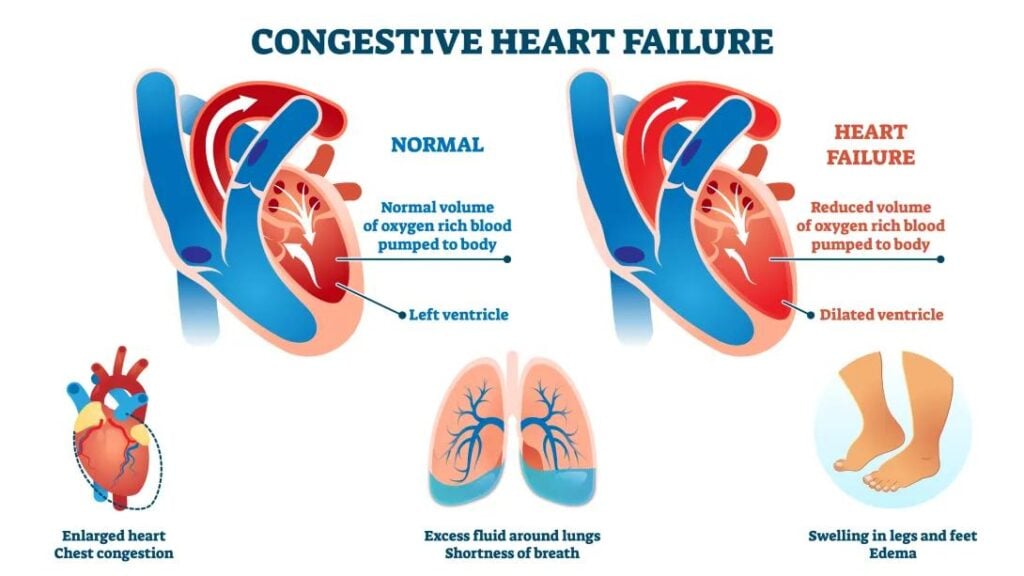
Heart failure is one of the most common and most misunderstood cardiovascular conditions. Despite its alarming name, a diagnosis of heart failure doesn’t mean the heart has stopped working. It means the heart isn’t pumping blood as efficiently as the body needs. With proper management, many people with heart failure live active, meaningful lives for years after diagnosis.
What Is Heart Failure?
Heart failure occurs when the heart muscle becomes too weak or too stiff to pump blood effectively. As a result, the body’s organs and tissues may not get enough oxygen-rich blood, and blood can back up in the lungs, liver, or other parts of the body, causing fluid buildup (congestion), which is why the condition is sometimes called congestive heart failure (CHF).
It’s a chronic, progressive condition, meaning it typically develops and changes over time, though the pace and severity vary widely from person to person.
Types of Heart Failure
Heart failure is generally classified based on how the heart’s pumping ability is affected:
- Heart failure with reduced ejection fraction (HFrEF): The heart’s main pumping chamber (left ventricle) doesn’t contract with enough force, so less oxygen-rich blood is pushed out to the body.
- Heart failure with preserved ejection fraction (HFpEF): The heart contracts normally, but the ventricle is too stiff to relax and fill properly between beats.
- Right-sided heart failure: Often develops as a consequence of left-sided failure, affecting the heart’s ability to pump blood to the lungs.
Doctors also stage heart failure (using systems like the New York Heart Association classification) based on how much symptoms limit physical activity, ranging from no symptoms during normal activity to symptoms even at rest.
Common Causes
Heart failure usually results from another condition that damages or overworks the heart, including:
- Coronary artery disease and prior heart attacks, which damage heart muscle
- High blood pressure, which forces the heart to work harder over time
- Diabetes, which increases risk of both coronary disease and direct heart muscle damage
- Heart valve disease
- Cardiomyopathy (disease of the heart muscle itself, which can be genetic, viral, or linked to other causes)
- Arrhythmias, particularly chronic irregular heart rhythms like atrial fibrillation
- Obesity, excessive alcohol use, and certain chemotherapy drugs
Recognizing the Symptoms
Heart failure symptoms often develop gradually and can be mistaken for normal aging or general fatigue at first. Common signs include:
- Shortness of breath, especially during activity or when lying flat
- Persistent fatigue and weakness
- Swelling in the legs, ankles, or abdomen
- Rapid or irregular heartbeat
- Persistent cough or wheezing, sometimes with white or pink-tinged mucus
- Sudden weight gain from fluid retention
- Reduced ability to exercise
- Difficulty concentrating or reduced alertness
Because these symptoms overlap with many other conditions, heart failure is sometimes diagnosed later than ideal, which is part of why awareness of these warning signs matters.
How It’s Diagnosed
Doctors typically use a combination of tools to diagnose heart failure and determine its type and severity:
- Echocardiogram, an ultrasound of the heart that measures ejection fraction and looks at heart structure
- Blood tests, including BNP or NT-proBNP, hormones that rise when the heart is under strain
- Electrocardiogram (EKG), to check heart rhythm and look for signs of prior heart attack
- Chest X-ray, to check for fluid in the lungs or heart enlargement
- Stress tests or cardiac catheterization, to evaluate blood flow to the heart
In cases where structural issues like valve disease or blocked arteries are involved, a consultation with a Best Cardiac Surgeon may be recommended to determine whether surgical intervention could help.
Treatment and Management
While heart failure is generally a lifelong condition, treatment has advanced significantly and can meaningfully improve both quality of life and survival. Management usually combines several approaches:
Medications
Several classes of medication are used, often in combination, including ACE inhibitors or ARBs, beta-blockers, diuretics (to reduce fluid buildup), and newer drug classes such as SGLT2 inhibitors, which have shown notable benefit even for patients without diabetes.
Lifestyle Changes
- Limiting sodium intake to reduce fluid retention
- Monitoring daily weight to catch fluid buildup early
- Regular, moderate physical activity as advised by a doctor
- Limiting alcohol and quitting smoking
- Managing related conditions like diabetes and high blood pressure
Devices and Procedures
For some patients, doctors may recommend an implantable device such as a pacemaker or defibrillator, or in more advanced cases, options like a left ventricular assist device (LVAD) or heart transplant evaluation. Patients reaching this stage are often referred to an Advanced Heart Failure Clinic, where specialists focus specifically on managing complex, harder-to-treat cases.
Ongoing Monitoring
Because heart failure can worsen or improve based on how well it’s managed, regular follow-up with a cardiologist, along with tracking symptoms like weight and swelling at home, plays a central role in long-term care.
Living With Heart Failure
A heart failure diagnosis can feel overwhelming, but many people manage the condition successfully for years through a combination of medication adherence, lifestyle adjustments, and regular medical care. Cardiac rehabilitation programs, which combine supervised exercise with education and support, have been shown to improve both physical function and quality of life. Emotional support also matters; heart failure can affect mental health, and many patients benefit from connecting with support groups or counseling alongside their medical treatment.
The Bigger Picture
Heart failure affects tens of millions of people worldwide and remains a leading cause of hospitalization, particularly among older adults. At the same time, treatment has improved substantially in recent decades, and ongoing research continues to refine both medications and care strategies. Early recognition of symptoms, consistent management, and a strong partnership with a healthcare team remain the most effective tools for living well with the condition. For patients facing structural heart problems, seeking out a Best Cardiac Surgeon for a second opinion can be a valuable step, and for those with advanced or treatment-resistant disease, an Advanced Heart Failure Clinic can offer specialized, multidisciplinary care not always available through general cardiology.
Previously in HealthTech: How to Scale Your Integrative Medicine Practice Without Burning Out