
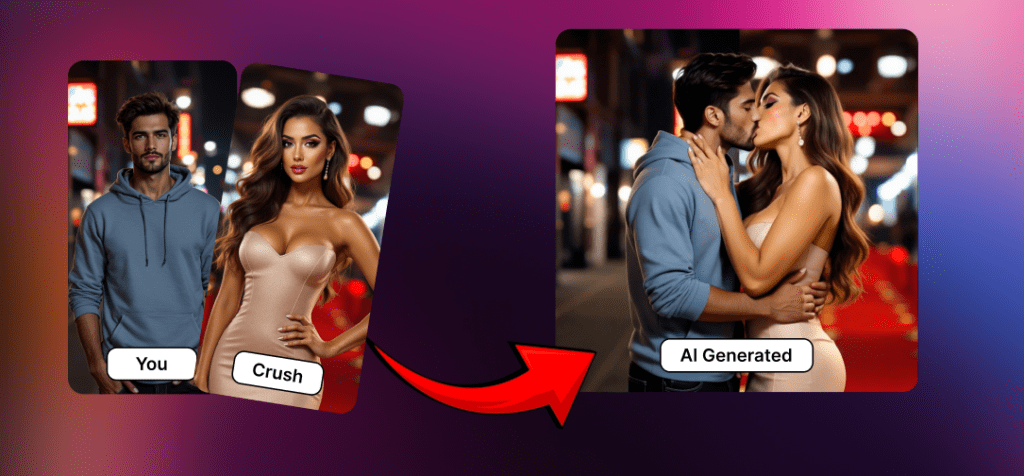
In 2025, artificial intelligence is reshaping digital communication by transforming static photos into animated videos that capture emotional gestures like kisses and hugs. AI Kiss tools and AI Hug tools enable users to create short, expressive videos that bring human connection to life, offering a novel way to share emotions digitally. This educational guide explores the concept of emotional video creation, detailing the technology behind AI Kiss and AI Hug generators, their emotional significance, and their applications across various contexts, providing insights for those interested in AI’s role in storytelling and communication.
Defining AI-Driven Emotional Video Creation
Emotional video creation refers to the use of AI to produce short video animations that depict human gestures tied to emotional connection, such as kissing or hugging. Unlike traditional video production, which involves labor-intensive editing and animation, AI Kiss and AI Hug tools automate the process by analyzing photos and generating dynamic sequences that mimic natural human behavior. These videos, typically 5–15 seconds long, feel personal and engaging, conveying emotions that static images cannot fully express.
The emotional power of these videos stems from their ability to evoke feelings like love, warmth, or camaraderie. For instance, an AI Kiss generator can create a video that captures the intimacy of a romantic moment, while an AI Hug generator can convey the warmth of a friendly or familial embrace. This technology makes video creation accessible to everyone, allowing users to craft emotionally resonant content with minimal effort, bridging the gap between technology and human expression.
How AI Kiss and AI Hug Tools Work
AI Kiss and AI Hug generators use advanced image processing to transform static photos into animated videos. The process involves several key steps:
- Photo Analysis: The AI scans input photos to identify facial features (e.g., eyes, mouth) or body positions (e.g., arms, posture). AI Kiss tools typically require two photos to capture the interaction between individuals, while AI Hug tools can work with a single or group photo.
- Motion Synthesis: Algorithms map these features onto a video sequence, creating smooth animations of the desired gesture. AI Kiss generators focus on facial dynamics, such as lip movement, while AI Hug generators emphasize arm and body movements.
- Style Customization: Users can often select an emotional tone, such as romantic, playful, or familial, to tailor the animation’s mood.
- Video Rendering: The AI produces a shareable video in a format like MP4, optimized for platforms such as social media or messaging apps.
For example, MagicShot.ai’s AI Kiss Booth and AI Hug Generator demonstrate this technology by creating kissing videos from two photos or hugging videos from a single or group photo, delivering results in seconds. These tools highlight how AI simplifies complex animation tasks, making emotional video creation accessible to a broad audience.
The Emotional Significance of AI-Generated Gestures
AI Kiss and AI Hug tools tap into the universal language of human gestures, which carry deep emotional meaning. A kiss often symbolizes romance or affection, while a hug conveys warmth, support, or community. By animating these gestures, AI tools create videos that feel vivid and relatable, enhancing their emotional impact compared to static photos. For example, an AI Kiss generator can transform a photo of a couple into a video that captures the tenderness of a shared moment, evoking nostalgia or joy. Similarly, an AI Hug generator can animate a group photo to depict a collective embrace, fostering a sense of unity.
In digital spaces, where physical interactions are limited, these videos bridge the gap by preserving the emotional depth of face-to-face gestures. They allow users to communicate feelings in a way that resonates with audiences, whether through personal messages, social media posts, or creative projects. This emotional resonance makes AI-driven video creation a powerful tool for digital storytelling.
Applications of AI Kiss and AI Hug Generators
AI Kiss and AI Hug tools have diverse applications, reflecting their versatility in various contexts:
- Personal Communication: These tools enable users to create digital gifts, such as a kissing video for a romantic occasion or a hugging video to connect with distant loved ones, adding an emotional layer to photos.
- Social Media Engagement: In 2025, social media platforms prioritize short, emotive content. AI Kiss and AI Hug generators produce videos that capture attention, encouraging interaction through likes and shares.
- Educational Demonstrations: Tech educators use these tools to illustrate AI concepts like image processing or motion synthesis in classrooms or workshops, showcasing practical applications of AI technology.
- Creative Storytelling: Artists experiment with AI-generated animations to explore new forms of digital art, blending technology with creative expression.
- Community Building: Organizations use these videos in virtual settings, such as online support groups, to foster connection through animated gestures of care.
Example Scenario: A teacher uses an AI Hug generator to animate a class photo into a hugging video, sharing it in a virtual classroom to promote a sense of togetherness among remote students.
Comparing AI Kiss and AI Hug Tools
AI Kiss and AI Hug generators serve distinct emotional purposes and have different technical requirements:
| Aspect | AI Kiss Tools | AI Hug Tools |
| Emotional Tone | Romantic, playful, intimate | Warm, friendly, familial |
| Input Requirements | Two faces (two separate photos or one image with two people) | Two faces (two separate photos or one image with two people) |
| Animation Focus | Facial interaction (lips, expressions) | Body movement (arms, posture) |
| Common Use Cases | Romantic gestures, anniversaries | Family connections, group bonding |
| Output Duration | 5–15 seconds | 5–15 seconds |
AI Kiss tools focus on facial dynamics, requiring precise alignment of two individuals’ features, while AI Hug tools emphasize broader body movements, accommodating solo or group inputs. These differences make each suited to specific emotional contexts.
Benefits and Limitations of AI Kiss and AI Hug Generators
Benefits
- Accessibility: These tools require no animation or editing skills, making them usable by anyone.
- Efficiency: Videos are generated in seconds, compared to hours for traditional animation methods.
- Emotional Engagement: Animated gestures enhance the emotional impact of photos, making them more relatable.
- Versatility: The tools support personal, educational, and creative applications, catering to diverse needs.
Limitations
- Photo Quality Dependency: High-resolution, well-lit photos are needed for accurate animations; blurry images may produce suboptimal results.
- Ethical Considerations: Users must obtain consent when using others’ photos and ensure the tool follows transparent data-handling practices.
Choosing the Right Tool for Emotional Video Creation
Selecting an AI Kiss or AI Hug tool depends on several factors:
- Project Intent: Use an AI Kiss generator for romantic or playful content and an AI Hug generator for familial or group-oriented projects.
- Photo Requirements: Ensure photos are clear and well-lit, with visible facial features or poses, for optimal results.
- Use Case: Personal projects may prioritize simplicity, while educational or creative projects may benefit from customizable styles.
- Platform Compatibility: Verify that the tool outputs videos in shareable formats like MP4, suitable for social media or messaging apps.
Tip: Experiment with different tools to compare their outputs, ensuring the animation aligns with your emotional or creative goals.
The Future of AI Emotional Video Creation
As AI technology evolves, AI Kiss and AI Hug tools are likely to advance in several ways:
- Improved Realism: Future tools may produce animations with finer details in expressions and movements.
- Expanded Gestures: New tools could animate gestures like waves or high-fives, broadening their emotional range.
- Media Integration: Animations may combine with audio or text for richer storytelling experiences.
- Privacy Enhancements: Developers may adopt stricter data policies, such as temporary storage, to address privacy concerns.
Conclusion
AI-driven emotional video creation, exemplified by AI Kiss and AI Hug tools, represents a powerful fusion of technology and human connection. By transforming static photos into animated gestures, these tools enable users to express emotions in dynamic, relatable ways. Understanding their technology, applications, and limitations empowers individuals to explore these tools for personal communication, education, or creative storytelling. As AI continues to evolve, emotional video creation will likely offer even more innovative ways to connect and communicate in the digital age. To explore these capabilities, consider trying tools like those offered by MagicShot.ai or visiting their site for more information.