
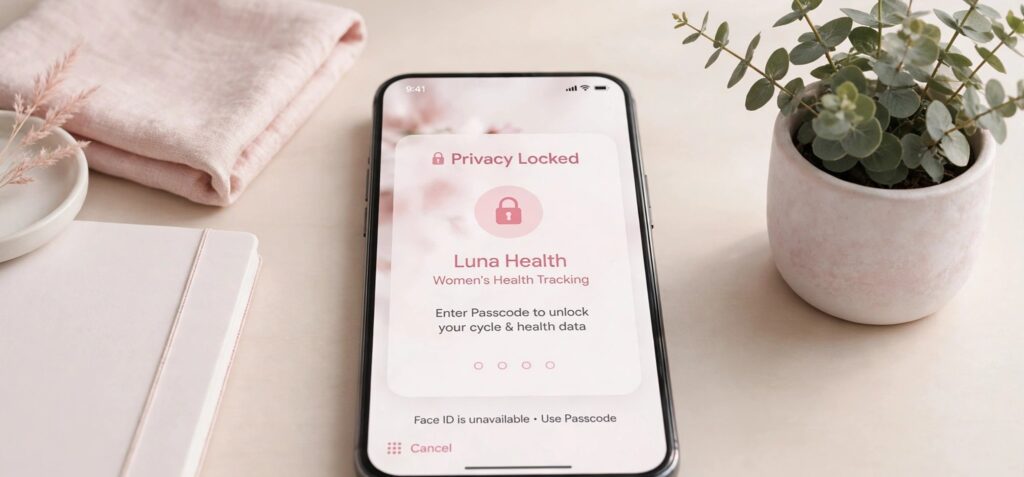
What It Takes to Actually Earn the Right to Store Women's Most Personal Data
Somewhere between a user's period tracker and the legal machinery of a post-Dobbs United States, a question got very loud very fast: What does it actually mean to trust an app with reproductive health data?
Most women’s health apps answered that question with reassurances. Flo Health answered it with infrastructure.
The distinction matters. Reassurances are cheap and reversible. Infrastructure takes time, costs money, and signals something about where a company thinks the world is going. Over the past several years, Flo has built a privacy architecture that would be notable in any health technology company and is exceptionally rare in the consumer app category. The reasons it built that architecture and what the company is doing now to ensure that work is understood tell you most of what you need to know about how it intends to compete.
What is the most common data problem with consumer apps?
Most consumer apps collect data that is, at worst, commercially inconvenient if exposed. Location history. Purchase patterns. Search behavior. The data Flo collects is categorically different. Menstrual cycles, fertility windows, pregnancy status, and detailed reproductive health patterns for more than 80 million monthly users globally constitute some of the most sensitive health information that exists. When the legal and political landscape shifted in 2022, the protection of that sensitive data became consequential in ways it hadn't been before. State-level privacy legislation accelerated, and the Federal Trade Commission sharpened its scrutiny of companies’ health data practices. And users who had never thought carefully about app privacy before, began to ask what would happen to their data if it were subpoenaed, shared, or breached.
For an app of Flo's scale, operating across dozens of countries with a user base that spans nearly every demographic in women's health, the stakes of getting this wrong weren't abstract.
What Privacy Features did Flo Build, and in What Order?
The sequence matters more than most coverage of this topic acknowledges. Privacy communications without a privacy infrastructure is marketing. Privacy infrastructure without communications is wasted. Flo has been deliberate about doing both – and doing them in the right order.
On the structural side: the company pursued and obtained dual ISO certifications, achieving both ISO 27001 for information security management and ISO 27701 for privacy information management. The latter certification is specifically designed to extend ISO 27001 into privacy risk management and maps directly to GDPR compliance requirements. It's uncommon for health apps to pursue ISO certifications, and genuinely rare in the consumer app category. What’s more unique is that its latest ISO 27701 and 27001 certification audits in August 2026 came back with zero findings, or no recommendations to improve its privacy and security programs.
Flo also established an independent advisory board of experts, specifically brought in from outside the organization to assess and ensure Flo’s privacy and security practices independently, rather than function as internal validators.
Anonymous Mode arrived from the same orientation. This feature strips personal identifiers entirely, which allows users to access cycle tracking, fertility tools, and pregnancy resources without providing a name, email address, or any other identifying information. The feature has been recognized by the International Association of Privacy Professionals, named to TIME's Best Inventions list, and included among Fast Company's World Changing Ideas. Those recognitions don't come from intention. They come from building a privacy feature that didn't previously exist in the category.
What Role Does Communications Play in Creating Understandable Infrastructure?
If users, regulators, and policymakers can’t comprehend the infrastructure, it might as well not exist. So Flo has intentionally invested in closing that gap. The latest effort created a dedicated Privacy and Policy PR position that works directly with its legal, privacy, and security teams to translate technical and regulatory work into public-facing clarity. The lead also builds the kind of sustained engagement with policymakers and industry stakeholders that keeps the company from being perpetually on defense when scrutiny increases.
Flo's Global Head of Communications has described the company's posture as setting the standard rather than meeting it. For Europe's first femtech unicorn, a company that raised $200 million from General Atlantic in 2024, and holds a dominant position in a category under active legislative and regulatory attention across multiple jurisdictions, that's both an aspiration and a competitive strategy.
Why This Privacy Positioning Is Durable
Unlike a product feature that can be copied in a cycle, an external advisory board, dual ISO certifications, and a genuine architectural commitment to Anonymous Mode aren't things a competitor replicates in a quarter. Years of consistent behavior around data handling don't compress. The moat is built in the compounding, not the announcement.
The women's health app and technology market is maturing. It will be shaped, over the next decade, by the companies that users genuinely trust with their most sensitive data and privacy protections that go beyond ordinary requirements. Flo has spent several years doing the work that earns that trust. It's now doing the work of making sure people know it.