
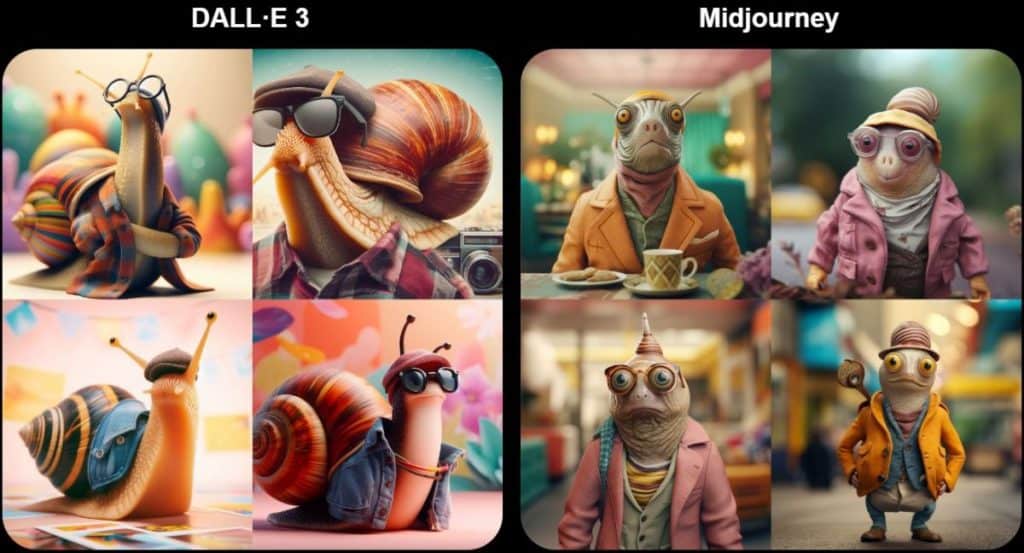
In the rapidly evolving world of AI image generation, artists, designers, marketers, and enthusiasts now have access to powerful tools that turn simple text prompts into stunning visuals in seconds. Among the many options, three platforms consistently stand out: Lexica.art (commonly referred to as Lexica AI), DALL·E 3 by OpenAI, and Midjourney. Each has unique strengths and trade-offs depending on your needs—whether it’s speed, control over style, cost, or creative exploration.
In this article, we’ll deeply review and compare these top three tools—Lexica.art, DALL·E 3, and Midjourney—to help you decide which one fits your workflow best. We’ll cover features, pricing, strengths & weaknesses, and best use cases.
- Lexica.art – Lexica AI: Fast, Inspiring, Search-Driven
What Is Lexica AI / Lexica.art?
Lexica.art (shortened often to Lexica AI) started as a huge gallery and search engine of AI-generated images. It offers a massive library of images created via stable diffusion models, along with the prompts used to generate them. Over time, Lexica has moved into full image generation: you can enter your own text prompts, tweak settings (style, resolution, etc.), and produce original images.
Key Features
- Prompt Search & Gallery: One of Lexica AI’s strongest draws is how transparent it is—users can see many example images with their prompts, which helps in learning how to craft prompts for their own work.
- Text-to-Image Generation: Using stable diffusion models, Lexica AI allows users to generate images from text descriptions. You can adjust size, style, guiding strength, scale, etc.
- Community & Inspiration: Because of the gallery and user-submitted artworks, Lexica is excellent for inspiration. You often refine your image generation by starting from what others have done.
- User Interface & Usability: Clean UI, intuitive search, favorites, history, prompt editing. Great for beginners and intermediate users who want to experiment.
Strengths
- Learning curve is gentle. Seeing prompts and results helps users understand “what works.”
- High quality outputs with good fidelity, especially for styles that stable diffusion handles well (fantasy, landscapes, stylized portraits).
- Excellent for inspiration and iteration—when you want variants or mood board visuals.
- Often more affordable (or at least less “mystical”) than some of the more closed tools.
Limitations
- Fine-tuning or control over some obscure details may be less precise than tools built specifically for “artistic style” control.
- Some images may lack the polish, style diversity, or dramatic flair that Midjourney or premium DALL·E 3 outputs can offer especially in certain artistic genres.
- Sometimes slower when generating high resolutions or complex scenes, depending on load.
Best Use Cases
- Idea generation / mood boards
- Designers or creators exploring styles and wanting to learn prompt engineering
- Projects where cost, speed, and flexibility are important
- Users who like to “see before they prompt” via libraries/gallery
- DALL·E 3 by OpenAI: Precision, Nuance, and Integration
What Is DALL·E 3?
DALL·E 3 is the latest generation of OpenAI’s text-to-image model, which significantly improves on detail, nuance, prompt understanding, and realism compared to earlier versions. It’s tightly integrated with ChatGPT (for example in some subscription tiers), allowing prompt refinement via conversation.
Key Features
- Enhanced Prompt Understanding: DALL·E 3 picks up more nuance in long, detailed prompts. It responds well to textual direction about style, lighting, composition.
- Integration with ChatGPT: Users can iterate prompts via chat, tweak images without restarting from scratch, which helps in refining results easily.
- High Quality & Detail: Better rendering of aspects that used to be tricky—hands, text, complex textures. More reliable fidelity.
- Creative Controls & Safety Measures: Safety filters, controls over unwanted content, respecting usage policies.
Strengths
- Output quality is often among the best, especially for photographers, ad creatives, or marketing where realism and high detail matter.
- Thanks to prompt refinement and in-chat capability, it can save time for users who want to experiment with iterations.
- Useful for people who prefer an all-in-one experience: coming up with ideas, generating, refining, all in one place.
Limitations
- More costly, particularly when used at higher resolutions or commercially.
- May have usage restrictions depending on subscription (e.g. number of images, allowed content, etc.).
- Less “open” in terms of viewing many others’ prompts & results (for inspiration) compared to a dedicated gallery tool like Lexica.
Best Use Cases
- Commercial design where precision, realism, and prompt fidelity are important
- Users who want to iterate quickly with high control over style, lighting, and fine details
- Marketing, advertising, or product mockups where output needs to look highly polished
- Midjourney: Artistic Flair & Creative Control
What Is Midjourney?
Midjourney is a popular AI image generation tool known for its artistic, stylized output. Many users praise it for creating imaginative, dramatic, and aesthetic visuals. Access is typically through Discord or its web interface, depending on plan updates.
Key Features
- Highly Stylized Artistry: Midjourney tends to push the visual style, often producing dreamy, surreal, painterly, cinematic outputs. If you want art that “feels like art,” Midjourney is strong.
- Prompt Customization & Parameters: Users can specify style intensity (stylize parameter), variation, aspect ratios, seed etc. Helps with control over randomness vs consistency.
- Community & Inspiration: Very active community, prompt examples, shared creations. Learning from others is built in.
- Feature Depth: Variations, upscaling, remixing of images, exporting, etc.
Strengths
- Unique, memorable style which stands out—great for visual branding, concept art, fantasy, etc.
- Strong control for those who want creative flair, not just realism.
- Because of its community, lots of prompt tips, styles, and inspiration available.
Limitations
- Can be more expensive at high resolution or premium plans.
- Some styles may feel too stylized for certain professional or commercial use cases where realism or consistency is required.
- Learning prompt crafting can be a bit steeper because to get exactly what you want, you often need to understand how Midjourney parameters work.
Best Use Cases
- Concept art, fantasy, sci-fi visuals, album covers, stylized posters
- Artists looking for artistic expression, rather than pure realism
- Marketing or branding that wants dramatic visuals rather than plain photorealism
How to Choose the Right Tool for You
Here are some recommendations depending on what you need:
- If you’re just getting started, want to generate visuals quickly, and learn how prompt‐engineering works, Lexica AI / Lexica.artis an excellent first pick.
- If you need high detail, realism, and powerful controls for production or commercial work, DALL·E 3is strong.
- If you care most about artistic style, major creative impact, and visual uniqueness, Midjourneymight give you more of what you want.
- There are other options like net
Also think about:
- How often you’ll generate images (occasional vs frequent)
- Whether you need commercial rights or higher resolutions
- How much tweaking vs direct output you prefer
Real-World Use Case Examples
- Marketing Visuals:A startup wanting social media ads might use Lexica AI to test dozens of styles quickly, then use either Midjourney or DALL·E 3 to polish the final ad visuals.
- Book Covers / Concept Art:Midjourney often shines at creating dramatic covers with mood, lighting, and visual storytelling.
- Product Mockups:DALL·E 3 may do better when you need precise product rendering, accurate lighting, and realistic textures.
- Blog Post Illustrations / UI Ideas:art is useful when you want fast, affordable, and varied images for blogs or UI inspiration.
Pros & Cons Summary
Lexica AI (Lexica.art)
✅ Pros: Accessible pricing, prompt-gallery for inspiration, easy to use, balanced realism & style
❌ Cons: Less control for ultra-fine artistic style; might not always match premium tools for hyper realism
DALL·E 3
✅ Pros: Excellent detail, prompt refinement, good realism, strong for professional/commercial use
❌ Cons: Higher cost, slightly steeper learning curve, possibly more restricted usage depending on plan
Midjourney
✅ Pros: Outstanding stylistic outputs, artistic flair, strong community, creative exploration
❌ Cons: Possibly less consistent realism, cost for high-res, need careful prompt engineering
Conclusion
In 2025, Lexica.art, DALL·E 3, and Midjourney represent three of the strongest choices for AI image generation. Which is “best” depends heavily on what you value most—speed, realism, style, price, or ease of use.
- For those wanting rapid inspiration and prompt learning, Lexica AIis fantastic.
- For crisp, detailed, production-level images, DALL·E 3delivers excellent capabilities.
- For artistic, imaginative, dramatic visuals, Midjourneyremains a go-to favorite.
If you try all three (many offer free tiers or trials), you can combine their strengths in your creative process. Use Lexica AI for sketches and variations, DALL·E for polished work, and Midjourney for bold style.
No matter which you choose, these tools are pushing what’s possible with AI art—but you’re the one who guides the vision.