
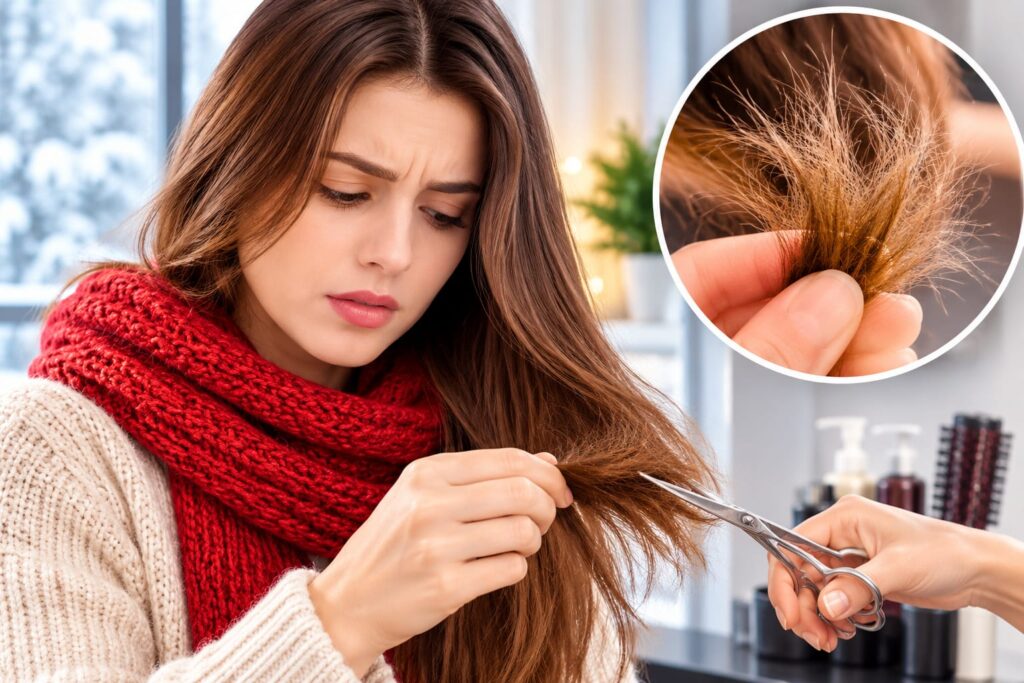
Winter changes everything about how your hair behaves, and most people do not realize it until their ends start splitting, their styles stop holding, and their hair feels like straw by February. The question of how often to trim hair does not have one universal answer, but the answer shifts noticeably once the temperature drops and indoor heating kicks in. Understanding why winter is different, and adjusting your trim schedule accordingly, can be the difference between hair that thrives through the cold months and hair that limps into spring looking tired and damaged.
This guide walks through exactly how often to trim hair during winter, why dry air changes the rules, and how to read your own hair’s signals so you are not guessing every time you sit down in the stylist’s chair.
Why Winter Air Is So Hard on Hair
Cold outdoor air holds very little moisture. Combine that with indoor heating systems running constantly, and you get an environment that pulls hydration out of your hair strand by strand. Hair is porous, and it naturally seeks balance with the air around it. When that air is dry, your hair gives up moisture to try to equalize, leaving the cuticle layer rougher and more prone to catching, snagging, and breaking.
This is why so many people notice more frizz, more static, and more split ends in January than they do in July. It is not that their hair is suddenly unhealthy. It is that the environment has become more hostile to the hair’s structure. Add in hot showers, which people tend to take more often in winter and which strip natural oils even faster, and you have a perfect storm for damaged ends.
Split ends do not stay contained. Once a strand splits, the damage travels up the hair shaft if left unchecked, turning a small problem into a larger one. This is the core reason trim frequency matters more in winter than in milder seasons: the damage accelerates faster, and waiting too long between trims lets that damage spread further than it would during a more temperate stretch of the year.
So, How Often to Trim Hair in Winter
For most people, the standard advice of trimming every six to eight weeks shifts slightly in winter. Many stylists recommend moving to a four- to six-week schedule during the coldest, driest months, particularly for those with chemically treated, color-processed, or naturally dry hair types. This is not about dramatically cutting length. A winter trim usually removes a very small amount, often just a quarter inch to half an inch, enough to catch split ends before they travel upward and compromise more of the strand.
That said, trim frequency is not one-size-fits-all, even within the winter season. A few factors determine where you should land within that four- to eight-week range.
Hair length plays a role. Shorter styles, particularly precision cuts like bobs or pixies, tend to need more frequent trims year-round because the shape depends on clean lines, and dry winter air can make those lines look ragged faster. Longer hair can sometimes stretch trims out a bit further since the ends are not as central to the overall shape, but longer hair is also more likely to show visible damage because those ends have been exposed to the elements the longest.
Hair texture matters too. Curly and coily hair types are naturally more prone to dryness because the hair’s natural oils have a harder time traveling down the twists and turns of the strand. In winter, this effect intensifies, which is why many people with curly or coily textures find that a slightly more frequent trim schedule, closer to the four- to five-week mark, keeps their curls looking defined rather than frizzy and uneven.
Chemical treatments are another major factor. If you color, bleach, perm, or relax your hair, those processes already weaken the hair’s structure to some degree. Winter dryness compounds that weakness, so hair that has been chemically treated often benefits from trims on the shorter end of the winter range, sometimes even every four weeks if the ends are particularly fragile.
Finally, your personal styling habits during winter matter. Heat styling tends to increase in winter as people blow-dry more often to avoid going outside with wet hair in freezing temperatures. That additional heat exposure, layered on top of already dry air, can accelerate damage and push your ideal trim schedule toward the more frequent end.
Signs Your Hair Needs a Trim Before Your Scheduled Appointment
Even with a general winter guideline in mind, your hair will tell you when it needs attention sooner rather than later. Learning to recognize these signs means you are not simply following a calendar blindly, but actually responding to what your hair needs.
Split ends are the most obvious signal. If you notice the hair separating into two or more strands at the tip, especially when you twist a section of hair around your finger and see little white or light-colored dots poking out, that is a clear sign the ends need to be cut. In winter, split ends can appear more suddenly because the dry air accelerates cuticle damage.
Tangling is another indicator. Hair that used to detangle easily but now knots up constantly, especially at the ends, often has rough, damaged cuticle layers that are catching on each other. This is especially common in winter when static electricity, caused by the dry air, makes strands cling together more aggressively.
A change in how your hair holds a style is also worth paying attention to. If blowouts that used to last two or three days are falling flat within hours, or if curls that once held their shape now droop almost immediately, damaged ends could be the culprit. Damaged hair has a harder time holding any kind of shape because the structural integrity of the strand has been compromised.
Visual thinning at the ends, where your hair looks noticeably thinner at the bottom than it does closer to the roots, is a sign that breakage has been happening gradually over time. This is common when trims have been skipped for too long, allowing split ends to travel upward and weaken larger sections of each strand.
If you are noticing several of these signs at once, it may be worth moving up your next appointment rather than waiting for your regularly scheduled winter trim. Letting damage accumulate rarely resolves on its own, and the longer it goes unaddressed, the more length you may eventually need to cut to fully remove it.
How to Extend the Life of a Winter Trim
While trimming on a consistent schedule is the foundation of healthy winter hair, there are things you can do between appointments to protect your ends and potentially stretch the time between cuts.
Humidity matters more than people realize. Running a humidifier in your bedroom, particularly if you have forced-air heating, can meaningfully reduce how much moisture your hair loses overnight. Many people notice less frizz and fewer tangles within just a week or two of adding a humidifier to their routine.
Reducing water temperature during showers helps as well. Hot water feels good in winter, but it strips natural oils from both scalp and hair, leaving ends more vulnerable to dryness. A lukewarm rinse, especially for the final rinse of a shower, helps seal the cuticle rather than leaving it open and rough.
Protective styling, such as loose braids or buns, can shield ends from friction against scarves, coats, and hats throughout the day. Wool and certain synthetic fabrics are especially rough on hair, and repeated friction against these materials throughout a cold winter can contribute to breakage at the ends.
Deep conditioning treatments, used weekly or biweekly depending on how dry your hair feels, can help replenish moisture that winter air strips away. Look for treatments with ingredients like shea butter, argan oil, or glycerin, which help both add and retain moisture in the hair shaft.
Silk or satin pillowcases reduce friction while you sleep, which matters more in winter when hair is already more fragile. Cotton pillowcases tend to pull moisture from hair and create more friction, both of which can accelerate split ends.
None of these steps replace the need for regular trims, but combined with a consistent four- to eight-week schedule tailored to your hair type, they can help your ends stay healthier for longer between appointments, and may allow some people to trim slightly less often than they otherwise would.
What Happens If You Skip Trims During Winter
Some people choose to skip haircuts in winter, often because they are trying to grow their hair out and worry that any trim will slow progress. This is a common misconception. Trimming does not affect how fast hair grows from the scalp since growth happens at the follicle, unrelated to the state of the ends. What trimming does affect is how much of that growth actually survives to become visible length.
When split ends are left unaddressed, especially in a dry winter environment, the split travels upward along the hair shaft. A strand that started with a small split at the very tip can, over the course of a few months, develop a split that extends an inch or more up the strand. At that point, removing the damage requires cutting off more length than would have been necessary with regular maintenance.
This means skipping trims in winter in the name of growing hair out can backfire. Hair may technically keep growing from the root, but the visible ends become so damaged that the overall appearance is thinner, frizzier, and less healthy-looking, undermining the very goal of longer, fuller hair.
For those genuinely trying to grow their hair out through winter, the better strategy is not skipping trims entirely but rather sticking to small, frequent trims, often called dustings, where only the very damaged tips are removed. This keeps growth progress intact while still preventing the kind of upward splitting that costs more length in the long run.
FAQ: Winter Haircare and Trim Schedules
How often should I trim my hair in winter if I am growing it out?
Even during a growth phase, a light trim every six to eight weeks is recommended to remove split ends before they travel up the shaft. This is often called a dusting and removes minimal length.
Does cold weather actually make hair grow slower?
There is no strong evidence that cold weather itself slows hair growth. What changes is the condition of the ends, which can make hair appear to be growing more slowly if breakage is outpacing new growth.
Is it true that trimming hair makes it grow faster?
No. Hair growth happens at the scalp and is unrelated to the ends. Trimming simply prevents breakage, which helps preserve length rather than speeding up growth.
What is the difference between a trim and a dusting?
A dusting removes only a very small amount of hair, often less than a quarter inch, focused solely on split ends. A trim removes slightly more, typically a quarter to half inch, and may also help maintain shape.
Common winter hair concerns people ask about include:
- Static and flyaways, usually caused by low humidity combined with friction from hats and scarves
- Scalp dryness and flaking, often improved with a lighter, more hydrating shampoo and less frequent washing
- Color fading faster than expected, which can be worsened by hot showers and dry air pulling moisture from treated strands
- Hair feeling rougher to the touch, typically a sign that the cuticle layer needs more consistent moisture and protection
Should I change my shampoo routine in winter?
Many people benefit from switching to a more moisturizing shampoo and conditioner during winter months, and reducing wash frequency slightly can help retain natural oils that are already being stripped by indoor heating.
Finding Your Winter Rhythm
There is no single correct answer to how often to trim hair in winter that applies to everyone, but there is a reliable range to work from: four to eight weeks, adjusted based on your hair type, texture, chemical treatments, and styling habits. Paying attention to the specific signs your hair gives you- split ends, excessive tangling, loss of style retention- is just as important as any general guideline, since your hair’s actual condition will always be the most accurate indicator of when it is time to sit back down in the stylist’s chair.
Winter does not have to mean sacrificing healthy, polished hair. With a trim schedule tailored to the season, paired with small daily habits that protect against dryness and friction, your hair can make it through even the coldest, driest months looking just as healthy as it did before the temperature dropped.
Previously in Business news: From Clicks to Calls: Building a Measurement Loop for Local Marketing