
Maintaining a swimming pool goes beyond keeping the water clear and free of debris. The true foundation of a safe and healthy pool lies in its water chemistry. Proper chemical balance ensures that the water remains clean, comfortable, and free from harmful bacteria or algae growth. When pool water becomes unbalanced, it can cause irritation for swimmers, damage pool equipment, and lead to costly maintenance issues.
Many pool owners struggle with maintaining the right chemical levels, often overusing or underusing sanitizers and other treatments. Imbalances can result in cloudy water, staining, scaling, or even corrosion of pool surfaces and plumbing. Understanding the science behind pool water balance is key to keeping a pool safe, extending the life of its components, and reducing the need for frequent chemical adjustments.
This guide explores the essential elements of pool water chemistry, how they interact, and the best practices for maintaining optimal balance. Whether managing maintenance independently or using professional pool services, following these guidelines helps ensure a well-maintained and problem-free swimming environment.
The Core Components of Pool Water Balance
1. pH Levels: The Foundation of Water Chemistry
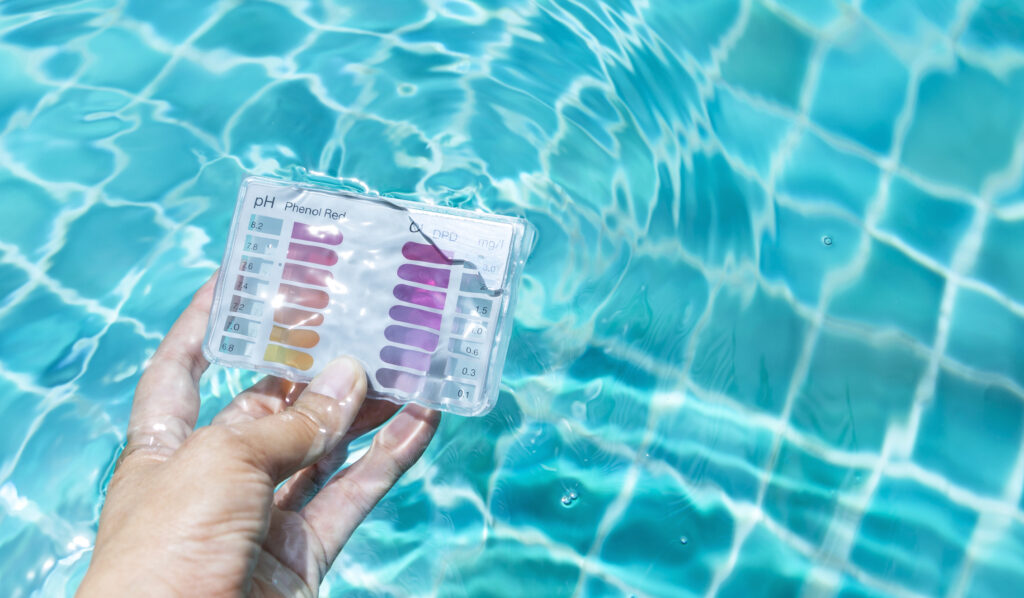
pH measures how acidic or basic the water is on a scale from 0 to 14. Ideally, pool water should have a pH level between 7.2 and 7.6.
- Low pH (Acidic Water): Can cause eye and skin irritation, corrode metal pool parts, and deteriorate plaster or vinyl liners.
- High pH (Alkaline Water): Reduces chlorine effectiveness, leads to cloudy water, and causes scaling on pool surfaces.
Maintaining a balanced pH level helps prevent discomfort for swimmers and protects the pool’s structure.
2. Chlorine and Sanitization Levels
Chlorine is the primary sanitizer used to kill bacteria, algae, and other contaminants in pool water. The recommended chlorine level for most pools is between 1 and 3 parts per million (ppm).
- Too Much Chlorine: Can cause skin and eye irritation, a strong chemical odor, and potential bleaching of pool surfaces.
- Too Little Chlorine: Increases the risk of bacteria growth, cloudy water, and algae formation.
Regularly testing chlorine levels and adjusting as needed ensures effective sanitation while maintaining swimmer comfort.
3. Alkalinity: The pH Stabilizer
Total alkalinity acts as a buffer to prevent drastic changes in pH. The ideal range for total alkalinity is between 80 and 120 ppm.
- Low Alkalinity: Causes pH levels to fluctuate rapidly, making it difficult to maintain chemical balance.
- High Alkalinity: Leads to scaling, cloudy water, and difficulty adjusting pH levels.
Keeping alkalinity within the proper range helps maintain a stable water environment and prevents frequent pH swings.
4. Calcium Hardness: Protecting Pool Surfaces
Calcium hardness refers to the concentration of dissolved calcium in pool water. The ideal range varies depending on the type of pool but typically falls between 200 and 400 ppm.
- Low Calcium Hardness: Causes water to become corrosive, leading to damage in plaster, grout, and metal fixtures.
- High Calcium Hardness: Results in scaling on pool walls, cloudy water, and potential clogging of pool equipment.
Balancing calcium levels is essential for preventing damage to pool surfaces and maintaining water clarity.
5. Cyanuric Acid: Chlorine Protection from UV Rays
Cyanuric acid (CYA) is a stabilizer that helps protect chlorine from breaking down too quickly under sunlight. The ideal range for CYA is between 30 and 50 ppm.
- Low CYA Levels: Causes chlorine to degrade rapidly, requiring frequent additions.
- High CYA Levels: Reduces chlorine effectiveness, leading to potential bacteria and algae growth.
Using the right amount of cyanuric acid ensures that chlorine remains effective without overuse.
The Impact of Unbalanced Pool Water
1. Cloudy or Murky Water
Chemical imbalances, including high pH or calcium hardness, can cause the water to become cloudy. Poor filtration and excessive organic contaminants can also contribute to murkiness.
2. Algae Growth and Green Water
When chlorine levels drop too low, algae can quickly take over a pool. Algae thrive in warm water, particularly when pH and cyanuric acid levels are unbalanced.
3. Corrosion and Metal Staining
Low pH or low calcium hardness can lead to corrosion of metal fixtures, ladders, and pipes. Metal particles in the water may also stain pool surfaces.
4. Scale Formation on Pool Walls and Equipment
High calcium levels and high alkalinity can result in scaling, which appears as rough white or gray deposits on pool walls, tile lines, and equipment.
5. Swimmer Irritation and Discomfort
Improper pH and chlorine levels can cause red eyes, dry skin, and breathing discomfort. Keeping water chemistry in balance ensures a pleasant swimming experience.
How to Maintain Proper Water Balance
1. Regular Testing and Monitoring
Testing pool water frequently helps catch imbalances before they become major problems.
- Use test strips or a digital tester at least twice a week.
- Check pH, chlorine, alkalinity, and calcium hardness levels regularly.
- After heavy rain or high swimmer load, test water to ensure balance.
2. Adjusting Chemicals as Needed
When test results show imbalances, make adjustments gradually to avoid sudden shifts.
- Use pH increasers or reducers to bring levels within range.
- Add chlorine or shock treatments when sanitizer levels are too low.
- Use alkalinity or calcium hardness increasers if levels fall below the recommended range.
3. Ensuring Proper Filtration and Circulation
Filtration plays a key role in maintaining clear and safe water.
- Run the pool pump at least 8-12 hours per day to keep water circulating.
- Clean or replace filters regularly to prevent debris buildup.
- Brush pool walls and steps to remove dirt and prevent algae growth.
4. Preventing Common Pool Chemistry Issues
Taking preventive steps can minimize water chemistry problems.
- Shock the pool regularly to eliminate contaminants.
- Keep leaves and debris out to reduce organic waste in the water.
- Monitor water evaporation and refill as needed to maintain proper chemical balance.
When to Seek Professional Pool Maintenance
While basic water testing and adjustments can be done at home, some situations require professional expertise.
- Recurring water clarity issues: If cloudy water persists despite chemical adjustments.
- Algae outbreaks that won’t clear up: When standard treatments fail to eliminate algae.
- Scaling or corrosion problems: If surfaces show buildup or metal parts start corroding.
- Equipment malfunctions: When pumps, filters, or heaters aren’t functioning efficiently.
Fortress Pool Service provides professional maintenance to keep pools balanced and running smoothly. Seeking expert assistance ensures that water chemistry remains optimal without the hassle of constant adjustments.
Conclusion
Proper water balance is essential for maintaining a safe, clean, and long-lasting swimming pool. Understanding pH levels, chlorine concentrations, alkalinity, and other key factors helps prevent common pool problems like algae growth, cloudy water, and equipment damage. Regular testing, proper filtration, and timely chemical adjustments are the foundation of good pool maintenance.
For homeowners who prefer professional assistance, Fortress Pool Service offers expert care to ensure pool water remains balanced and safe year-round. Whether managing pool chemistry independently or relying on professional help, staying proactive with water maintenance leads to a better swimming experience and longer-lasting equipment.
Read More From Techbullion