
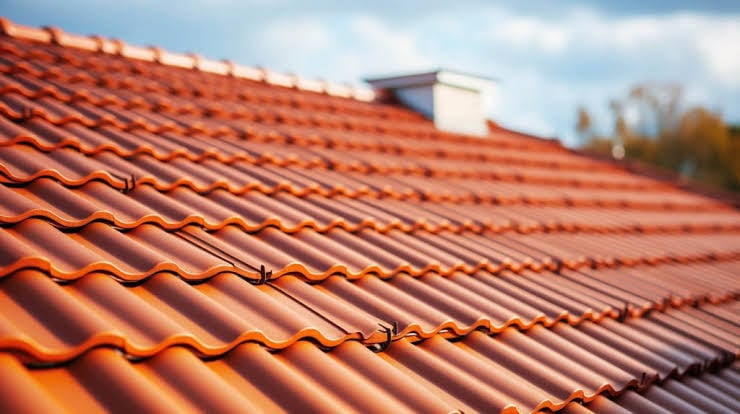
Some of the most important improvements to a building happen where nobody thinks to look.
There is something interesting about the way we look at buildings.
We notice the entrance, the windows, the landscaping, and maybe even the fresh paint. We pay attention to the things at eye level.
But rarely do we look up.
Above the everyday activity of a commercial building sits something that quietly carries an enormous responsibility: the roof.
It faces the summer sun, the changing seasons, and every storm that passes through. It protects everything underneath, often without anyone giving it a second thought.
And perhaps that’s exactly how it should be.
For one commercial property in Sacramento, California, that quiet responsibility became the focus of a roofing project designed around durability, efficiency, and long-term protection.
This is the story of what went into that roof—and why the details matter more than most people realize.
A Different Kind of Challenge in Sacramento
Sacramento has a character all its own.
Beyond the busy streets and commercial districts, the landscape opens toward rolling green hills. During the warmer months, the region experiences long stretches of sunshine and high temperatures.
It’s beautiful country, but the climate asks a lot of the buildings standing in it.
A commercial roof doesn’t have the luxury of escaping the afternoon sun. Hour after hour, its surface absorbs or reflects solar energy while the spaces underneath depend on it to help maintain a comfortable environment.
For a business owner, this creates an important question.
How do you protect a building from the elements while also making practical decisions about efficiency and future maintenance?
It isn’t simply about putting a new surface on top of a structure.
It’s about choosing a roofing system that makes sense for the building, its location, and the years ahead.
That was the thinking behind a commercial roofing project completed by Higher Level Roofing in the Sacramento area.
The Material That Changed the Story
For this property, the roofing team installed a 60-mil single-ply TPO roofing membrane.
To someone unfamiliar with commercial construction, that might sound like a collection of technical terms.
But the idea behind it is straightforward.
TPO, short for thermoplastic polyolefin, is a roofing material commonly used on flat and low-slope commercial buildings. It creates a durable protective surface, and reflective TPO systems can help reduce the amount of solar heat absorbed by a roof.
The 60-mil designation describes the membrane’s nominal thickness—approximately 0.060 inches.
It might not sound like much, but roofing performance depends on more than thickness alone. The membrane, its installation, its seams, and the details where it meets other building components all work together.
For a Sacramento property facing hot weather and daily exposure to the elements, that combination matters.
A reflective roof can help limit heat transfer into the building, potentially reducing demand on cooling equipment. Actual savings depend on the roof assembly, insulation, building use, and other factors.
But the material itself was only one part of the story.
The next challenge was turning that material into a properly installed roofing system.
Where the Real Craftsmanship Happens
From the ground, a completed commercial roof can look deceptively simple.
A wide, uninterrupted surface. Clean lines. Very little to attract attention.
What isn’t immediately visible is the precision required to achieve that appearance.
On the Sacramento project, Higher Level Roofing focused on the layout of the TPO membrane, secure seams, and careful detailing around the roof edges and penetrations.
Those details deserve attention.
A commercial roof isn’t one perfectly uninterrupted sheet. It has transitions, connections, and areas where other building components pass through or meet the roofing surface.
These are places where installation quality becomes particularly important.
A poorly executed connection can create problems long after the installation crew has left.
A carefully completed detail, on the other hand, is something the people underneath may never need to think about.
There’s a certain satisfaction in that kind of work.
The purpose isn’t to attract attention. It’s to prevent future problems.
And in a trade where the consequences of small mistakes can become expensive, doing the ordinary things correctly is what separates a roofing system from a reliable one.
A Business Has More to Protect Than Its Building
It’s easy to describe a commercial roof in terms of membranes, materials, and installation methods.
But underneath that roof is something much more important.
A business may have employees depending on their workplace, equipment essential to daily operations, inventory that needs protection, and customers expecting things to run smoothly.
The roof is part of what makes all of that possible.
When water enters a building, the consequences can extend well beyond repairing the roofing material. Interior finishes, equipment, and business operations may all be affected.
Even without a leak, the way a roof handles solar heat can influence a building’s cooling requirements.
This is why commercial roofing decisions deserve to be treated as long-term investments rather than short-term construction tasks.
For the Sacramento installation, the objective was to provide a practical roofing system designed to resist weather exposure while supporting the building’s energy-efficiency goals.
It wasn’t about creating something dramatic.
It was about making an important part of the property more dependable.
The Beauty of Work That Goes Unnoticed
Perhaps the most interesting part of this project is how little attention the finished result is supposed to receive.
A newly renovated storefront might inspire compliments. A redesigned interior might become the subject of conversation.
A properly installed roof is different.
Its success is often measured by the absence of problems.
No unexpected water entering the building. No avoidable interruptions caused by roofing defects. No constant concern about whether the surface overhead is doing its job.
Of course, even a well-installed roof needs periodic inspections and maintenance. No roofing material eliminates every risk.
But a thoughtful installation gives a building owner a better starting point for long-term care.
And that is a meaningful accomplishment, even if nobody walking past the building ever notices it.
Looking at the Bigger Picture
There is a broader lesson in this Sacramento roofing story.
We tend to celebrate the parts of construction that are easy to photograph and admire. The dramatic transformations. The beautiful finishes. The visible before-and-after moments.
But some of the most valuable construction work happens in the less glamorous places.
It happens in the decisions about materials.
In the care taken with a seam.
In the attention paid to a roof edge.
In the understanding that a building must continue performing long after the installation is complete.
Higher Level Roofing’s Sacramento TPO project represents that quieter side of construction: a focus on practical performance rather than appearance alone.
And while the finished roof may never become the most talked-about feature of the property, its importance remains.
The Next Time You Walk Into a Building, Look Up
Every commercial building has a story.
Some stories are told through architecture. Others through the businesses operating inside.
And some are written in the materials and workmanship that protect the building from above.
In Sacramento, a 60-mil TPO roofing installation became one small example of how thoughtful construction decisions can contribute to the life of a property.
There may be no grand reveal, no ribbon-cutting ceremony, and no crowd gathered to admire the finished surface.
Just a building moving forward with a new layer of protection overhead.
Sometimes, the best work is the work nobody has to think about.
And sometimes, that’s the whole point.
Project inspiration and photographs: Single-Ply TPO 60mil Installation in Sacramento, CA — Higher Level Roofing.
For additional information on reflective roofs and building energy performance, see ENERGY STAR’s guide to cool roofs.
Previously in Latest News: The Best Human in the Loop Automation Tools in 2026