
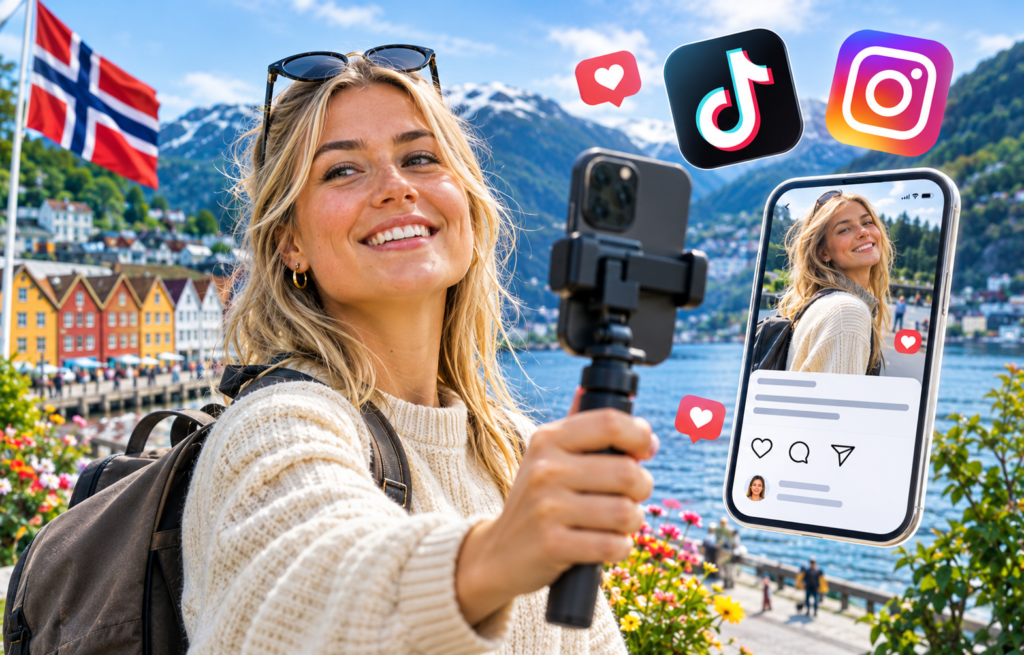
Ask a Norwegian teenager who their favourite celebrity is, and there’s a good chance the answer won’t be an actor or a footballer. It’ll be someone they follow on TikTok or Instagram. Someone who films their morning routine, reviews snacks from the local shop, or talks about a breakup straight into the camera.
Influencers have become a real part of Norwegian public life. They sell products, shape trends, appear on TV and sometimes even take part in public debates. But the path that got them here started long before TikTok existed, and the job is a lot harder than it looks from the outside.
From Bloggers to TikTok Profiles
Norway had an influencer culture before the word influencer was common. In the late 2000s and early 2010s, personal blogs exploded in popularity. Young women writing about fashion, makeup, training and daily life gained huge readerships. The media even gave them a nickname, the “rosabloggere”, or pink bloggers, because of the bright, girly look of many of their pages.
People made fun of them at first. Then they noticed the numbers. Some of these bloggers had more daily readers than local newspapers, and brands started paying attention. A few of them went on to host TV shows, launch their own products and write books.
When Instagram took off, most of that audience simply moved there. Photos replaced long posts, and stories made it easy to share small moments throughout the day. A few years later, TikTok shook things up again. Short videos, trending sounds and a recommendation feed that could push an unknown creator to millions of viewers overnight changed the rules completely.
Today, the most successful Norwegian creators usually work across several platforms at once. They might post polished photos on Instagram, quick and funny clips on TikTok, longer content on YouTube and talk more openly on a podcast.
How Influencers Build Audiences in Norway
Norway is a small market, and that shapes everything. A creator speaking Norwegian has a natural ceiling on how big their audience can get. That’s why many of them focus on being close to their followers rather than chasing huge numbers.
Relatability over glamour
Norwegian audiences are often suspicious of anything that looks too perfect. The creators who do well tend to show messy kitchens, bad hair days and real struggles alongside the nice stuff. A video about failing a driving test can get more love than a luxury holiday post.
Local identity
Dialect, hometown and background matter. Someone from a fishing village in Finnmark or a farm in Trøndelag brings a story that followers remember. Plenty of popular profiles lean into where they come from instead of trying to sound like they’re from Oslo.
Reality TV as a launch pad
A big share of today’s Norwegian influencers got their first push from reality television. A season on Paradise Hotel, Ex on the Beach or Farmen can bring tens of thousands of new followers in a few weeks. The smart ones use that window to show viewers who they really are outside the edit.
Consistency
Algorithms reward people who post regularly. TikTok has shared plenty of advice for creators through its official newsroom, and one theme comes up again and again: showing up often and being yourself matters more than expensive equipment. Many Norwegian creators film everything on a phone.
Marketing Rules Every Influencer Must Follow
This is where Norway stands out. The country has some of the clearest rules in Europe when it comes to influencer marketing, and the authorities actually enforce them.
The Norwegian Consumer Authority (Forbrukertilsynet) requires that paid content is clearly marked as advertising. It needs to be obvious right away, not hidden at the bottom of a caption or buried in a list of hashtags. If a creator gets a free product, a trip or money in exchange for a post, followers have a right to know.
Norway also made headlines internationally when it introduced rules on retouched images in advertising. Since 2022, influencers and advertisers must label paid posts where a person’s body shape, size or skin has been altered. The goal was to reduce the pressure young people feel from comparing themselves to edited photos.
For creators, this means running an influencer business in Norway is a bit like running a small media company. They need to know the rules, keep track of agreements, and be careful about how they present sponsored content. Agencies have popped up to help with that side of the work.
Influencer Profiles Worth Reading About
Followers see the highlights. What they often don’t see is the full story of how a person got there. Where did they grow up? What did they do before the camera? How did one viral video or one reality season change their life?
That’s the kind of background Lekly focuses on. The site publishes detailed profiles of Norwegian influencers and reality personalities, covering their early years, their time on TV, their relationships and what they’re doing now. For anyone curious about the people behind the usernames, it’s a good place to get the bigger picture in one read.
Longer profiles also help put things in perspective. A creator who seems to have appeared out of nowhere often turns out to have been posting for years before anything clicked. That’s a useful reminder for anyone thinking of trying it themselves.
The Pressure Behind the Feed
Influencer life looks easy on a phone screen. In reality, it can be exhausting.
Creators are always “on.” Their income often depends on engagement, so a slow week can feel like a financial threat. Brand deals come with deadlines and approvals. And then there are the comments. Norwegian influencers, especially young women, regularly talk about hateful messages, body shaming and people digging into their private lives.
Research backs up how big a role social media plays, particularly for younger people. Studies from the Pew Research Center have looked at how teens use platforms like TikTok and Instagram and how they feel about the pressure that comes with them. Many young users say social media helps them feel connected, while a large share also say it makes them feel judged or left out. Influencers sit right in the middle of that, both as a source of pressure and as people experiencing it themselves.
Some Norwegian creators have responded by being more open. They talk about therapy, take breaks from posting, or share unfiltered photos to push back against the perfect image. Others have stepped away completely after deciding the attention wasn’t worth it.
What Comes Next
The influencer industry in Norway is still changing. A few trends seem likely to grow:
- More video, less photo. Short and long form video keeps taking over from still images.
- Niche creators. Fishing, hunting, farming, budgeting and parenting accounts are finding loyal audiences that brands value.
- Stricter transparency. Followers and authorities both expect clear labelling, and that won’t loosen.
- Crossover careers. Expect more influencers moving into TV hosting, podcasts, books and business.
Conclusion
Norwegian influencers have come a long way from the pink blogs of the early 2010s. Today they’re entrepreneurs, entertainers and, in some cases, genuine public voices. They work in a small market with strict rules, which forces them to stay close to their audience and honest about what they’re selling.
Behind the polished feeds are real people dealing with real pressure. Understanding their stories, not just their latest post, makes it easier to see why so many Norwegians follow them so closely, and why the most successful ones are usually the ones who never stopped acting like themselves.