
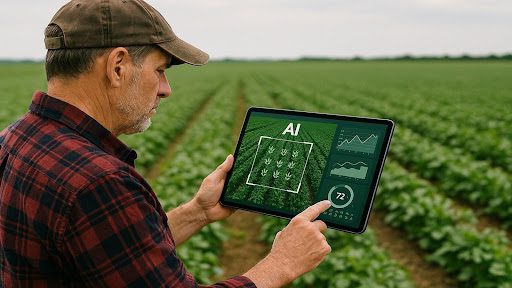
AgTech is no longer a side story in agriculture. In 2026, it is becoming central to how farms manage risk, improve efficiency, and meet rising sustainability expectations.
From smarter nutrient strategies to carbon markets and AI-powered equipment, here are the trends shaping the year ahead, and the companies driving them forward.
1. Carbon Markets and Verified Sustainability Programs Scale
Sustainability is moving from marketing language to measurable outcomes. In 2026, more growers are evaluating programs tied to verified carbon credits and regenerative practice tracking, even as scrutiny around verification and long-term value continues.
Indigo Ag reported completion of its third carbon crop and production of 163,048 carbon credits, an indicator of scaling execution in agricultural carbon markets.
This trend reflects:
- Increased demand for practice-based verification
- Greater scrutiny around measurable outcomes
- More structured farmer participation in carbon programs
Why it matters:
As supply chains request sustainability data, farmers need systems that document outcomes across seasons, not just one-off practices.
Carbon markets remain evolving and debated, but program execution milestones show the category is maturing.
2. Precision Nutrition and Nutrient Efficiency Go Mainstream
As input costs fluctuate and environmental scrutiny increases, growers are focusing more on nutrient efficiency, getting the right nutrients to crops at the right time, in the right amount.
Why this matters in 2026:
Early-season nutrient gaps can quietly limit yield potential long before visible symptoms appear. The focus is shifting from “more fertilizer” to “better-timed nutrition.”
ICL Group promotes controlled-release fertilizer technologies designed to better synchronize nutrient availability with crop demand.
This approach supports:
- More consistent early root development
- Improved nutrient availability under variable moisture conditions
- Reduced environmental losses through timed release
- Stronger crop performance during early stress periods
Rather than adding inputs late in the season, this approach addresses yield-limiting factors early, before potential is capped.
Trend takeaway: Precision nutrition is becoming foundational, not optional.
3. Data Platforms That Turn Field Chaos Into Actionable Decisions
Digital farming platforms are becoming the operating system of modern agriculture, driven by the need to integrate fragmented tools and translate growing volumes of data into practical decisions.
Bayer’s Climate FieldView brings together multiple data layers into a single platform designed to support season-over-season decision-making. It integrates:
- Field history
- Weather data
- Satellite imagery
- Operational records
The platform is positioned as a digital tool to analyze “what worked and what didn’t” across seasons.
As farms layer more technologies into their operations, the ability to unify data into a single decision-support system becomes critical to avoid tool fragmentation and workflow overload.
In 2026, data platforms are less about dashboards and more about decision support:
- Variable-rate insights
- In-season performance tracking
- Multi-season comparisons
Trend takeaway: Farms are consolidating tools. Integration beats fragmentation.
4. Equipment + Automation Become Climate Tools
Precision equipment is no longer just about convenience. It’s about reducing waste, managing variability, and improving resilience.
John Deere equipment and software collect and unify operational data across machines and fields. This enables:
- More precise seed and fertilizer placement
- Field-by-field performance comparison
- Reduced over-application
- Improved input timing
Precision tools are increasingly tied to:
- Soil variability management
- Water optimization
- Reduced compaction
- Operational consistency
Why 2026 is pivotal:
With labor challenges and unpredictable weather, automation helps stabilize operations.
5. AI + Robotics Move From Pilot to Practical
Labor constraints and rising wage pressures continue to push interest in robotics and AI-driven field operations.
Carbon Robotics focuses on AI-powered weeding systems that aim to reduce reliance on herbicides through laser-based technology, illustrating how robotics is being applied to high-cost, repetitive field tasks.
This trend reflects:
- Computer vision in-field
- Automated mechanical weed control
- Reduced chemical dependency
- Real-time plant identification
In 2026, robotics adoption remains selective, but use cases tied directly to labor savings and input reduction are gaining traction.
Why it matters:
When technology directly reduces recurring costs (labor, herbicides), adoption accelerates.
6. Climate Resilience Becomes the Organizing Principle
Across all categories, nutrition, carbon, software, equipment, robotics, one theme connects everything: resilience.
Data-enabled farming supports:
- Early stress detection
- Better water management
- More consistent sustainability measurement
- Improved risk planning
From nutrient timing (ICL Group) to carbon verification (Indigo Ag), from digital platforms (Bayer) to smart machinery (John Deere) and robotics (Carbon Robotics), the focus is no longer just yield. It’s stability under increasingly variable conditions.
What AgriTech “Winning” Looks Like in 2026
The technologies gaining traction share common traits:
- They fit into real farm workflows
- They reduce risk, not just add complexity
- They show measurable efficiency gains
- They support sustainability reporting
- They improve decision-making speed
AgTech in 2026 is less about flashy pilots and more about operational infrastructure.
Bottom Line
The future of AgriTech isn’t defined by one breakthrough. It’s defined by integration.
- Smarter nutrient strategies improve early crop strength.
- Carbon programs create measurable sustainability pathways.
- Digital platforms unify decision-making.
- Precision equipment reduces variability.
Robotics tackles labor and chemical constraints.
Together, these shifts point to a more data-driven, efficiency-focused, and climate-resilient agricultural system. And in 2026, resilience isn’t just an advantage. It’s the requirement.