
Starting a social media account from zero can feel a little like opening a shop on a street where nobody walks past. You may have a great product and useful content. But where is everybody?
That's part of the appeal of pre-built social media audiences. Rather than spending years finding followers, you acquire an asset with a niche and content history.
Sounds like a shortcut, right? Sometimes it is. But there's an important distinction: you can acquire an asset, not the loyalty of the people following it. And some platforms restrict or outright prohibit account sales.
Before pricing someone's follower count, let's look at the economics, the metrics that matter, and legitimate handovers.
What makes a pre-built audience valuable?
A social media channel can have value for much the same reason an established newsletter or content website does. Someone has already chosen a topic, created content, and earned attention.
That might mean a faster start for product launches, sponsorships, or store traffic.
But the audience needs to fit the business.
Imagine two opportunities: a general entertainment page with 80,000 followers and a smaller gardening channel with 8,000 followers who regularly ask about soil, tools, and plant care. If you sell gardening supplies, which one would you rather put in front of your products?
I'd investigate the smaller one first. An interested audience can be more useful than a large audience that has no reason to buy from you.
And this isn't some imaginary corner of the internet. A 2025 study presented at the ACM Internet Measurement Conference identified 38,253 accounts advertised for sale across 11 marketplaces during February to June 2024, with advertised values totaling more than $64 million. Those were listings, not confirmed sales. Researchers also found fraudulent engagement and bot farming. Another reason to look beyond headline numbers.
The real calculation: what can the audience earn?
Here's where things get interesting. The value of an audience isn't simply the cost of acquiring its followers one by one. It's the future benefit you can reasonably expect from operating the asset, minus the costs and risks.
Let's try a hypothetical example. Say you're considering a niche channel priced at $6,000, with another $400 budgeted for transaction and handover expenses.
Your projections suggest it could send 600 qualified visitors to your store each month. If 3% buy something and your contribution margin is $30 per order (after the direct costs of fulfilling it), that's $540 per month. Subtract $150 for ongoing content work, and you're left with $390 in monthly contribution.
At that rate, recovering the $6,400 outlay would take roughly 16 months.
Not terrible. But what if the new ownership or content direction causes traffic to fall by half? Your monthly contribution would drop to around $120, stretching the payback period to more than four years.
That's the awkward thing about an audience valuation spreadsheet: the numbers look wonderfully tidy, while actual humans are under no obligation to behave according to the forecast. Compare that return with building your own channel, running ads, or hiring a creator. Buying isn't always cheaper.
Four things to check before buying a social media asset
1. Audience fit and authenticity
Ask for access to recent native analytics, ideally covering at least 90 days. Look at audience location, post reach, website clicks, and how people actually interact with the content.
Follower spikes aren't proof of fraud, but they deserve an explanation. So do generic comments or weak reach.
And don't rely entirely on screenshots from Instagram Insights or activity trackers Ask the seller to walk you through the analytics in the platform itself. You're checking whether the audience is real and useful to your business.
2. Performance that lasts beyond one viral post
One Reel with a million views can make a modest channel look like a media empire. What did the other 20 posts do?
Look at typical performance, recent content, and whether followers care more about the creator than the topic.
If the seller is the main attraction, replacing them may fundamentally change the asset you're buying.
3. Ownership, rights, and outstanding obligations
What's included? Content, brand name, domain, sponsorship contracts, or admin control? Does the seller actually own the videos, photos, and music they used?
Check sponsorship commitments, copyright claims, account warnings, and revenue statements. Hidden obligations change the valuation.
4. What the law in your country allows
This is the check I'd make before negotiating a price.
Selling an account can involve more than transferring login details. Depending on your country, data protection, copyright, tax, and consumer protection laws may apply.
Take the European Union, for example. The General Data Protection Regulation (GDPR) sets rules for how businesses collect, use, and share personal information. If an account comes with customer details, email lists, or other identifiable follower information, you can't simply assume that information can be passed to the buyer.
Also check who owns the account's content and whether the sale creates tax obligations. A little legal due diligence can prevent you from making an expensive business mistake.
How to make an eligible acquisition safer
Let's say you've found an asset that suits your goals, the seller's claims hold up, and the proposed transfer is allowed. There's still the rather important matter of exchanging money for something you can't put in a shipping box.
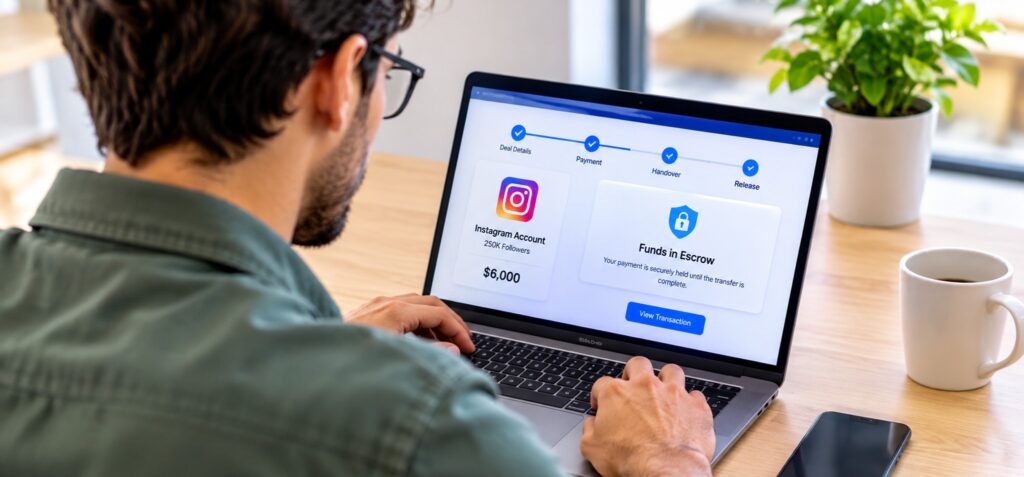
This is where an escrow process can be useful.
Scrowise provides escrow services for digital assets, including social media-related transactions. Its social media escrow process is built around agreed deal terms, funding, handover, a review period, and payment release.
Here's how I'd approach those stages:
1. Define what is being sold. Document the asset, price, included rights, required approvals, ownership or admin-access method, review window, and what happens if a condition isn't met. Make sure the seller is authorized to transfer each item.
2. Verify the details before funding. Review analytics and income evidence, confirm the seller's identity and control, and check the relevant platform policies. No payment process replaces due diligence.
3. Fund escrow and follow the agreed handover. Money is held while the parties complete the documented steps. Use official role-based access or ownership controls where available, rather than casually exchanging passwords.
4. Inspect before approving release. Confirm the permitted access, content and commercial rights, recovery or administrative controls, and every other deliverable in the agreement. If something doesn't match, use the stated review and dispute process rather than hoping it sorts itself out.
Importantly, Scrowise as an escrow platform does not independently verify follower quality, engagement, or revenue. That's the buyer's job. Escrow helps manage payment and handover risk; it doesn't guarantee audience performance or make a platform-prohibited sale acceptable.
Want to understand how escrow arrangements work? Read our article on Escrow Accounts vs. Trust Accounts to learn about the differences and how each handles funds.
The first month matters as much as the purchase
Imagine acquiring a thriving community and immediately replacing everything its members liked with hard-sell product posts. You might own the operating asset, but you could lose the very attention you paid for.
A more sensible approach is to preserve what works. Understand the existing content themes, introduce any change in ownership appropriately, and keep publishing material people originally came for.
Then watch the numbers that mean something to your business: returning viewers, comments, qualified clicks, and actual conversions. If those start sliding, don't double down on the original forecast. Adjust the plan.
Ultimately, the real value of an acquired audience depends on what you do with it after the purchase. Maintaining engagement, understanding what followers expect, and delivering relevant content all play a part in turning an existing community into a sustainable business asset.
My suggestion? Before buying, price the downside as carefully as the upside. Compare the deal with a small creator partnership or a month of paid promotion. If an acquisition still makes sense after those checks, you'll be making a business decision rather than buying an impressive-looking follower count.