

Automated photo studios are typically perceived as a niche offline service — a machine for ID photos or content creation installed in a shopping mall or government facility. In reality, the sustainable growth of such a network is driven by a full-fledged technology platform with financial analytics, location scoring, and risk management — essentially a fintech product with hardware on display.
This article examines the experience of building and scaling a network of automated photo studios in the United States and Europe under the leadership of a product manager with a background in commercial lending and financial analysis. It describes the platform architecture, the role of data and algorithms, and how fintech principles help transform offline terminals into a manageable digital ecosystem.
Keywords
fintech; product management; automated photo studios; self-service; technology platform; data analytics; risk management; United States; Europe
1) From a Single Device to a Technology Platform
The first automated photo studios in the network were launched as standalone terminals: compact booths equipped with a camera, lighting, and a built-in user interface. The initial priorities were ensuring hardware reliability, creating an intuitive user flow, and integrating correctly with payment systems.
Further growth demonstrated that:
- an individual studio is only the “tip of the iceberg”;
- the real value lies in the software platform that manages the network, collects data, calculates unit economics, and supports decision-making at the scale of dozens and eventually hundreds of locations.
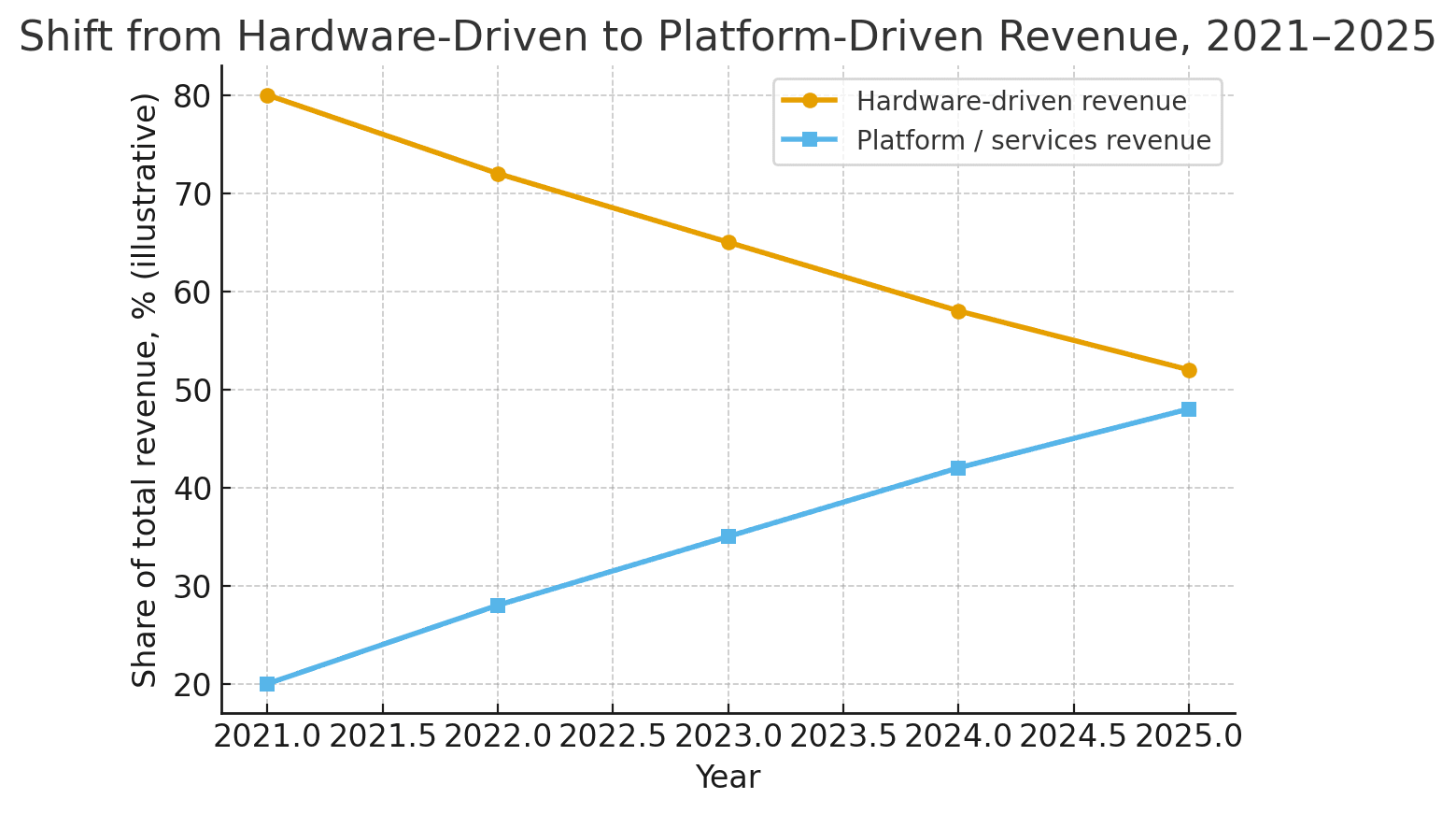
In practice, the project evolved from a model of “selling or leasing space for a device” to a self-service platform model:
- a unified software core;
- a centralized hub for integrations and payments;
- an analytics layer;
- APIs for partners and additional services.
This shift in mindset is characteristic of fintech, where the front end (user interface) is only the visible part of a complex backend infrastructure.
2) Fintech DNA: Location as a “Client,” Network as a “Portfolio”
Artjoms Blazko’s experience in commercial lending and financial analysis shaped a distinctive approach to risk and data. In banking, a client is treated as an entity with its own risk profile, cash flows, probability of default, and cost of capital.
These same principles were applied to the network of automated photo studios:
- each location is analyzed as a “client” — with traffic patterns, rental economics, and operational constraints;
- each studio has its own financial profile — revenue, costs, margin, and payback period;
- the entire network is treated as a portfolio with distributed risk, requiring a balance between stable and experimental locations.
Classical fintech tools — scoring, limits, and stress testing — were adapted to offline infrastructure:
- limits were introduced on the share of high-risk locations;
- downside scenarios were developed for traffic decline and cost increases;
- a system of “red flags” was implemented for studios with deteriorating performance metrics.
As a result, the automated photo studio project evolved from the outset not as a collection of isolated terminals, but as a portfolio of assets managed through data.
3) Platform Architecture: What’s Inside the “Box”
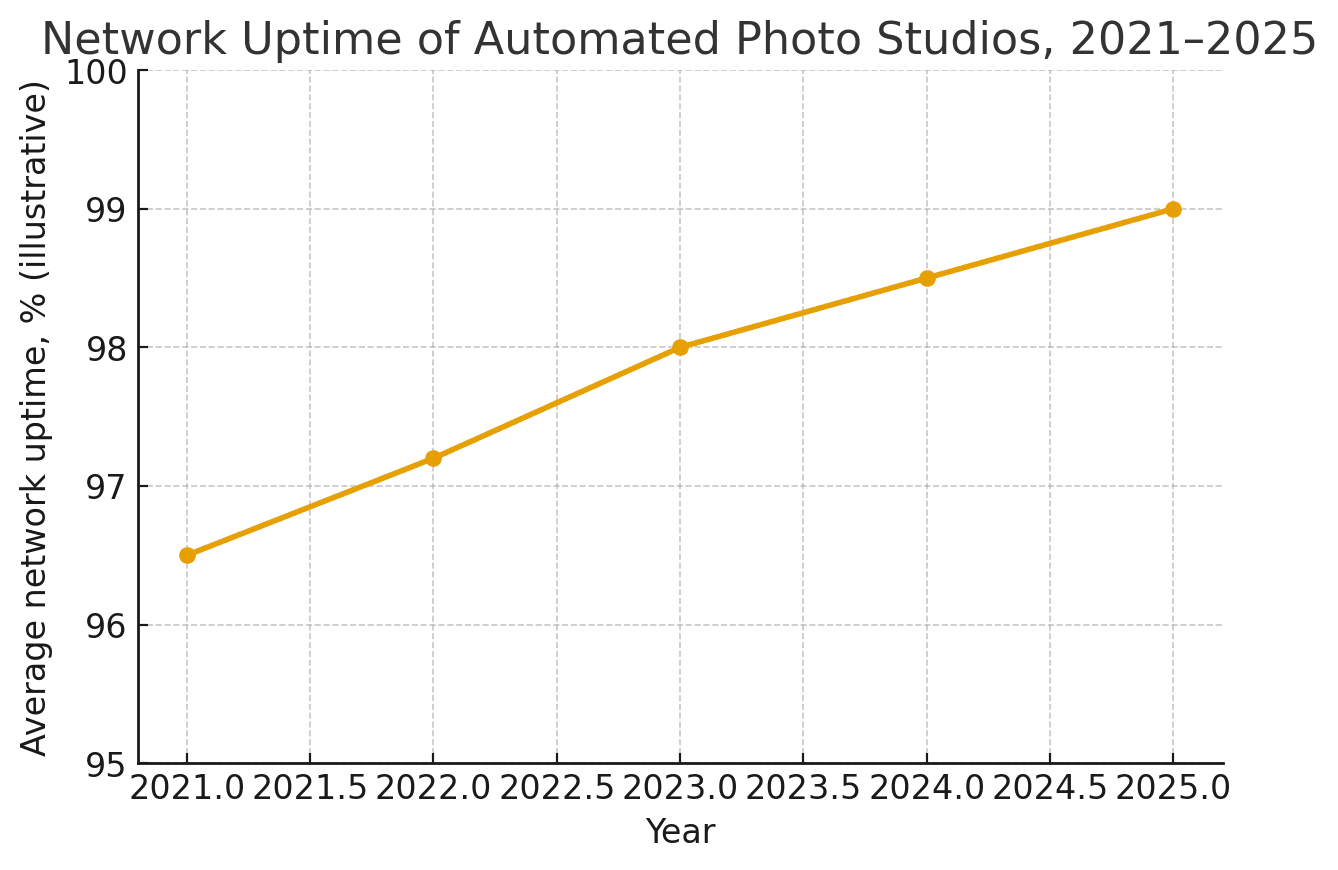
From the user’s perspective, the experience is simple: enter, select a scenario, take a series of photos, pay, and receive a digital file and/or a printout. To ensure this experience remains consistent across dozens of regions and multiple countries, the platform solves several layers of challenges simultaneously.
1) Hardware Management
- remote monitoring of cameras, lighting, and printers;
- automated alerts for failures and quality degradation;
- over-the-air software updates.
2) Session and Content Management
- orchestration of shooting scenarios (ID photos, portraits, social media sets);
- image processing and validation against basic requirements (size, background, sharpness);
- secure storage and delivery of files, including time-limited access.
3) Payments and Billing Subsystem
- integrations with acquiring systems in the United States and European countries;
- support for multiple payment methods (cards, mobile wallets, etc.);
- tracking of transactions, refunds, cancellations, and reporting by location and region.
4) Analytics and Risk Layer
- collection of telemetry and business data across all studios;
- calculation of unit economics at the location and regional levels;
- scoring and classification of locations by risk profile and profitability.
In this way, the platform becomes the core, while the studios themselves act as “distributed interfaces” to that core.
4) The Role of Data: From Monitoring to Product Decisions
A fintech approach involves working not only with financial data but also with behavioral patterns. Within the photo studio network, data is collected for each session (duration, selected scenario, drop-off points), along with time-based usage patterns, conversion changes, and differences across location types.
This data is used for:
Product Improvements
- simplifying the most problematic steps in the user interface;
- adapting scenarios to typical user behavior (e.g., prioritizing throughput for quick portraits and flexibility for creative content).
Pricing and Promotions
- testing pricing levels across regions with different sensitivities;
- running localized promotions during off-peak hours to balance demand.
Operational Management
- prioritizing maintenance and service operations;
- making relocation decisions for underperforming units.
In essence, data transforms the network into a laboratory where every change can be measured and evaluated rather than guessed.
5) Integrations and Partnerships: Platform as Part of an Ecosystem
Fintech solutions rarely exist in isolation — they are embedded into ecosystems such as banking apps, marketplaces, and payment gateways. The network of photo studios managed by Artjoms Blazko follows a similar logic.
Potential integration directions include:
- Service marketplaces and entertainment platforms — where booking a service or purchasing a ticket includes the option to create branded digital content at a nearby studio;
- Corporate HR systems — for centralized creation and updating of professional employee portraits for internal portals and communication tools;
- Future service platform integrations — where API-based architecture enables use cases such as identity verification or standardized photo generation, where compliant imagery is a required technical step.
The technological platform facilitates such integrations: APIs, standardized data formats, and transparent reporting make the product compatible with partners accustomed to “fintech-grade” interactions.
6) International Expansion: One Platform — Multiple Markets
Expansion from the United States into Europe required not only addressing legal and operational challenges but also adapting the platform itself.
Key challenges included:
- differing requirements for ID photos (formats, proportions, backgrounds);
- regulatory frameworks for personal data processing;
- variations in local payment systems and pricing structures;
- differences in user perception of self-service solutions.
The fintech approach enabled the architecture to:
- maximize reuse of the core platform;
- isolate local specifics (photo formats, interface language, payments) into configurable modules;
- maintain comparability of key metrics across countries.
As a result, the platform became multi-country without fragmentation: a single core, unified data logic, and consistent principles of risk management and unit economics.
Conclusion
Automated photo studios provide a clear example of how a traditional offline service can evolve into a полноценный fintech product.
The key elements of this transformation include:
- shifting from viewing studios as “hardware” to adopting a platform mindset;
- applying financial analysis, scoring, and portfolio management practices to locations and studios;
- building a data-driven infrastructure where every decision is based on measurable metrics;
- developing partnerships and integrations that position the network within a broader digital ecosystem;
- scaling internationally through an architecture designed from the outset for multiple jurisdictions and user behaviors.
Artjoms Blazko’s experience demonstrates that fintech is not limited to banking applications or investment platforms. It is, above all, a way of thinking about products, money, and risk. And this mindset proves equally effective in purely digital services as well as in projects where the digital core is embedded within very tangible “photo booths” in shopping malls or government facilities.
References:
- Industry reports on the automated photo booth and self-service kiosk markets in the United States and Europe (2022–2024).
- Best practices in building fintech platforms and managing portfolios of digital products.
- Materials on the architecture of scalable services with offline components (retail tech, kiosk solutions).
- Internal anonymized data from the network of automated photo studios managed by Artjoms Blazko (including location performance, transactions, revenue, and utilization metrics).